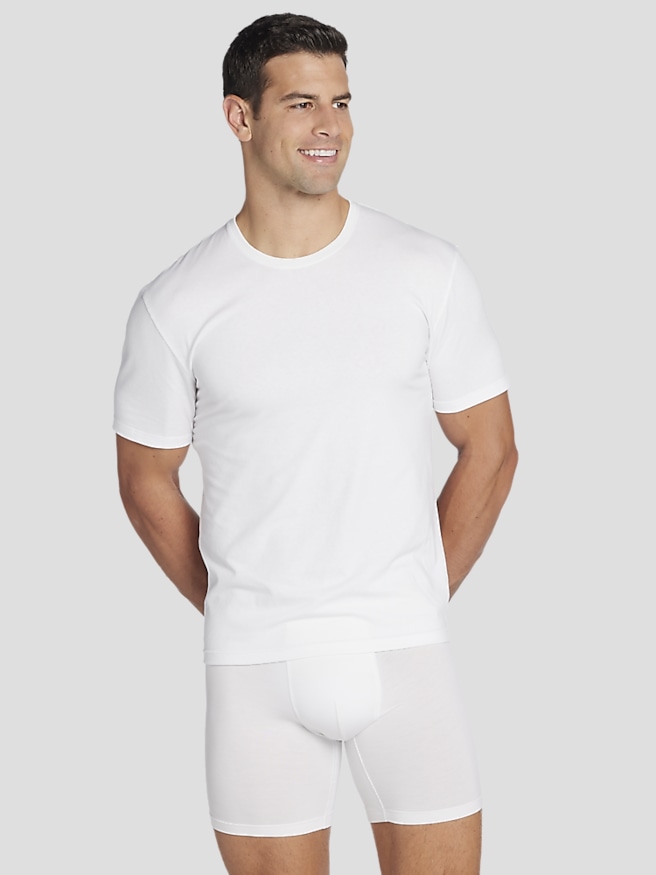
Smart casual T-shirts bring the comfort of a familiar knit top into a more polished wardrobe through clean lines, a balanced fit, and fabric that holds its shape. Compared with a loose workout tee or a graphic-heavy weekend top, a dressier T-shirt usually has a smooth surface, restrained detailing, and a neckline that sits neatly against the body. The effect is relaxed rather than formal: a simple foundation that looks intentional with tailored trousers, dark denim, or an unstructured jacket. Fabric makes much of that distinction. Cotton jersey has a familiar softness and a flexible knit construction, while interlock cotton typically has a denser, smoother feel that can give a plain shirt more structure. Combed cotton uses fibers processed to remove shorter strands, creating a smoother yarn; pima cotton is valued for its long fibers and soft hand. Neither a fabric name nor a heavier weight alone guarantees quality, but an even knit, tidy seams, and a neckline with good recovery are useful signs of thoughtful construction. Cotton blends can introduce other benefits, depending on their composition. A small amount of stretch can support comfortable movement, while modal or lyocell can contribute softness and fluid drape. Polyester blends may offer quicker drying and improved shape retention, though the finish matters when the goal is a refined appearance. A matte surface generally looks less athletic than a pronounced sheen. Substantial fabric can help a shirt fall cleanly without clinging, but excessive thickness may create bulk beneath a jacket. Opaque coverage, comfortable movement, and a smooth silhouette matter more than weight alone. Color and detail also influence the overall impression. White, navy, black, charcoal, and muted earth tones offer straightforward combinations with tailored separates. Heathered yarns and subtle texture can add depth without a prominent design. A narrow ribbed collar, a neatly finished sleeve, or a discreet chest pocket can provide enough interest for a shirt to stand on its own without competing with the rest of an outfit.
Fit is what allows a smart casual T-shirt to look considered rather than simply basic. Shoulder seams generally look cleanest near the edge of the shoulder, with enough room through the chest and back for natural movement. A close fit should follow the torso without pulling across the chest, outlining every contour, or creating horizontal tension lines. A straighter cut can feel equally polished when the proportions are balanced and the fabric falls smoothly instead of billowing at the waist. Sleeve shape deserves attention as well: sleeves that sit comfortably around the upper arm tend to look more deliberate than openings that flare widely or grip tightly. Body length affects how the shirt works with other clothing. An untucked hem that finishes around the upper to middle fly area often creates a balanced line, although torso length and trouser rise change the right placement. A shirt intended for tucking needs enough length to remain secure when sitting or reaching, without leaving excess fabric bunched at the waistband. Necklines contribute their own character. A crewneck gives a jacket a simple, continuous frame, while a modest V-neck creates a more open line without exposing too much of the chest. A collar that lies flat is especially noticeable beneath a blazer, where stretched ribbing or a rippled edge can interrupt an otherwise tidy outfit. In everyday settings, the same shirt can take on a different character through its companions. With flat-front chinos and clean leather sneakers, it suits a relaxed dinner or a daytime gathering. With tailored trousers, loafers, and a softly constructed blazer, it can feel appropriate for a creative workplace or an informal evening out. Dark, evenly finished denim offers another option when the setting permits it. The distinction is not that a T-shirt becomes formal clothing, but that its simplicity supports a put-together appearance. Workplace expectations, venue rules, and invitation wording still determine whether a knit top belongs; dress codes that call for formal attire generally require something else.
Durability and care help preserve the details that make these shirts look sharp. Neck ribbing, shoulder seams, and hems receive repeated stress, so secure stitching and fabric that returns to shape after gentle stretching are worth noticing. Reinforcement at the neckline can help stabilize an area that gets frequent handling, while even stitching helps hems lie flat. Pilling, fading, and shrinkage depend on fiber content, construction, friction, and laundering, not just how soft a shirt feels at first touch. The care label provides the most useful direction for each fabric blend. Washing with similar colors, turning shirts inside out, and avoiding unnecessarily harsh wash settings can reduce surface wear. Appropriate detergent amounts and thorough rinsing help prevent residue from dulling a dark color or stiffening the fabric. High dryer heat can contribute to shrinkage and shorten the life of stretch fibers; the recommended drying method helps protect the intended fit. Folding keeps storage simple and avoids the shoulder marks that some hangers leave in soft knits. When a shirt needs pressing, the labeled iron setting matters, especially with blended fibers. These practical details make smart casual T-shirts useful for people who want uncomplicated clothing that still looks finished: someone moving between a home office and a lunch meeting, heading to dinner after a day of errands, or packing a small travel wardrobe built around compatible colors. They can also make thoughtful gifts when the recipient’s usual size, preferred neckline, and fit are known. A familiar neutral often integrates more easily than an unfamiliar cut or a conspicuous design. The broader appeal of Casual T Shirts is that everyday comfort can take several forms, from easygoing basics to more structured knit tops. Within that range, smart casual styles emphasize the fabric, proportions, and finishing that let a simple shirt sit comfortably alongside more tailored clothing. The result is a dependable foundation for occasions that call for care in appearance without the structure of a dress shirt and tie.