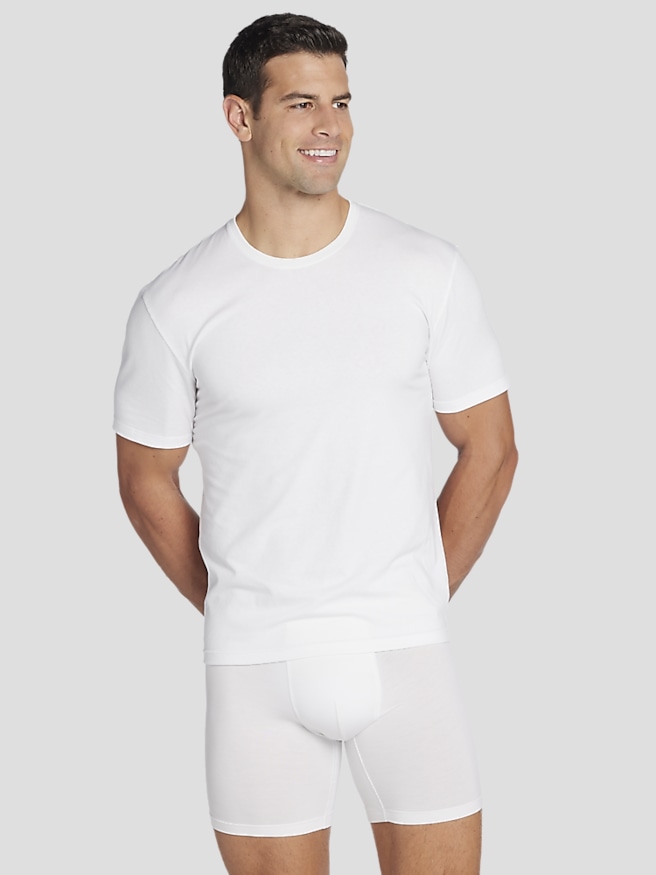
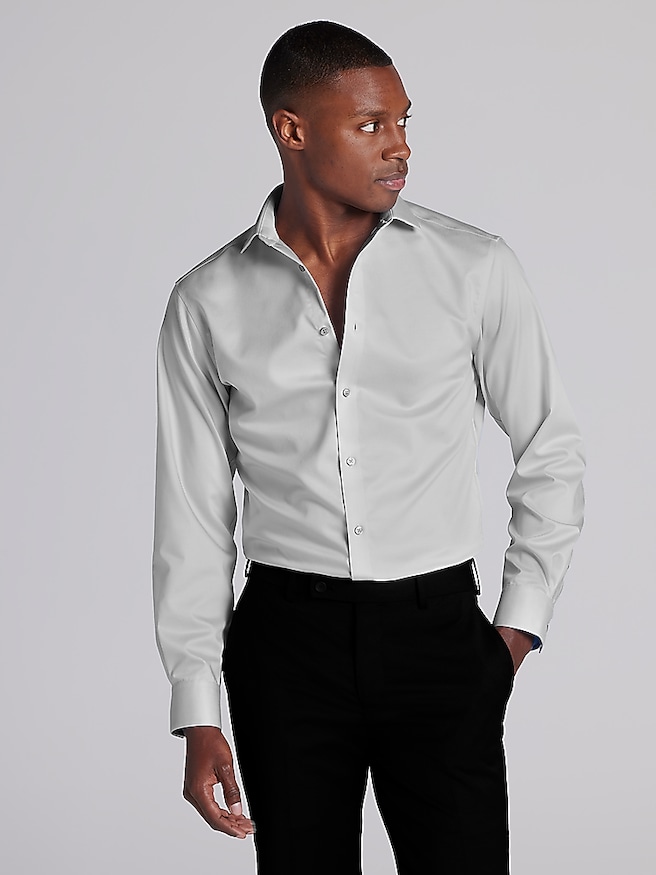
Office casual T-shirts are clean-lined knit tops suited to workplaces where a relaxed dress code allows an alternative to a collared shirt. Their appeal is straightforward: the familiar comfort of a tee, with enough structure and restraint to sit comfortably alongside tailored trousers, chinos, and an unstructured jacket. In this setting, the details carry more weight than a bold graphic or conspicuous logo. A smooth neckline, even seams, opaque fabric, and a tidy silhouette help a T-shirt look intentional rather than like an undershirt worn on its own. Solid colors such as navy, charcoal, white, and black create a quiet foundation, while muted shades and subtle textures can add interest without dominating an outfit. A crew neck offers a simple frame beneath a jacket; a shallow V-neck creates a more open neckline while keeping the overall effect understated. Neither neckline makes a tee appropriate for every workplace. Office casual T-shirts fit best in environments that explicitly welcome them, including some creative studios, technology workplaces, and relaxed administrative settings. A day spent at a desk, collaborating around a conference table, or taking an internal video call may call for a less formal outfit than a client presentation or an interview. Where tees are accepted, a neat pairing can make that distinction visible: straight-leg chinos, a smooth cotton T-shirt, and clean leather sneakers read as considered without feeling dressed up. Adding an unstructured blazer gives the same foundation a sharper outline, provided the neckline lies flat and the sleeves do not bunch beneath the jacket. For a closely related approach to relaxed, polished dressing beyond the workplace, Smart Casual T Shirts offers another useful point of reference. The connection is a focus on proportion and finish, not formality for its own sake. A well-chosen tee can move from focused desk work to lunch with colleagues and an informal gathering afterward without requiring a complete change of clothes.
Fabric and fit largely determine whether an office casual T-shirt holds that polished appearance through a full day. Cotton has a soft, familiar feel, and a fine, evenly knitted cotton jersey can provide a smooth surface that pairs naturally with tailored separates. Combed and ring-spun cotton are terms associated with fiber preparation and yarn construction; they can indicate a smoother hand, though the finished fabric and garment construction still matter. Cotton blends may bring other qualities into the mix. Polyester can support shape retention and quicker drying, while a small amount of elastane can add stretch for reaching across a desk or moving between meetings. These benefits depend on the blend and construction rather than the fiber name alone. Fabric weight also changes the impression. A very thin tee may reveal an undershirt, outline a waistband, or cling where a cleaner drape would look more refined. A substantial knit often gives the body a steadier outline, but thickness alone does not guarantee quality or comfort. The most useful balance is enough coverage and body to look finished without feeling stiff under a jacket. Across the shoulders, the seams generally sit close to the natural shoulder edge in a classic fit. Through the chest and torso, there should be room to sit, type, and reach without horizontal pulling or excess fabric gathering at the waist. Slim fits follow the body more closely; classic fits offer additional ease while still looking neat when the size is right. Sleeve openings that sit comfortably around the upper arm create a cleaner line than openings that flare widely or grip tightly. Length matters just as much. An untucked tee typically looks balanced when it covers the waistband and ends around the upper to middle fly, with body proportions influencing the best placement. A tucked tee needs enough length to stay secure when seated, but not so much fabric that it forms a bulky roll beneath the trousers. These small points become especially noticeable during ordinary movements, from leaning toward a laptop to standing for a presentation.
Durability in office casual T-shirts is often visible in the areas that receive repeated stress: the collar, shoulder seams, sleeve hems, and lower edge. A neckline that recovers its shape after stretching helps preserve a crisp frame around the face, while even stitching and flat seams support a tidy finish. Reinforcement at the shoulders or back of the neck can help stabilize those areas, although no single construction detail guarantees a longer garment life. Repeated wear and laundering also reveal how well a fabric resists twisting, fading, pilling, and loss of shape. Care requirements deserve attention because a tee intended for regular workdays should fit comfortably into an everyday routine. The care label remains the best reference for washing, drying, and ironing. When the label permits, washing with similar colors, turning the garment inside out, and avoiding unnecessary heat can help protect its appearance. Excess detergent may leave residue, and aggressive drying can contribute to shrinkage or wear in some fabrics. Promptly removing a tee from the dryer, or reshaping it while damp when air-drying is recommended, can reduce creasing and help the hem sit evenly. Folding tees neatly avoids the shoulder bumps that some hangers leave behind. Before a workday, a quick check for a stretched collar, visible lint, or a curled hem can be as important as the color combination. Office casual T-shirts are particularly useful for someone building a flexible work wardrobe, commuting in an outfit that needs to stay comfortable while seated, or moving between home-based work and an office with a relaxed dress code. They can also make a practical gift for a graduate starting a role or someone who prefers uncomplicated everyday clothing, provided the recipient’s size, fit preferences, and workplace expectations are known. Neutral colors and familiar silhouettes tend to be easier to integrate than an unfamiliar cut or striking pattern. The lasting value of this category lies in repeat use: a comfortable, well-proportioned layer that works with existing trousers and jackets, maintains a neat appearance with appropriate care, and feels natural throughout an ordinary working day.