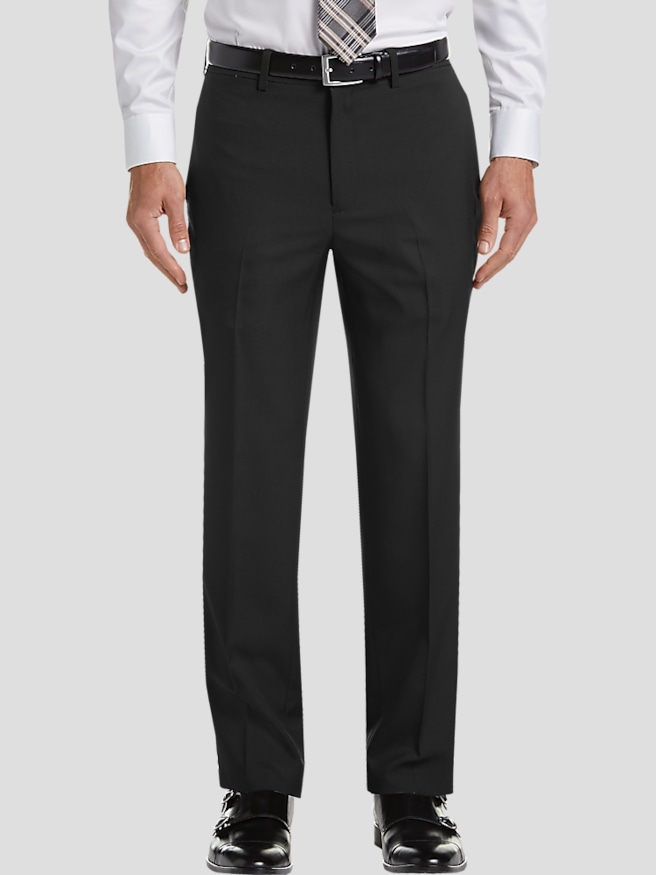
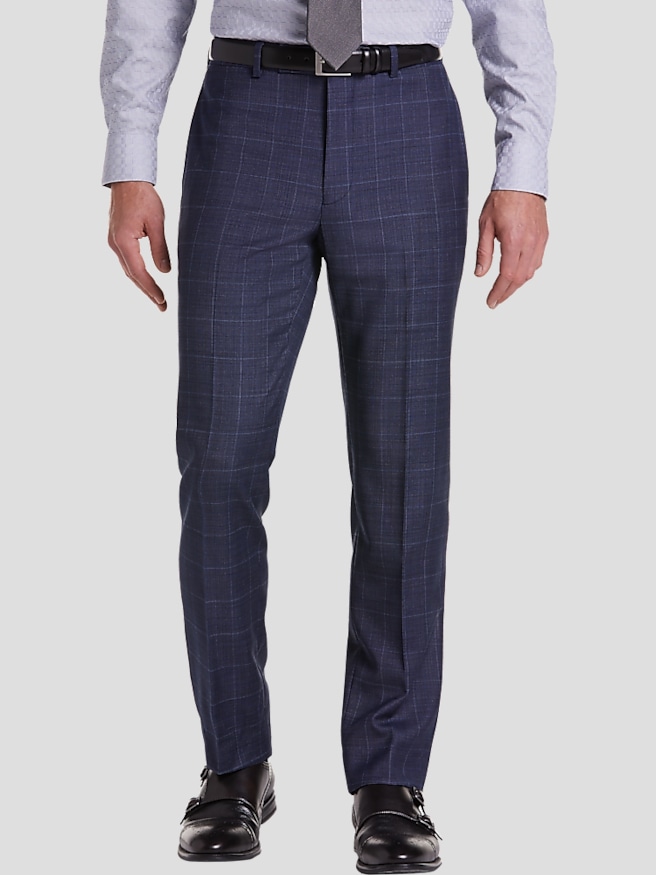
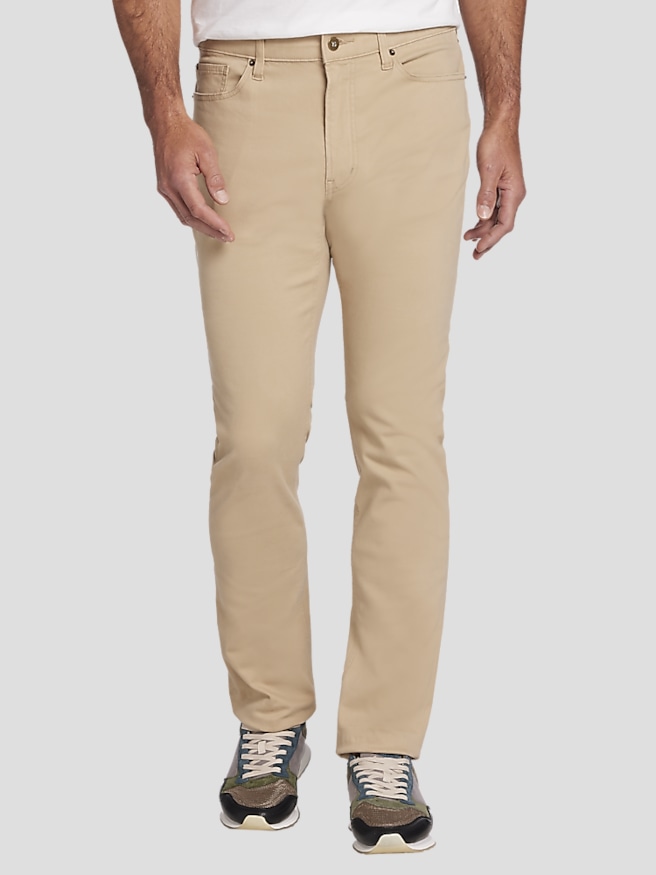
Men’s skinny fit pants have a close-fitting silhouette through the seat and thighs, with legs that taper toward narrow ankle openings. The effect is clean and streamlined, with less excess fabric than a straight or relaxed cut. Compared with slim fit pants, a skinny fit generally follows the leg more closely, although the exact proportions depend on the design. That distinction matters at the waist, seat, and calf: a comfortable pair should stay secure without digging in, allow room to sit, and fall smoothly rather than pull into tight horizontal lines. A skinny silhouette does not need to feel restrictive, and the right balance of shape and movement comes from both the cut and the fabric. Cotton twill gives casual pants a familiar, substantial feel, while finer woven fabrics can create the smooth surface associated with dress pants. Wool blends may offer a refined drape, and fabrics containing elastane or another stretch fiber can provide flexibility when walking, taking the stairs, or settling into a desk chair. Stretch helps with movement, but it is not a substitute for enough room through the hips and thighs. Someone with fuller calves or an athletic build may find that two pairs with the same waist measurement feel quite different below the knee. Rise also influences comfort and appearance. A waistband that sits naturally on the body helps a tucked shirt stay neat and keeps the front of the pants from feeling crowded when seated. Length is especially noticeable with a narrow leg opening. A hem that meets the top of the shoe with little or no break creates a crisp line, while too much length can bunch around the ankle. Together, the waist, rise, leg shape, and inseam determine whether skinny fit pants look intentionally tailored rather than simply tight. For everyday wear, the best fit preserves that close profile while leaving enough ease for ordinary movement.
Skinny fit pants work across casual and dressier settings because their narrow shape creates a defined foundation for the rest of an outfit. A pair in a smooth, understated fabric can complement a button-down shirt and a tailored jacket for an office where polished separates are appropriate. Dark, restrained colors tend to look cohesive with dress shoes, while a cotton twill texture can feel more relaxed with a knit polo or an untucked shirt. For dinner, a gallery opening, or a birthday gathering, the same tapered proportions can bring definition to a simple combination of pants, a fine-gauge sweater, and loafers. The fabric, finish, and styling determine how dressy the result feels; a close cut alone does not make pants suitable for every formal occasion. Where a suit or tuxedo is expected, the event’s dress code takes priority. Proportion is useful when building an outfit around a narrow leg. A shirt that skims the torso often looks balanced without making the entire outfit feel compressed, and a jacket should have enough room across the shoulders to move comfortably. Footwear changes the visual effect, too. A streamlined lace-up shoe keeps the line sleek, a loafer gives the ankle a lighter appearance, and a clean sneaker brings the outfit closer to casual wear. The hem should sit neatly with the intended footwear rather than catch above it or collapse into folds. Smaller details, including pocket shape, front creases, and the visibility of stitching, can shift the impression from relaxed to refined. For someone who likes a tapered silhouette but prefers a little more room through the thighs and lower leg, Modern Slim Fit Pants offer a related fit to consider. The choice is less about a particular body type than about preferred proportions, daily activities, and how closely the fabric should follow the leg.
Materials and construction influence how skinny fit pants feel after repeated wear, not just how they look when first put on. A sturdy cotton weave can provide structure, while a lighter, smoother fabric may drape more softly and feel less substantial against the leg. Blended fabrics can combine qualities such as softness, shape retention, or easier care, but the fiber label and care instructions are more useful than assumptions based on appearance. Stretch content also varies: a small amount can add give to an otherwise structured fabric, while the weave and overall construction affect how well the pants recover their shape. Secure stitching at pocket corners, belt loops, and the seat supports areas that experience frequent handling or tension. Even well-made pants benefit from a fit that does not place constant strain on seams. Pockets should lie reasonably flat, and carrying a bulky phone or wallet can interrupt the clean outline of a close-fitting pair. Care should follow the garment label, since washable cotton blends and dress fabrics may need different treatment. For machine-washable pants, turning them inside out can help reduce surface abrasion; using the recommended water temperature and drying method helps protect the fabric and finish. Excessive heat can be hard on some stretch fibers, so drying instructions deserve particular attention. Pants labeled for dry cleaning should receive that treatment rather than an improvised wash. Between wears, hanging pants neatly or folding them along their natural lines can limit unnecessary creasing. A suitable iron setting or careful steaming, where permitted, helps restore a polished appearance without flattening texture or damaging fibers. These practical details make skinny fit pants useful for commuters, office professionals, students, and anyone who prefers a close, tapered look for everyday plans. They can also be a thoughtful gift for a partner, brother, or friend whose measurements and fit preferences are known. Familiarity with the recipient’s waist, inseam, and preferred rise makes the gift more personal and helps distinguish an appealing silhouette from a pair that will feel comfortable throughout the day.