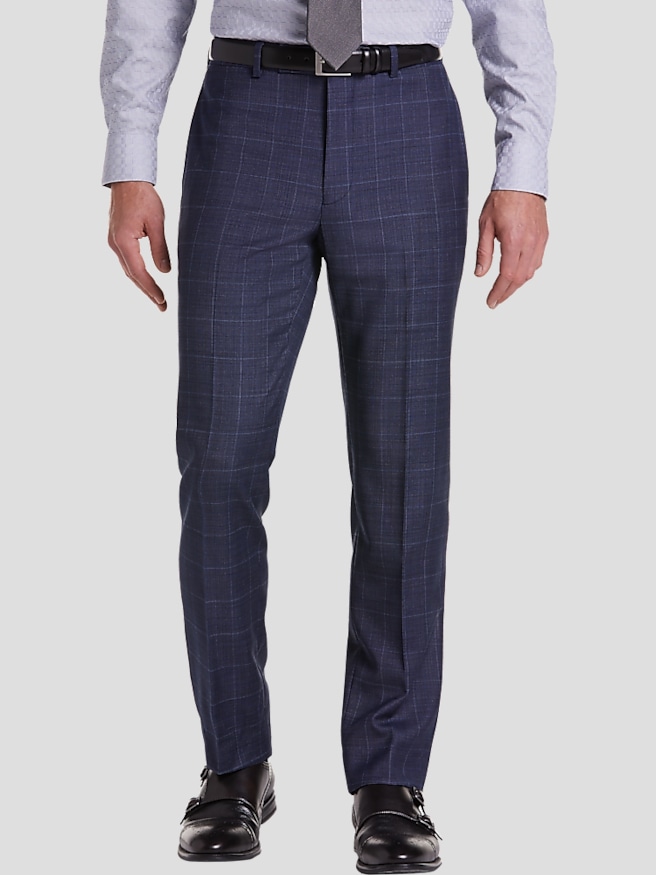
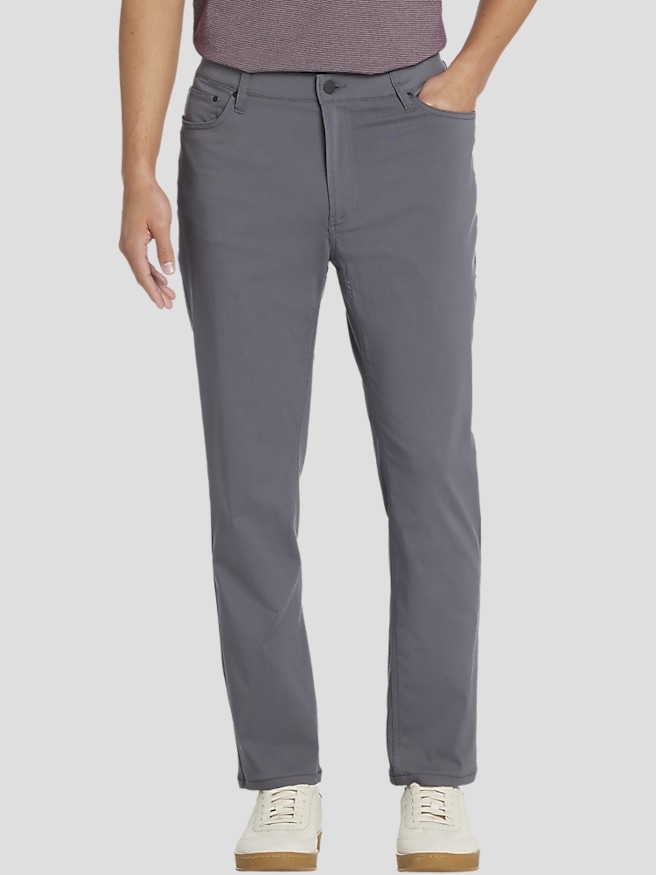
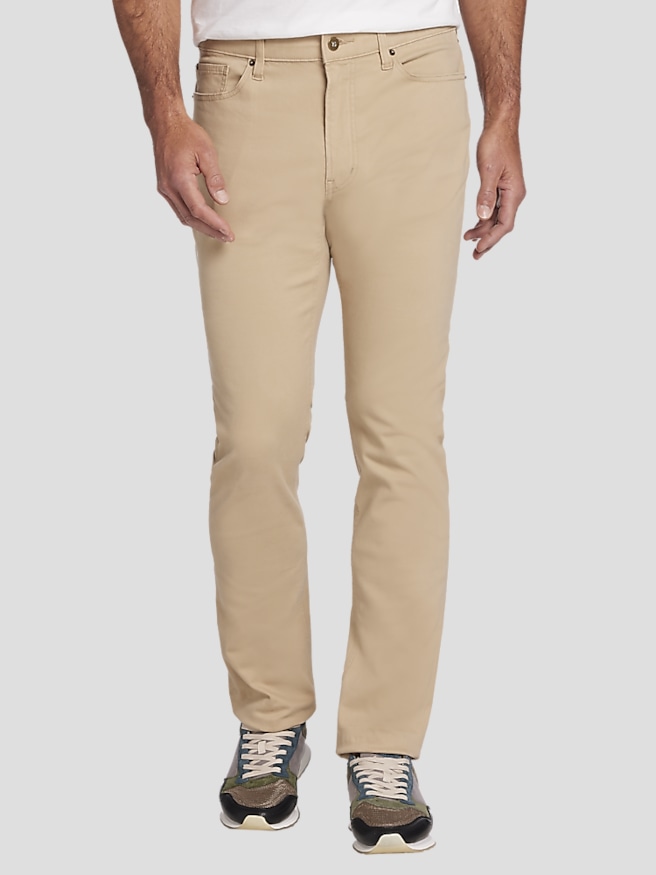
Black slim fit pants are trousers cut close through the seat and thighs, with a narrower leg opening than a regular fit. The result is a defined silhouette that follows the body without the especially close fit associated with skinny pants. In black, that shape can look understated with a polo or distinctly dressy beneath a tailored jacket. The distinction often comes down to fabric, construction, and finishing details: a pressed crease creates a sharper line, while a softly textured surface and an uncreased front feel more relaxed. For men who prefer less fabric around the lower leg, slim fit pants provide a clean outline that lets shoes and other details remain visible. A comfortable fit still leaves room to sit at a desk, climb stairs, and bend without pulling across the thighs. The waistband should rest securely at the intended rise without relying on a tightly cinched belt, and the front pockets should lie flat rather than flare open. Horizontal tension lines across the front, strained pocket openings, or fabric catching behind the knees can signal that the cut is too close. Rise matters as much as waist size because it affects where the pants sit and how comfortably they fit through the seat. A slightly higher rise can create a longer-looking leg line, while a lower rise changes the proportions of a tucked shirt and jacket. At the hem, a slight break offers a traditional dress-pant finish, while little or no break emphasizes the tapered shape. Excess fabric pooling over the shoes can obscure that shape even when the waist fits correctly. Because slim fit describes a silhouette rather than a universal measurement, waist, inseam, thigh room, and leg opening all contribute to the final appearance. Trying pants with the shoes typically worn with them gives a more useful sense of length than judging the hem barefoot, particularly when moving between low-profile loafers and more substantial lace-up shoes.
Fabric gives black slim fit pants much of their character. Wool dress trousers tend to drape smoothly, making them a natural companion to dress shirts and tailored jackets. Fine worsted wool can hold a crisp crease without looking bulky, though the weight and weave influence how structured the trousers feel. Cotton twill has a more familiar, casual texture, with diagonal ribs that lend subtle depth to an otherwise solid black surface. Cotton blends can bridge the space between chinos and dress trousers, depending on their finish and construction. Polyester and other synthetic fibers may contribute wrinkle resistance and shape retention, while a small amount of elastane can add flexibility for sitting, walking, and reaching. Stretch does not replace adequate room through the seat and thighs; pants that fit well should not need constant tension to accommodate movement. A tightly woven fabric often creates a smoother outline, while a more pronounced texture can make an outfit feel less formal. Matte black fabric tends to blend quietly with other pieces, whereas a slight sheen draws more attention to the trousers and can change how they look under indoor lighting. Construction details matter for repeated wear, too. Secure stitching, neatly finished seams, reinforced stress points, and smooth-operating closures support everyday use. Pocket bags should sit comfortably without bunching beneath the outer fabric, particularly in a close-fitting cut. Care requirements depend on the full fiber blend and any lining or special finish, so the garment label remains the most reliable reference. For washable pants, turning them inside out and washing with similar dark colors can help limit surface abrasion and visible fading. Excessive dryer heat can affect stretch fibers and alter fit, making the recommended drying method especially important. Trousers labeled for dry cleaning need that care rather than an improvised wash cycle. Between cleanings, airing pants and hanging them neatly can help preserve their shape. A steamer or carefully controlled pressing may smooth wrinkles when permitted by the label, while a pressing cloth helps protect dark fabric from unwanted shine.
The usefulness of black slim fit pants comes from how readily their restrained color works across everyday and dressier settings. For an office with a business-casual dress code, a pale blue button-down, a simple leather belt, and black loafers create a composed outfit without requiring a matching suit. A fine-gauge knit or textured polo makes the same silhouette feel less formal for dinner or an afternoon gathering. With a white dress shirt and a suitably tailored jacket, black dress trousers can also work for presentations, interviews, and celebrations where separates suit the dress code. Fabric is important in those combinations: casual cotton pants do not create the same effect as smoothly finished wool trousers, even when both share a similar cut. Black trousers also should not be treated as a substitute for matching suit pants or formal evening trousers when an occasion calls for those garments. Two black fabrics can differ noticeably in depth, texture, and sheen, so a deliberately contrasting jacket often looks more cohesive than a near match. Charcoal, medium gray, and textured blue jackets provide separation, while an all-black outfit gains definition from contrasting surfaces, such as a soft knit above smooth trousers. Shoe proportions can reinforce the narrow leg line without making the outfit feel overly delicate. Sleek lace-ups, loafers, and understated sneakers each suggest a distinct level of formality; the setting and the fabric determine which pairing feels appropriate. For another neutral with a softer visual contrast against black shoes or a dark jacket, gray slim fit pants offer a related direction. Black remains particularly useful for someone building a coordinated wardrobe around solid shirts, uncomplicated knitwear, and a few dependable shoes. As a gift, pants are most practical when the recipient’s waist, inseam, and preferred rise are known, along with whether a close-fitting thigh feels comfortable. Those details help turn a familiar wardrobe essential into something that gets worn regularly rather than reserved for a single occasion.