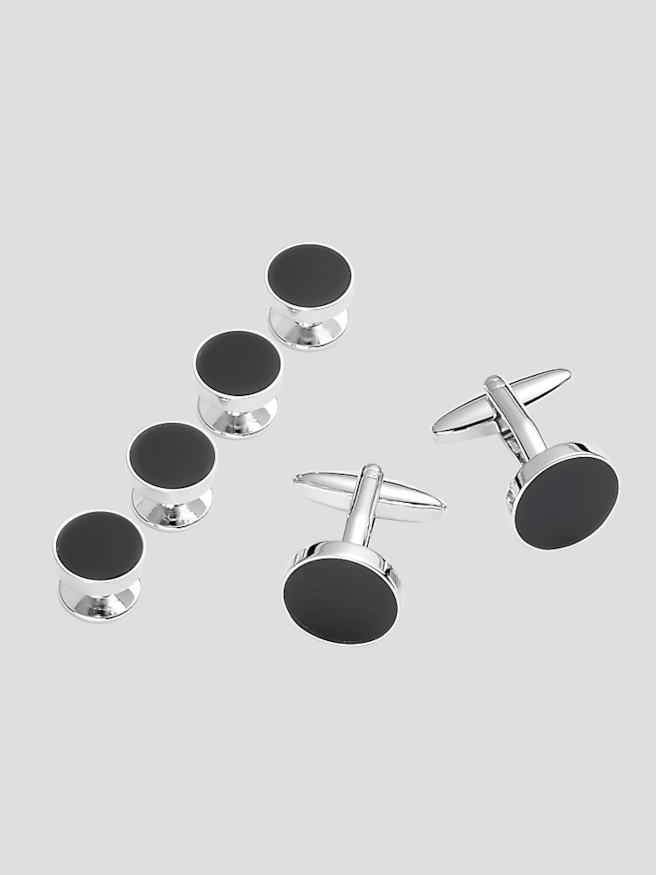
Silver men's jewelry includes chains, bracelets, rings, and cufflinks, with designs ranging from slim, understated accents to substantial shapes with a more noticeable presence. The appeal is partly in the color: silver's cool, neutral appearance works with navy tailoring, charcoal trousers, black denim, and a simple white shirt without demanding a complete change of wardrobe. Materials matter, though, because a silver appearance does not always mean solid silver construction. Sterling silver contains 92.5% silver, with the remaining portion made up of other metals that add strength. A 925 or sterling marking can help identify this composition, alongside the material description. Sterling silver is stronger than pure silver, but it can still scratch, bend under pressure, and develop tarnish with exposure to air and certain substances. Silver-plated jewelry has a layer of silver over a base metal, while silver-tone jewelry describes a color or finish and does not necessarily contain silver. These distinctions affect weight, maintenance, and how a piece changes with wear. Plating may gradually wear through at points of frequent contact, whereas solid sterling silver has the same silver alloy beneath its surface. Finish also shapes the overall impression. Highly polished surfaces catch the light and feel dressier; brushed textures create a quieter effect; deliberately darkened recesses bring out engraved details and sculptural forms. For everyday use, smooth edges, secure closures, and connections that move freely are as important as appearance. A heavier piece is not automatically better made, and a lightweight design can be comfortable for long stretches at a desk or at an event. The most useful comparison is between construction and intended use: a delicate chain worn beneath a shirt faces different demands than a ring that repeatedly touches door handles, keyboards, and work surfaces. Jewelry that feels balanced on the body and suits an established routine is more likely to become part of everyday dressing.
Proportion gives men's silver jewelry its place in an outfit. A narrow chain adds a small flash of metal at an open collar, while a wider link creates a stronger visual line against a plain knit shirt. Chain length determines whether the jewelry sits near the collarbone, rests lower on the chest, or stays mostly beneath clothing; neck size, pendant weight, and the shape of the neckline all influence that placement. When a pendant is involved, the chain and its clasp need to suit the pendant's weight, and the connection should allow it to move without catching. Bracelets bring similar considerations to the wrist. A close fit can feel neat under a shirt cuff, but there should still be enough room for comfortable movement without pinching. Too much extra length can send a bracelet sliding onto the hand or tapping against a desk. Cuffs need particular attention to opening size and wrist shape, since repeatedly forcing a rigid design wider or narrower can stress the metal. Rings should feel secure without pressing uncomfortably into the finger, and broader bands often feel snugger than narrow ones of the same stated size. A raised setting or pronounced edge may also catch on pockets or gloves, making a lower-profile shape more practical for frequent wear. For tailored occasions, silver cufflinks add a focused detail to French cuffs or convertible cuffs designed to accept links. Their scale should sit comfortably within the cuff rather than overwhelm it, and a secure fastening helps keep the shirt looking composed through a ceremony, dinner, or business event. Matching every metal exactly is unnecessary, but repeating a similar finish across a bracelet, watch, and cufflinks can make the combination feel deliberate. A polished accent beside a brushed watch case can work just as well when the shapes remain restrained. One substantial piece can provide enough definition on its own, while several finer pieces create texture without competing with the clothing.
Care and storage help preserve both the appearance and function of silver jewelry. Tarnish is a surface reaction rather than proof that sterling silver is poor quality, and its pace varies with exposure, storage conditions, and contact with skin products. A soft, dry cloth can remove everyday fingerprints and residue after wear. For sterling silver, a polishing cloth intended for that metal may help address tarnish when the care instructions permit it, but abrasive cleaners and vigorous polishing can damage plating, delicate textures, protective coatings, or intentionally darkened details. Jewelry with stones, adhesives, or mixed materials may need a different approach from an unadorned silver band, so cleaning methods should follow the stated requirements for the whole piece, not just its metal. Separate, dry storage in a soft pouch or lined compartment reduces rubbing and tangling; anti-tarnish storage can also help limit exposure. Removing jewelry before swimming, strength training, household cleaning, or hands-on work reduces contact with chemicals and unnecessary force. Chains benefit from being fastened before storage, and clasps and connecting rings deserve an occasional check for gaps or looseness. For anyone with metal sensitivities, the full alloy and base-metal information matters more than the silver color alone, since sterling silver, plated jewelry, and silver-tone finishes can have different compositions. As a gift, men's silver jewelry works especially well when it reflects the recipient's habits rather than an imagined change in style. A person who keeps accessories minimal may appreciate a clean shape with little ornament, while someone who already wears substantial jewelry may prefer greater width or texture. Graduation, an anniversary, a milestone birthday, or a wedding can give a lasting piece personal significance without requiring elaborate symbolism. Known ring measurements, preferred chain lengths, and an existing preference for polished or matte metal make the choice more personal. The strongest connection comes from jewelry that feels natural to wear, complements familiar clothing, and carries meaning beyond a single occasion.