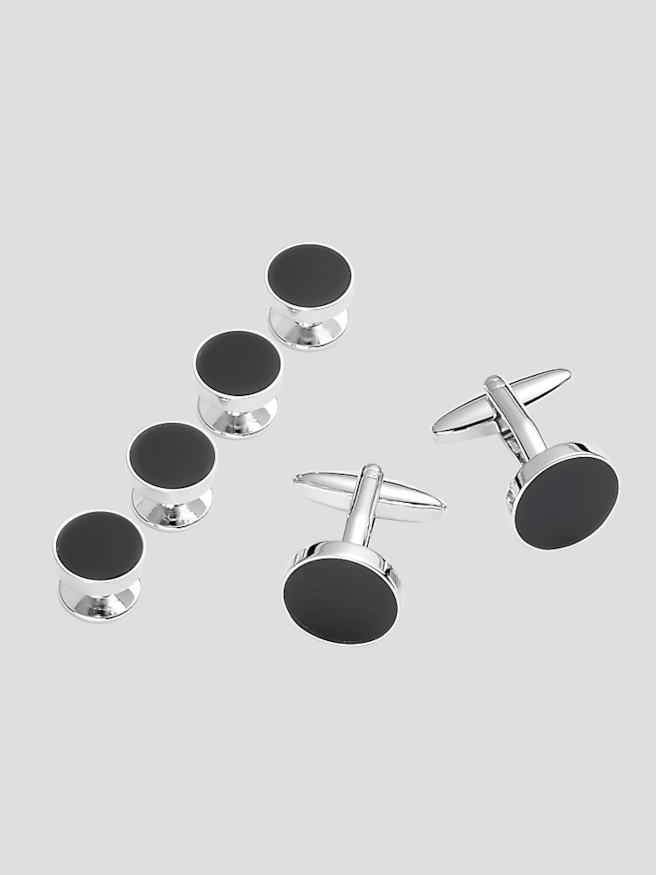
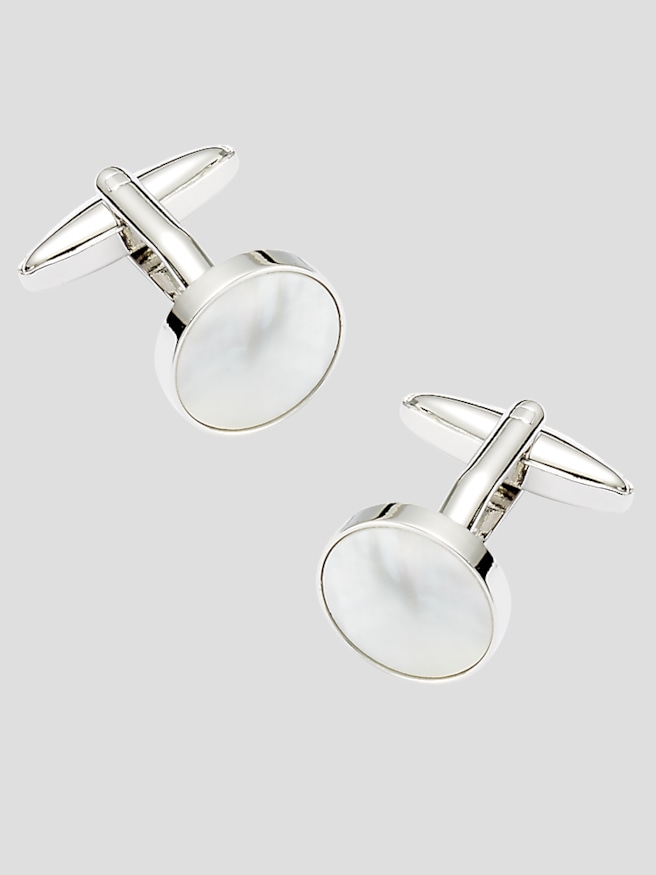
Men’s silver cufflinks fasten dress shirt cuffs while adding a cool metallic accent to tailoring. Their appeal lies in scale: a small flash of silver at the wrist can sharpen a white shirt and dark suit without drawing attention away from the overall outfit. The category includes both sterling silver cufflinks and silver-tone designs, so the color alone does not identify the metal. Sterling silver contains 92.5 percent silver alloyed with other metals for added strength, and it is often marked 925. Silver-tone cufflinks describe a finish or appearance rather than a precious-metal content; they may be made from stainless steel, brass, or another base metal, sometimes with plating. Silver plating and rhodium plating can both create a bright surface, but neither makes the underlying piece solid sterling silver. Material descriptions are therefore more useful than color when comparing construction and care needs. Finish also changes the effect at the wrist. Highly polished faces catch the light and have a crisp, reflective quality, while brushed or satin surfaces look quieter and tend to make light fingerprints less noticeable. Engine-turned patterns, fine grooves, and woven textures add depth without requiring a colored accent. Smooth ovals and round faces soften the lines of a structured outfit; squares and rectangles echo a straight cuff edge or a geometric watch face. Knot designs offer a compact, sculptural alternative. Black onyx, enamel, or mother-of-pearl accents introduce contrast or a subtle sheen, with each material bringing its own care considerations. For a white dress shirt worn beneath a charcoal jacket, an understated silver surface creates definition without adding another color to coordinate. With navy tailoring, that same cool finish provides a clean counterpoint to the fabric. These small distinctions make silver cufflinks useful for a range of personal styles, from restrained business dressing to more expressive formalwear, while keeping their practical purpose at the center.
The fit of silver cufflinks depends first on the shirt cuff, not on a standard clothing size. French cuffs fold back and have aligned holes designed for cufflinks, while convertible cuffs can accommodate cufflinks when their construction includes the necessary openings. A conventional button-only barrel cuff is not designed to accept them. With French cuffs, the two sides usually meet with their inner surfaces together, allowing the decorative face to sit on the outside of the wrist. The length of the post or connector must accommodate the layers of fabric, and the face should be proportionate to the cuff rather than overpowering it. A broad, heavy design can pull on lightweight shirting; a very small face may look lost against a substantial double cuff. Comfortable fastening leaves the fabric secure without bunching it tightly. Closure construction affects everyday handling, too. A bullet-back closure uses a pivoting cylindrical toggle that turns into line with the post for insertion, then rotates crosswise to hold the cuff. A whale-back closure works similarly but uses a flatter, broader backing. Fixed-back cufflinks have no hinged toggle and rely on a stationary backing passing through the openings; their simplicity reduces moving components, although fastening them can take more dexterity. Chain-link designs connect two ends with a short chain and allow a looser, more flexible relationship between the cuff edges. Smooth edges, secure connections, and a toggle that holds its position matter more in regular use than decorative complexity. At a desk, a low-profile face is less likely to press against a work surface or catch on a jacket lining. For a ceremony or evening reception, a slightly more substantial face can remain visible when the shirt cuff extends beyond the jacket sleeve. The most comfortable proportions allow the wrist to move naturally, including when shaking hands, holding a glass, or reaching across a table, without the cufflink twisting sharply into the fabric.
Silver cufflinks suit weddings, formal dinners, milestone celebrations, and professional settings where French-cuff shirts feel appropriate. A plain polished or softly textured pair supports a conservative suit, while a dark inset creates a more defined accent against pale shirting. For black-tie dressing, understated silver finishes can coordinate with shirt studs and other visible metal details without competing with the tuxedo. Exact matching is not essential, but a shared finish among cufflinks, a watch case, and a tie bar creates a deliberate impression. A brushed watch beside subtly textured cufflinks often looks more relaxed than a combination of highly reflective accessories. Those drawn to stronger contrast can consider Silver And Black Cufflinks, whose two-color appearance works naturally with a black bow tie or dark tailoring. As gifts, cufflinks can mark a graduation, career milestone, anniversary, or wedding, particularly for someone who already wears compatible dress shirts. Familiarity with the recipient’s wardrobe helps distinguish a useful everyday shape from a more ceremonial design. Engraving may add personal meaning when the material, face size, and construction permit it, though textured or plated surfaces are not automatically suitable. Long-term appearance depends on both the underlying metal and the way the cufflinks are handled. Sterling silver can tarnish with exposure to air and sulfur-containing substances; gentle cleaning with a method appropriate to the complete piece can help restore its luster. Plated finishes need particular care because abrasive polishing can wear through the surface layer. Inlays, enamel, and adhesives may require gentler treatment than plain metal, making material-specific care directions important. A soft cloth after wear helps remove fingerprints and residue, while separate storage in a lined compartment or pouch limits contact scratches. Keeping cufflinks dry and away from fragrance, cleaning chemicals, and prolonged moisture helps protect their finish. Secure hinges and connections also deserve an occasional check, especially on frequently worn pairs. With suitable care and comfortable construction, silver cufflinks can become a familiar finishing touch rather than an accessory reserved for a single occasion.