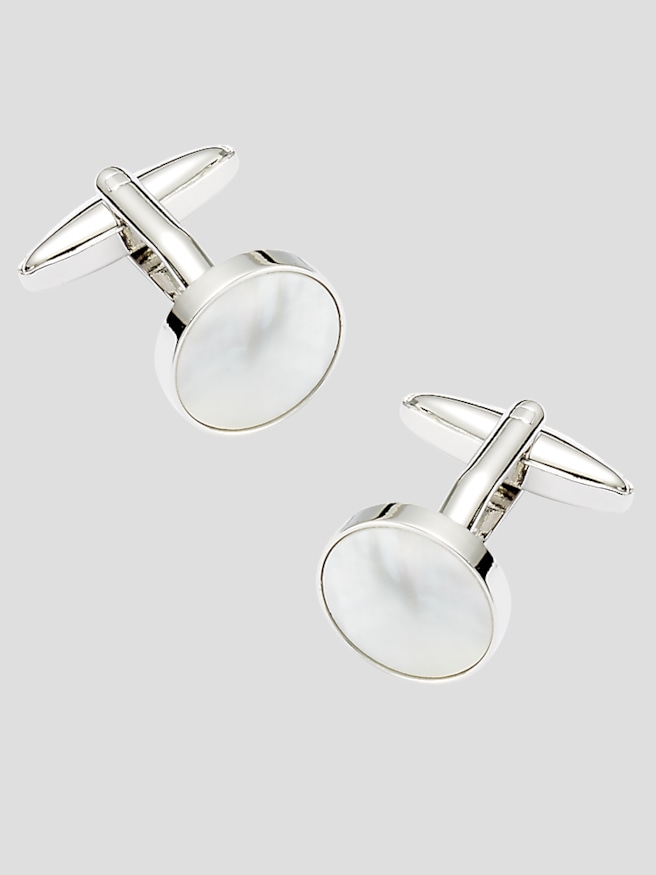
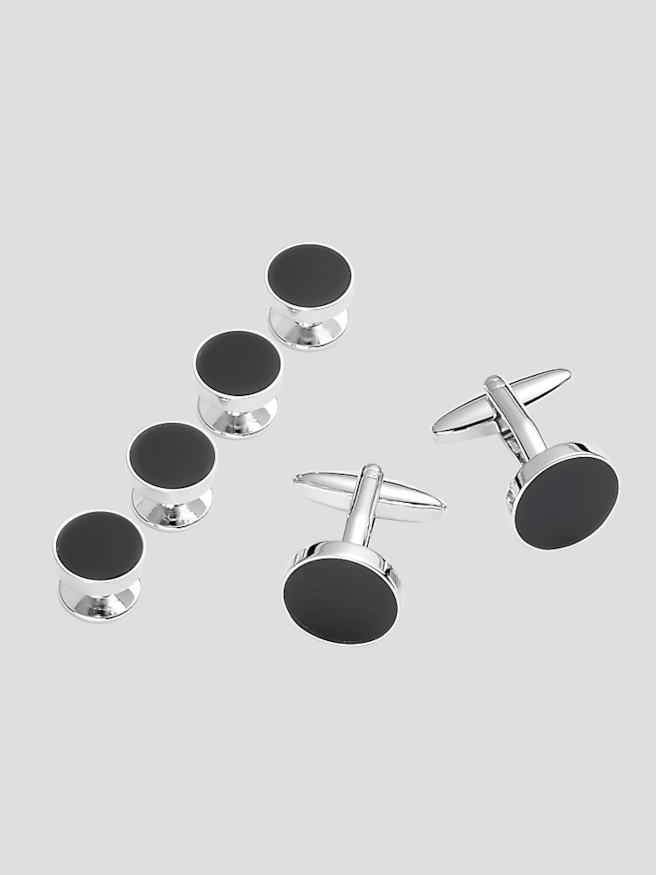
Silver and black cufflinks bring a crisp contrast to formal clothing, combining the light-catching character of a metallic finish with the depth of a dark face or accent. The effect can be subtle enough for a business presentation or distinctive enough for a black-tie reception, depending on the shape, surface, and scale. A narrow silver-tone border around a smooth black center creates a clean outline at the wrist, while engraved edges, textured metal, or geometric details give the same color combination more dimension. Round faces tend to have a softer, traditional appearance; square and rectangular shapes echo the straight lines of a shirt placket and tailored jacket. Neither needs much decoration to make an impression. Against a white French-cuff shirt, the contrast is especially clear, with a small flash of silver visible as a hand reaches across a table or adjusts a jacket sleeve. Pale blue shirts offer a quieter backdrop, and restrained stripes can work when the cufflink design stays relatively simple. Black accents connect naturally with a black tie, tuxedo lapels, or polished black shoes, but the pairing also sits comfortably alongside charcoal and navy tailoring. Matching every accessory exactly is unnecessary; repeating a similar metal tone in a watch case or tie bar usually provides enough continuity. The most convincing combinations give each detail room to breathe rather than making every accessory equally prominent. For a wedding ceremony, an understated pair can add definition without competing with a boutonniere or patterned neckwear. At an awards dinner or an important client event, a slightly larger face may feel appropriate with otherwise restrained clothing. Cufflinks also offer a way to personalize a familiar suit without changing its overall character. Their appeal comes from that balance: a practical shirt fastening that becomes a small, considered part of the outfit, visible in ordinary gestures rather than demanding attention from across the room. Silver and black keep that detail grounded in a palette that works across many formal and professional settings.
Materials and construction influence how silver and black cufflinks look, feel, and hold up to repeated wear. The word silver may describe a color or finish rather than the metal itself, so material descriptions matter when comparing construction. Sterling silver, stainless steel, and silver-tone plated base metals have distinct characteristics, and none should be assumed from appearance alone. Sterling silver can develop tarnish and may need occasional polishing appropriate to its finish. Stainless steel generally offers good resistance to corrosion, while plated surfaces benefit from gentle handling that helps preserve their outer layer. Black details may come from enamel, stone, or another decorative treatment, each with its own surface character. Polished onyx, for example, can provide a deep, glossy appearance, while enamel can create an even field of color framed by metal. Care requirements depend on the complete construction, not just the most visible material. Smooth edges, securely seated accents, and a fastening mechanism that moves cleanly are useful signs to consider, particularly for cufflinks intended for regular wear. Fit is less about a numbered size than the relationship between the cufflink, shirt cuff, and fastening. French cuffs are designed to fold back and align their holes for cufflinks; some convertible cuffs also accommodate them. Standard button-only cuffs generally do not. A cufflink needs enough room through the aligned fabric to close securely without compressing the cuff excessively. An oversized face can overwhelm a narrow cuff, while a very small face may look lost against a broad fold. The reverse side matters as well: a swiveling bar can make fastening straightforward, while fixed backs and chain connections have a different feel during dressing and wear. Comfort becomes noticeable over a full evening, especially when hands rest on a desk or dining table. A well-proportioned design should hold the cuff neatly without poking the wrist, catching the lining of a jacket, or feeling unnecessarily heavy. These practical details help a polished accessory remain comfortable beyond the first few minutes in front of a mirror.
The intended occasion can help shape the choice between a discreet everyday design and something with more visual presence. For someone who wears French-cuff shirts to work, a low-profile face with restrained detailing is easy to repeat with different suits and ties. For a groom or wedding attendant, silver and black can establish a shared visual thread without requiring every accessory to match in shape. The combination also makes a thoughtful gift for a graduation, milestone birthday, anniversary, or professional achievement, especially when the recipient already enjoys tailored clothing. A gift becomes more useful when it suits the recipient’s habits: simple geometry for someone who favors clean lines, a textured border for someone who appreciates small decorative touches, or a compact shape for someone who prefers accessories to stay unobtrusive. Shirt compatibility is worth considering before choosing cufflinks as a gift, since the right cuffs are essential to wearing them. For a broader look at metallic finishes and designs with less dark contrast, silver cufflinks offer a related direction within the same accessory category. Once cufflinks become part of a wardrobe, considerate care helps retain their appearance. A soft, dry cloth can remove fingerprints after wear, and separate compartments or a lined pouch can reduce contact with other metal accessories. Moisture, fragrance, and grooming products may affect certain finishes or decorative elements, so avoiding direct exposure is a sensible precaution. Abrasive cleaners and vigorous polishing can damage plating or surface treatments; any specialized cleaning should follow the material-specific care instructions. A quick check of moving parts and decorative settings before dressing can also prevent an unsecured fastening from becoming a distraction during an event. Stored as a pair and handled gently, cufflinks are easier to keep ready for the next occasion. Their lasting usefulness lies in their modest scale and clear purpose: securing a dress shirt cuff while adding a deliberate finishing touch. In silver and black, that finishing touch has enough contrast to register and enough restraint to belong.