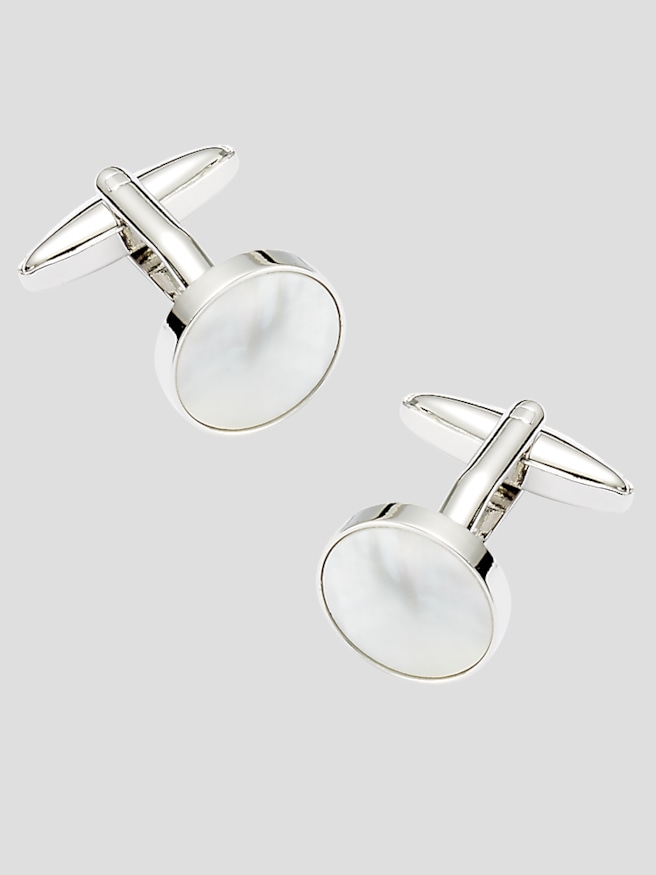
Silver cufflinks secure a shirt’s cuffs while adding a small, deliberate accent to tailored clothing. Their cool metallic finish works with a broad range of suit colors, from navy and charcoal to light gray and black, making them a versatile finishing touch for business attire, wedding outfits, and formal eveningwear. The term “silver cufflinks” can describe either the metal itself or the appearance of the finish, so material descriptions matter: sterling silver contains 92.5 percent silver, while silver-plated cufflinks have a layer of silver over another metal, and silver-tone cufflinks describe a color rather than a guaranteed silver content. Stainless steel and other base metals can also provide a silvery appearance, with weight, maintenance needs, and surface characteristics varying by construction. That distinction is especially useful when choosing a pair for regular wear rather than occasional events. Appearance involves more than color, too. A polished face reflects light sharply and looks crisp beside a white cuff, while brushed or satin finishes offer a softer gleam. Engraved lines, subtle borders, and sculpted surfaces add depth without requiring a bold motif. Round and oval shapes tend to feel understated; square and rectangular faces introduce clean geometry that echoes the lines of a jacket and shirt collar. For a navy suit worn to a client presentation, a modest silver face can look finished without drawing attention away from the conversation. With a tuxedo, a restrained shape can complement shirt studs and other formal accessories. Designs that combine a bright metal edge with a dark center create stronger definition against white fabric, and silver and black cufflinks offer that contrast while remaining easy to coordinate with black shoes or a dark tie. The most useful choice is not necessarily the most ornate: a balanced shape and a finish that suits the rest of the outfit often make a stronger impression than extra decoration.
Fit begins with the shirt rather than the cufflink face. Cufflinks are intended for cuffs with aligned holes on both sides, most commonly French cuffs, which fold back before fastening. Some convertible cuffs also accommodate them, but a standard button cuff without the necessary openings will not. On a traditional French cuff, the two sides usually meet with their inner surfaces together, allowing the decorative face to sit on the outside of the wrist. A cufflink should hold those layers securely without squeezing the wrist or pulling the fabric into tight folds. Thicker shirting and substantial folded cuffs need enough room along the post or connector; a fastening that feels cramped can be awkward to close and uncomfortable through a long event. Face size matters as well. A broad design may overwhelm a narrow cuff or catch beneath a closely fitted jacket sleeve, while a smaller, low-profile shape generally moves more easily under tailoring. A little shirt cuff visible beyond the jacket sleeve gives the metal room to show without making it the focus of the outfit. Closure styles affect everyday handling: bullet-back and whale-back mechanisms use a rotating bar to help the post pass through the cuff holes, while fixed-back designs rely on a stationary backing that must fit through those openings. Chain-link construction connects the two ends with a short chain and can allow more movement, depending on its length. For someone dressing alone before a ceremony or an important meeting, a mechanism that is easy to grip and close can matter as much as the design. Smooth edges, a secure connection between face and post, and a closure that moves cleanly are useful signs to examine when assessing construction. Coordination does not require every accessory to match exactly, but repeating a similar metal tone in a watch case, tie bar, or belt buckle creates continuity. If the shirt has a pronounced stripe or check, a plain cufflink provides a quiet counterpoint; a solid shirt leaves more visual space for texture or a distinctive shape.
Care and durability depend on the underlying material, any plating, and decorative details such as enamel or inset stones. Sterling silver naturally develops tarnish through exposure to sulfur-containing substances in its surroundings; that surface change is not the same as rust and can often be removed with appropriate care. A soft cloth used after wear helps lift fingerprints and residue before storage. For plain sterling silver, a cloth specifically intended for silver may help with light tarnish, but polishing products should be suitable for the exact finish. Abrasive compounds and vigorous rubbing can damage plating, soften decorative detail, or alter intentionally darkened areas. Silver-plated pieces need a particularly gentle approach because repeated abrasion can wear through the outer layer. Warm water and a small amount of mild soap may suit some plain metal designs when the maker’s care directions permit it, followed by careful drying; soaking is not a universal choice for cufflinks with glued components, porous insets, or delicate finishes. Harsh chemicals and jewelry dips should not be used without confirming compatibility. Applying fragrance and grooming products before fastening cufflinks helps limit direct contact with residue. Between occasions, keeping each piece in a separate soft compartment reduces scratches and prevents the posts or backs from rubbing against the decorative faces. Dry storage is especially useful for silver, and an appropriate anti-tarnish pouch can help slow discoloration. Regular wear also makes the strength of the fastening important: check that moving backs remain secure, and avoid forcing a stiff mechanism through heavy fabric. As gifts, silver cufflinks can mark a graduation, a career milestone, a wedding, or an anniversary with something that has a clear purpose beyond display. A recipient who frequently wears French-cuff shirts may appreciate a versatile everyday shape, while someone building a formal wardrobe may get more use from a simple design suited to ceremonies and evening events. Where the construction allows engraving, initials or a meaningful date can add a personal detail. Considering the recipient’s shirts, usual accessories, and comfort with decorative touches helps make the choice feel thoughtful and easy to wear.