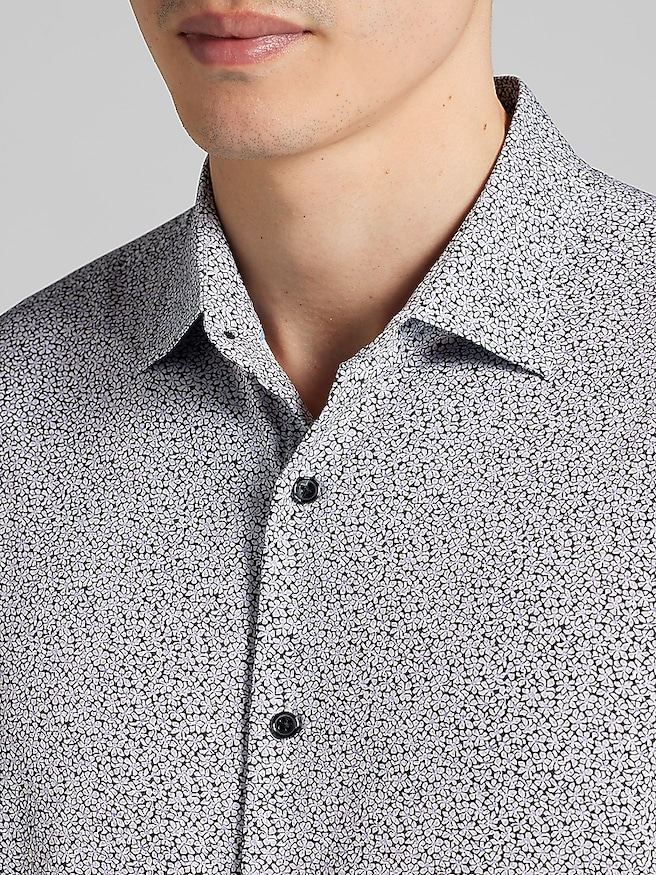
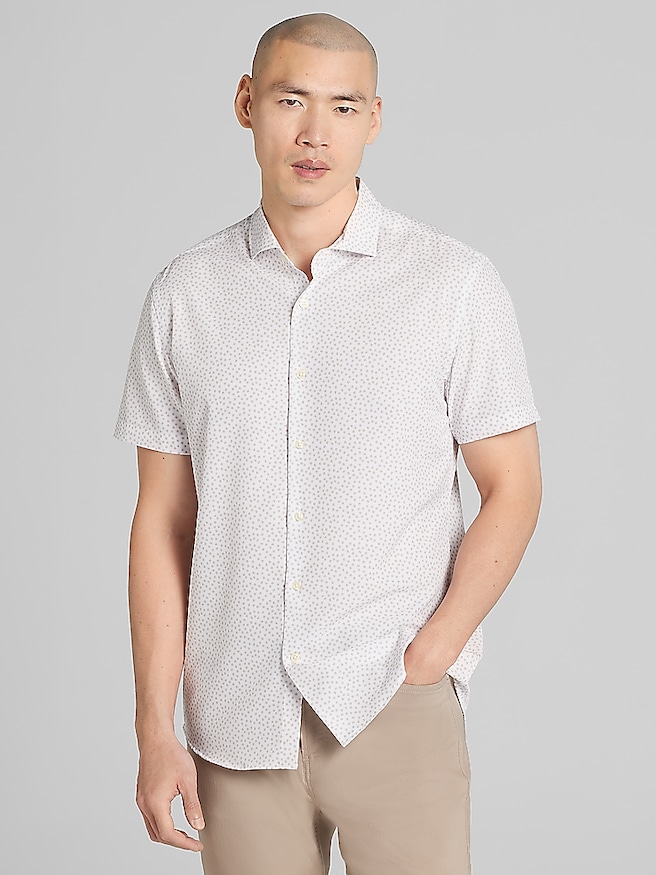
Short sleeve tops are shirts with sleeves that end above the elbow, including T-shirts, polos, Henleys, and button-front styles. In a men’s wardrobe, they cover a broad range of everyday needs, from a simple tee worn with jeans to a collared shirt paired with chinos for a casual workplace. The neckline and construction do much of the work in setting the tone. A crew neck creates a clean, familiar outline, while a Henley adds a short button placket without the structure of a collar. A polo sits between a T-shirt and a traditional woven shirt, making it useful for a lunch meeting, a family gathering, or an office where the dress code allows casual separates. Short sleeve button-front shirts offer another option when a defined collar and a more structured shape suit the occasion. Within the category of Men's Short Sleeves, these differences matter more than sleeve length alone. Fit also changes how a top looks and feels throughout the day. Shoulder seams generally sit near the edge of the shoulder in a conventional fit, and the body should allow comfortable movement without pulling across the chest or bunching at the waist. A closer cut can sit neatly beneath a casual jacket, while a relaxed cut gives the torso more room when worn on its own. Sleeves that follow the upper arm without gripping it create a balanced silhouette; wider sleeves produce a looser appearance. Length deserves the same attention. An untucked shirt typically works well when its hem falls around the middle of the fly, though proportions vary with height, torso length, and the shirt’s design. A hem intended for tucking needs enough length to stay in place when sitting or reaching. These details become noticeable in ordinary moments: leaning across a desk, carrying a bag over one shoulder, or sitting down to dinner. The right proportions let the shirt remain comfortable and look intentional without constant adjustment.
Fabric gives short sleeve tops much of their character. Cotton jersey has the flexible, familiar feel associated with everyday T-shirts, with a knitted surface that moves easily and usually looks more relaxed than a woven fabric. Cotton piqué, often used for polos, has a small textured pattern that adds visual depth and can give the shirt a more substantial appearance. Interlock knits tend to feel smooth and look even on both sides, while woven cotton creates a clearer shirt shape with less natural stretch. Linen has a distinctive texture and an easy drape, with creasing that is part of its appearance rather than a sign that something is wrong. Blends can combine these qualities in different ways. Cotton mixed with polyester may be less prone to wrinkling than some all-cotton fabrics, while a small amount of elastane can add stretch for reaching, driving, or moving between tasks. Performance fabrics may incorporate moisture-management properties, but the fiber content and construction determine how a particular fabric behaves. Thickness alone does not establish quality or durability. A substantial knit can hold a defined shape, while a lighter fabric may layer more smoothly; both benefit from even stitching, secure hems, and a neckline that maintains its shape with appropriate care. Texture also influences styling. A smooth, solid-color tee keeps attention on the rest of an outfit, while a textured polo adds interest without needing a bold pattern. Stripes, checks, and small repeated prints can give a simple combination of shirt and trousers more personality. Navy, gray, white, and black are straightforward partners for many pants, while richer colors can serve as the main accent in an otherwise understated outfit. Beneath an overshirt or casual jacket, a short sleeve top should lie smoothly rather than gather around the armholes. Worn alone, its collar, sleeve shape, and hem become the defining details, especially with clean-lined trousers and simple shoes.
Care helps preserve the fit, color, and finish that make a short sleeve top useful over time. The care label is the best starting point because similar-looking shirts can have different washing and drying requirements. Some cotton knits tolerate routine machine washing, while certain blends, delicate constructions, or decorative details need a gentler approach. Washing with similar colors and turning printed or deeply colored tops inside out can help limit surface abrasion. Excessive dryer heat can contribute to shrinkage or affect stretch fibers, so the recommended drying method matters as much as the wash cycle. Promptly removing a shirt from the dryer can reduce set-in wrinkles, and reshaping collars or hems before air-drying may help maintain a tidy outline. Folded storage often works well for tees and other flexible knits, particularly when hanging could stretch the shoulders. Woven button-front shirts may benefit from hangers that support the shoulder line, with ironing or steaming used only as the care instructions allow. Paying attention to a loose button or a small opening in a seam can keep a minor issue from becoming a bigger repair. These practical details matter for tops worn repeatedly for commuting, casual workdays, errands, and time with friends. A shirt that feels right at breakfast should still feel comfortable after several hours of sitting, walking, and moving around. Short sleeve tops can also make thoughtful gifts for someone whose daily routine favors easy, versatile clothing. A familiar neckline, a preferred color, and a fit similar to a shirt the recipient already enjoys are more useful clues than a size label alone. Someone who regularly wears collared shirts may appreciate the familiar structure of a polo, while someone who favors uncomplicated outfits may get more use from a straightforward crew neck. For travel, a top that coordinates with several pairs of pants can simplify packing without requiring every outfit to look the same. Whether the goal is an understated everyday shirt or a more polished casual look, material, proportion, and care requirements help define a short sleeve top’s place in a wardrobe.