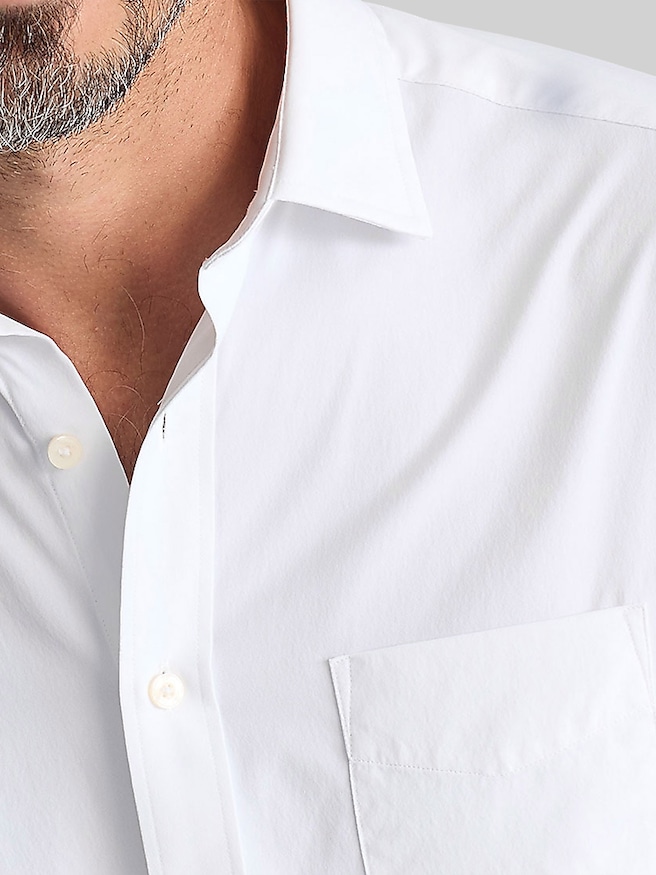
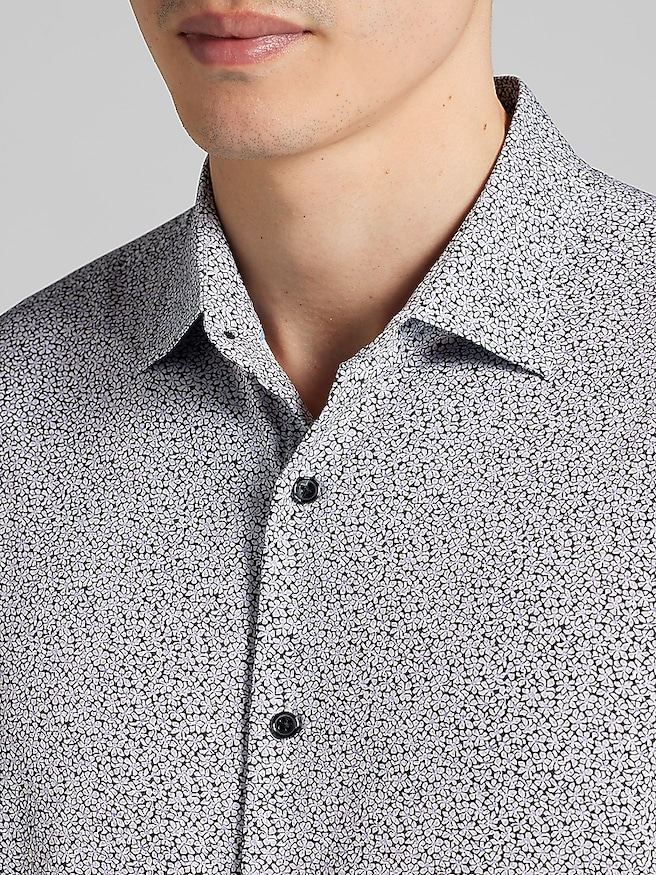
Men's long-sleeve tops include T-shirts, henleys, polos, button-front shirts, and knit pullovers, with options suited to casual routines, office settings, travel, and evenings out. Their defining feature is full-length arm coverage, but the fabric, neckline, and construction determine how each style looks and feels. A smooth cotton jersey tee has an easy, familiar feel and a clean surface that works beneath an overshirt or on its own. A henley's short button placket adds detail without the structure of a collar, while a long-sleeve polo bridges the space between a T-shirt and a dress shirt. Woven button-front styles offer a more defined shape, with details such as collar construction, pocket placement, and cuff design helping establish their level of formality. Fabric makes an equally noticeable difference. Cotton is valued for softness and breathability, while cotton blends can combine that familiar feel with added stretch or easier care, depending on their composition. Linen brings visible texture and a relaxed drape; it also develops creases that are part of its character. Fine-gauge wool knits can provide a smooth finish and comfortable layering without a bulky profile. Synthetic fibers may contribute moisture management, shape retention, or quicker drying, though those qualities depend on the fabric's design rather than its fiber name alone. Jersey generally stretches and drapes more readily than a tightly woven shirting fabric, while pique and waffle constructions introduce texture. Fabric weight affects opacity and how neatly a top sits beneath a jacket. For frequent wear, details such as even stitching, reinforced openings, securely attached buttons, and cuffs that recover their shape are worth considering. A substantial fabric is not automatically more durable than a lighter one: yarn quality, construction, fit, and care all contribute to how well a top holds up.
Fit determines whether a long-sleeve top feels comfortable through an entire day, from reaching for a bag on the commute to sitting through a meeting or leaning across a dinner table. A well-positioned shoulder seam usually sits near the edge of the shoulder, unless the design intentionally uses a dropped shoulder for a relaxed silhouette. Sleeves should allow the elbows to bend freely, with cuffs resting around the wrist rather than covering much of the hand. Across the chest and upper back, enough room for movement helps prevent pulling at buttons or strain lines through the fabric. A close fit can look streamlined beneath a blazer, but it should not require constant adjustment. A relaxed fit offers more room through the body and works well with casual pants, provided the proportions still look intentional. Length matters, too. Tops intended to stay tucked generally need enough fabric below the waistband to remain secure when sitting or reaching. Untucked styles look more balanced when the hem complements the rise of the pants without extending so far that it overwhelms the outfit. For an office with a business-casual dress code, a long-sleeve polo or neatly pressed button-front shirt pairs naturally with chinos and leather shoes. A henley with dark denim feels less formal without looking unfinished, while a simple crewneck can sit comfortably beneath an unstructured jacket for dinner. Necklines and collars help frame the face: a crewneck creates an uninterrupted line, an open placket adds depth, and a structured collar gives the outfit a sharper finish. Color provides another way to change the impression without changing the basic outfit. Navy, gray, white, and black are adaptable foundations, while Mens Red Long Sleeve Shirts introduce a more noticeable accent alongside charcoal pants, dark denim, or neutral layers. Solid colors emphasize shape and fabric, while stripes, checks, and subtle textures add visual interest with relatively little styling effort.
Care requirements deserve the same attention as appearance, especially for long-sleeve tops that will become regular parts of a weekly rotation. The care label is the best starting point because similar-looking fabrics can require different treatment. Some cotton tops tolerate machine washing, while certain knits, structured shirts, or blended fabrics need a gentler cycle, reshaping, or professional cleaning. Separating light and dark colors, using the recommended detergent amount, and avoiding an overloaded washer can help reduce unwanted color transfer, residue, and friction. Turning printed or textured tops inside out may help protect their surfaces when the care instructions permit machine washing. Drying deserves particular attention: excessive heat can contribute to shrinkage or affect elastic fibers, and some knits retain their proportions better when reshaped and dried flat. Woven shirts often benefit from prompt removal after washing or drying so wrinkles do not set deeply. When ironing or steaming is appropriate, the setting should match the fabric, with extra care around prints, trims, and decorative details. Storage also influences appearance over time. Folding heavier knits helps prevent stretching at the shoulders, while suitable hangers can support woven shirts without creating sharp bumps. Repeated rubbing from bag straps, rough surfaces, or tight layers can contribute to pilling and abrasion, so intended use matters when choosing fabric and construction. Someone who spends the day at a desk may prioritize smooth cuffs and a collar that sits neatly under a jacket; someone traveling frequently may value straightforward care and a fabric that packs well. Long-sleeve tops can also make thoughtful gifts for a partner, father, brother, friend, or recent graduate building a versatile wardrobe. Familiar necklines, a preferred fit, and colors already worn often are more useful clues than choosing solely by size. A top that suits the recipient's daily routine, preferred feel, and laundry habits is more likely to become a dependable favorite rather than an occasional choice.