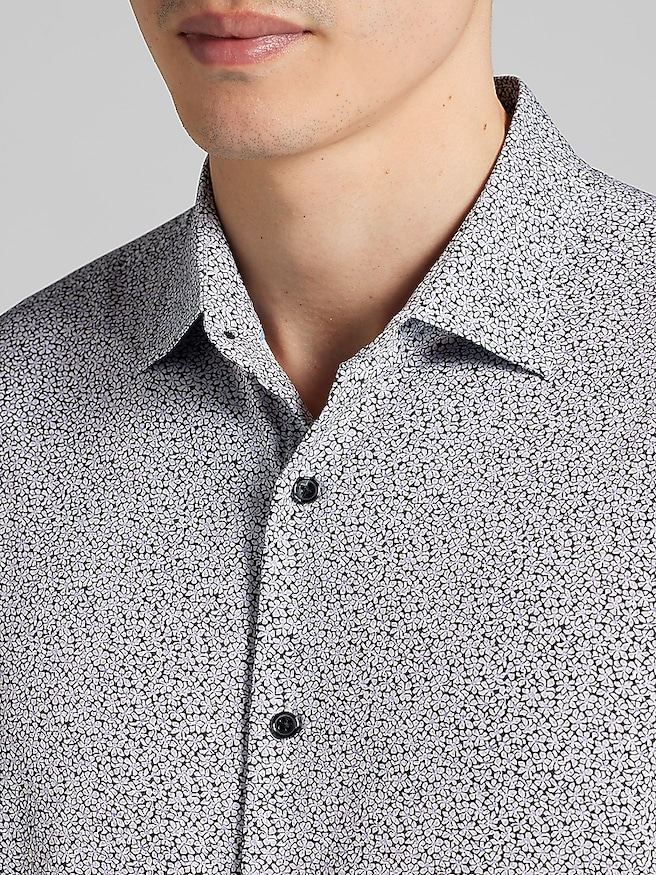
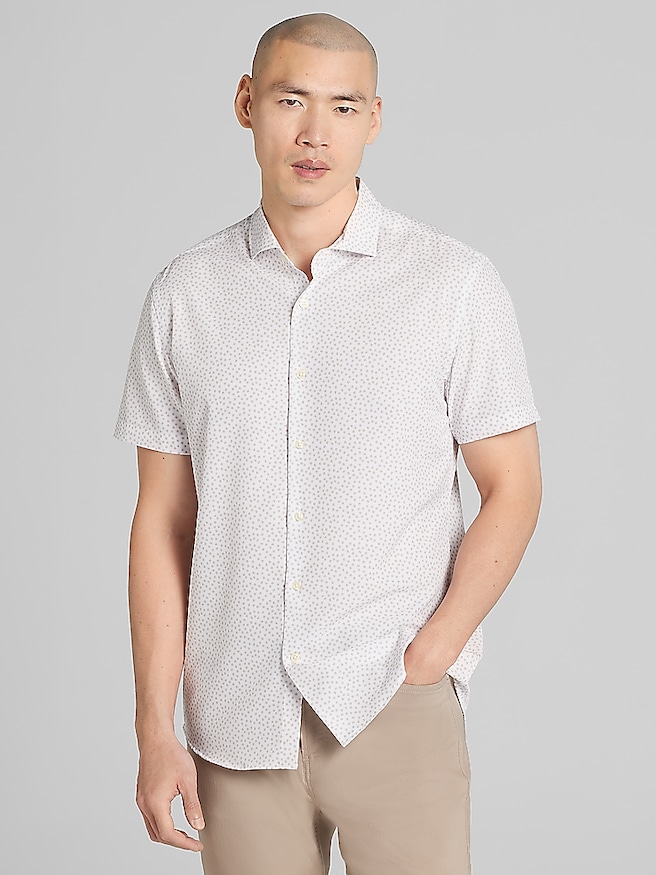
A short-sleeve suit shirt combines the collar and button-front styling of a dress shirt with sleeves that finish above the elbow. It can work with a suit in business-casual settings and at gatherings with a relaxed dress code, but it does not offer the same traditional finish as a long-sleeve dress shirt. Conventional suiting includes a small amount of shirt cuff showing beneath the jacket sleeve, a detail that short sleeves cannot provide. For conservative interviews, formal business meetings, and occasions that call for strict formal attire, a long-sleeve shirt is generally the more appropriate choice. In a less formal office or at a dinner where tailored clothing is welcome without being required, a short-sleeve shirt can give a suit a more casual character. The collar plays an important role in making that combination look deliberate. A structured point or spread collar sits neatly beneath jacket lapels, while a softer button-down collar brings a more relaxed expression to the outfit. Collar points should rest cleanly rather than curl upward or disappear awkwardly beneath the jacket. White and light blue create a familiar dress-shirt foundation; fine stripes and small checks add interest without necessarily competing with a patterned suit. A solid shirt also gives a textured jacket room to stand out. Worn open at the neck, the shirt should maintain a tidy neckline instead of collapsing against the chest. A tie is possible with a collar designed to accommodate one, although adding a tie does not make short sleeves appropriate for every dress code. The complete outfit matters, including how it looks when the jacket comes off. At a desk, across a restaurant table, or during an informal presentation, well-proportioned sleeves and a smooth shirt front help the look remain composed. The strongest combinations treat the short-sleeve shirt as an intentional part of relaxed tailoring rather than a substitute for every traditional dress shirt.
Fabric determines much of how a short-sleeve shirt feels against the skin and how smoothly it sits beneath a suit jacket. Cotton is valued for its soft hand and breathability, with the weave influencing the surface and structure. Poplin typically has a fine, smooth appearance that pairs naturally with tailored clothing, while Oxford cloth has a more noticeable texture and often reads as less formal. Twill offers a subtle diagonal pattern and can provide a slightly fuller drape. Cotton blends may offer easier maintenance or improved wrinkle resistance, depending on their composition and finish. Fabrics containing stretch can allow more comfortable movement through the shoulders and upper back, especially when reaching for a laptop or sitting through a lengthy meeting. Performance features such as moisture management and stain resistance vary by garment and should be evaluated through the fabric description and care label rather than assumed from the category name. Fabric weight and opacity matter, too: a very thin white shirt may reveal an undershirt or pocket lining, while a denser weave can create a more substantial appearance. Fit is equally important beneath a jacket. Shoulder seams should sit near the edge of the shoulders, and the chest should have enough ease for movement without pulling the buttons apart. A slim fit follows the torso more closely; a classic fit generally provides more room through the chest and waist. Neither should create heavy folds beneath the lapels or restrict a comfortable seated position. Short sleeves often look most balanced when they end around the middle of the upper arm, with enough room to bend and reach without pinching. Oversized sleeve openings can flare away from the body, while overly narrow openings may bunch. For a tucked-in outfit, sufficient shirt length helps keep the hem secure through ordinary movement. A smooth tuck supports the clean line of suit trousers without requiring the shirt to fit tightly everywhere.
The appeal of a short-sleeve suit shirt extends beyond wearing a complete matching suit. The same collared shirt can accompany tailored trousers on a business-casual day, sit beneath a sport coat for a social dinner, or pair with chinos when a full suit would feel excessive. Consistent proportions help these combinations feel connected: a neatly fitted shirt works well with trousers that have a similarly considered shape, while a fuller shirt needs enough room at the waist to tuck comfortably without spilling over the waistband. Small details influence the result, from a placket that lies flat to a collar that remains even after several hours of wear. A chest pocket adds a practical, slightly more casual note; a clean front offers a simpler appearance beneath a jacket. For a closer look at this category, Short Sleeve Dress Shirts For Men brings the focus to collared styles that can serve both tailored and everyday wardrobes. Long-term usefulness also depends on care. Washing temperature, drying method, and ironing guidance should follow the individual garment label, since cotton, blended fabrics, and stretch materials can have different requirements. Prompt attention to collar marks and spills helps prevent discoloration from becoming harder to remove. Avoiding unnecessary dryer heat, when consistent with the label, can help protect fabric and fit. An iron or steamer may improve the collar, placket, and hem, but heat settings should suit the material and any applied finish. Hanging the shirt after care helps preserve its shape between wears. Durable stitching, secure buttons, and neatly finished seams are useful construction details for shirts worn repeatedly. As a gift, this category can suit someone whose routine includes relaxed office dressing, dinners, or regular jacket-and-trouser combinations, provided the recipient’s measurements and preferred fit are known. A familiar collar shape and an understated color are often easier to integrate into an established wardrobe than an unfamiliar cut or bold pattern. The most useful shirt is one that feels comfortable on its own, sits cleanly beneath tailoring, and matches the level of formality its wearer actually needs.