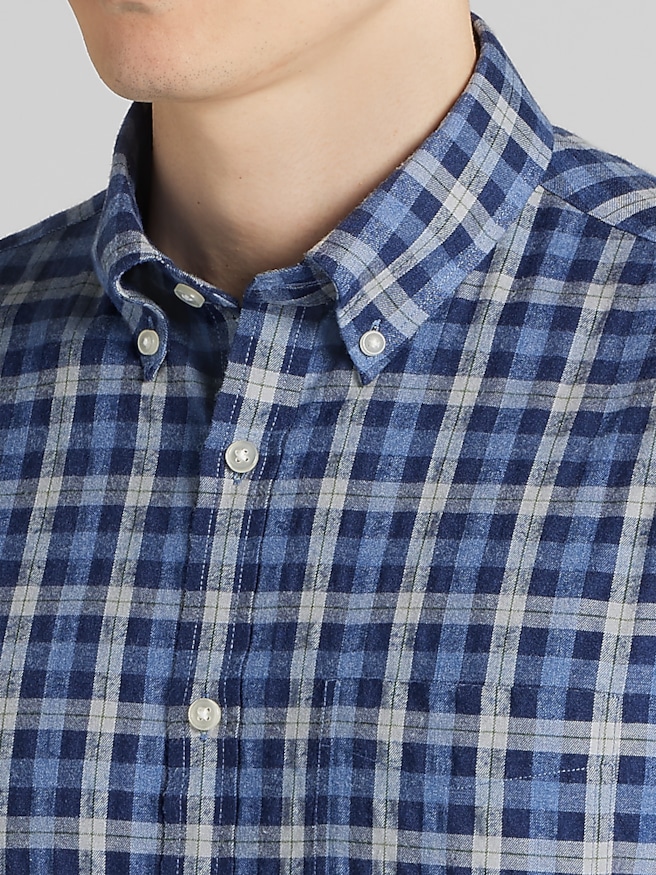
Short sleeve plaid button-up shirts combine a full button front, a collared neckline, and an intersecting pattern of stripes in a style that works for casual outfits and relaxed business-casual settings. The plaid supplies visual interest, while the collar gives the shirt a more finished appearance than a basic T-shirt. That balance makes these shirts useful for an afternoon gathering, a casual dinner, a day at the office with a relaxed dress code, or a weekend spent moving between errands and plans with friends. Pattern scale has a noticeable effect on the overall look. Small checks and closely spaced lines tend to feel understated, especially when the colors sit close together. Larger plaids and stronger contrasts make the shirt a focal point, with broad bands of color that remain visible from across a room. Neither approach requires an elaborate outfit. Navy chinos, straight-leg jeans, or simple five-pocket pants give the pattern room to stand on its own. Picking up one color from the plaid in the pants or shoes can make the combination feel coordinated without looking overly matched. A navy-and-white pattern, for example, works naturally with dark denim, while an earthy mix can sit comfortably beside tan or olive pants. Plaid adds character to Short Sleeve Button Up Shirts For Men without making everyday dressing complicated. Worn buttoned, the shirt creates a clean, continuous line down the front; worn open over a plain crewneck, it becomes a relaxed layer with a little more depth. An untucked hem generally suits casual plans, while a shirt with enough length to stay tucked can look more polished with chinos and a belt. A tidy collar and straightforward footwear help finish either version. For offices, restaurants, and gatherings where a full suit would feel out of place, a restrained plaid can offer personality without losing that sense of being thoughtfully dressed.
Fabric and fit determine how a short sleeve plaid shirt feels throughout the day, not just how it looks on a hanger. Cotton is a familiar choice for its soft hand and ability to absorb moisture, although the weave and fabric weight influence how crisp or relaxed the finished shirt feels. A smooth, closely woven cotton can give checks a sharp outline, while a textured weave creates a more casual surface. Cotton blends may combine that familiar feel with properties such as improved wrinkle resistance or quicker drying, depending on the fibers and finishing used. Linen blends often have visible texture and a more relaxed drape, including natural creasing that becomes part of their character. Fabrics containing rayon can feel fluid and soft, while a small amount of stretch may provide extra give when reaching forward or sitting for extended periods. Those differences matter to someone who spends the day at a desk, drives between appointments, or prefers clothing that moves easily during social plans. A good fit leaves room through the chest and upper back without excess fabric bunching at the waist. The shoulder seams should generally sit near the shoulder edge, and the button placket should lie flat rather than pulling into gaps across the torso. Sleeve openings need enough space for comfortable movement, with a length that looks balanced against the upper arm. A closer cut creates a neater outline, while a roomier cut gives more ease and a relaxed silhouette. The best choice depends on body proportions and personal preference rather than a single fit label. Hem shape matters, too: a shorter, gently curved hem often looks intentional untucked, while longer tails are better suited to staying inside the waistband. Firmly attached buttons, even stitching, and neatly finished seams are useful construction details. Plaid alignment at prominent areas, such as the front opening or a chest pocket, can also contribute to a cleaner appearance, though pattern placement varies by design.
Regular care helps preserve the color, shape, and everyday usefulness of short sleeve plaid button-up shirts. The care label is the starting point because cotton, linen blends, stretch fabrics, and rayon blends can respond differently to washing and drying. Where machine washing is permitted, sorting by color and using an appropriate gentle cycle can help reduce unnecessary wear. Fastening instructions and drying directions deserve attention, particularly for fabrics that may shrink, crease, or lose their shape under excessive heat. Promptly removing a washable shirt from the machine, smoothing the collar and placket, and hanging or laying it out as directed can reduce deep wrinkles before they set. If ironing is needed, the correct heat setting protects the fibers; extra care around buttons and any stretch content helps avoid damage. Long-term durability also depends on how the shirt is worn and stored. A hanger that supports the shoulders helps maintain the outline, and leaving a little space between garments keeps the collar from being crushed. Small repairs, such as securing a loose button before it falls off, can extend the life of an otherwise dependable shirt. These practical qualities make plaid shirts appealing gifts for a father, brother, partner, or friend who prefers useful clothing with some personality. A familiar color palette and a fit similar to shirts the recipient already enjoys are often more thoughtful choices than an unusually bold pattern or an unfamiliar silhouette. For travel, a versatile plaid can work with more than one pair of pants, making repeat wear feel less repetitive when the setting and care requirements allow. For everyday dressing, its value comes from the same straightforward combination: a recognizable pattern, a comfortable fit, and enough structure to look put together. Whether paired with clean sneakers for casual plans or leather loafers for dinner, a well-chosen plaid shirt brings detail to an outfit without asking every other piece to compete.