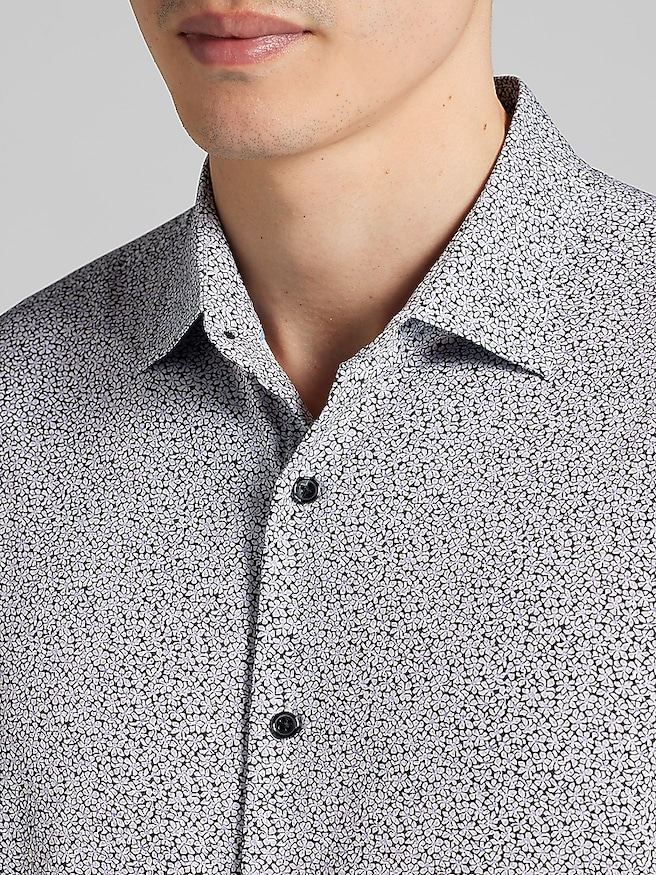
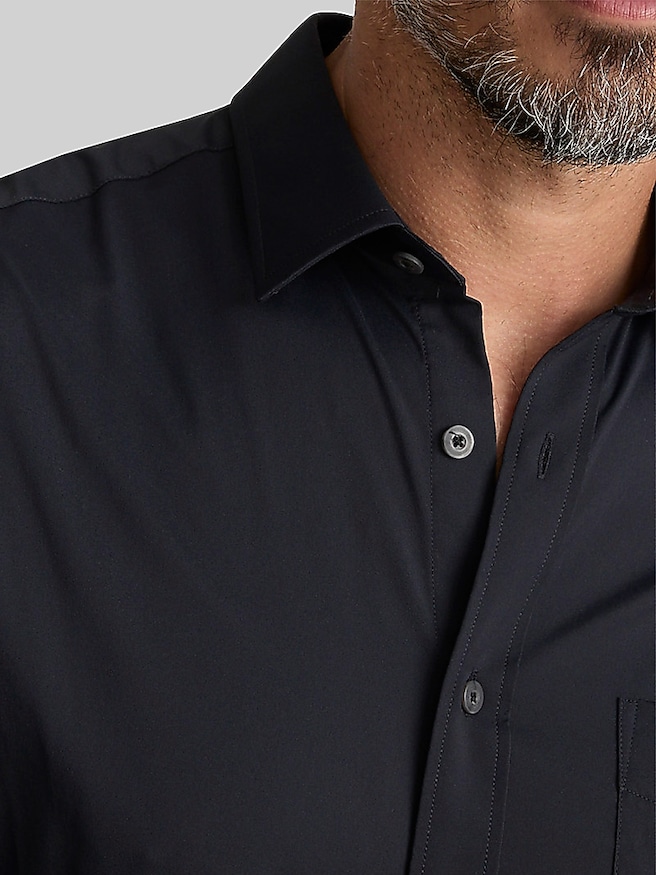
Short sleeve button-up shirts for men bring the structure of a collared shirt to an easy, everyday silhouette. A full button front makes them versatile enough to wear closed with chinos, tucked into tailored trousers, or open over a plain crewneck T-shirt. They suit casual offices, dinner plans, travel, and gatherings where a T-shirt feels too relaxed but a long-sleeve dress shirt would be more formal than necessary. The terms button-up and button-down describe different details: a button-up shirt fastens down the front, while a button-down collar has small buttons that secure its points to the shirt. A short-sleeve shirt can have both features. Within the broader category of Short Sleeve Men's Shirts, button-front designs offer plenty of variation through fabric, collar shape, texture, and pattern. Cotton is a familiar choice for its soft feel and absorbency, though the weave and fabric weight also influence how a shirt wears. Cotton poplin generally has a smooth, clean surface, while Oxford cloth has a more visible basket-weave texture. Linen brings a distinctive grain and relaxed drape, with natural creasing that contributes to its character rather than indicating poor care. Cotton-linen blends combine qualities of both fibers, with the exact feel depending on the blend and construction. Stretch blends can provide additional give across the shoulders and back, while knit button-up shirts tend to move and drape differently from crisp woven styles. Fabric names alone do not tell the whole story: a densely woven cotton shirt can feel quite different from a loosely woven version. Subtle slub textures, small checks, narrow stripes, and solid colors each create a different impression without changing the shirt’s basic versatility. A smooth solid can look understated with tailored pants, while a textured weave adds interest to a simple pairing with dark denim.
Fit determines whether a short-sleeve button-up looks intentional and feels comfortable through an ordinary day. On a conventional set-in sleeve, the shoulder seam should sit close to the edge of the shoulder rather than pull toward the neck or drop noticeably down the arm, unless the shirt is designed with a relaxed shape. The front should lie reasonably flat when buttoned, without gaps across the chest or pronounced pulling around the midsection. Enough room to reach forward, sit at a desk, or lift a bag makes a practical difference beyond the fitting room. Slim fits generally follow the torso more closely, while classic and relaxed fits allow more space; those labels are useful starting points, but measurements and cut vary. Sleeve openings deserve the same attention as the chest and waist. An opening that grips the upper arm can restrict movement, while an excessively wide sleeve may overwhelm an otherwise neat fit. A sleeve ending around the middle of the upper arm is a common proportion, although the most balanced length depends on the wearer and the shirt’s design. Hem length helps determine styling options. Shorter, straighter hems are often intended for untucked wear, while longer, curved tails usually provide more coverage when tucked. An untucked shirt should cover the waistband without hanging so low that it obscures the shape of the pants. Collar construction also changes the effect: a button-down collar keeps its points in place, while a camp collar creates an open neckline with a more relaxed appearance. For an office with a casual dress code, a restrained pattern, clean chinos, and leather loafers can look put together without feeling stiff. For a meal with friends, a softly textured shirt with straight-leg jeans offers a less formal combination. These shirts can also work with tailored shorts and simple sneakers when the setting allows. Short sleeves are generally a casual choice, so formal dress codes still call for the shirt and sleeve length appropriate to the occasion.
Care and construction influence how well a short-sleeve button-up holds its shape and appearance over repeated wears. Even stitching, secure buttons, neatly finished seams, and a placket that lies flat are useful details to examine. Areas that receive frequent handling, including the collar, buttonholes, and sleeve hems, benefit from careful finishing. A heavier fabric is not automatically more durable, and a softer fabric is not necessarily delicate; fiber quality, weave, construction, and laundering all play a part. The care label is the best starting point because shirts that look similar can have different washing and drying requirements. Sorting by color, fastening buttons as directed, and avoiding an overloaded washer can help limit unnecessary friction and creasing. Excessive dryer heat may contribute to shrinkage or affect stretch fibers, so the recommended drying method matters as much as the wash cycle. Promptly hanging or folding a shirt after drying helps prevent deep wrinkles from settling in. A light press can sharpen a cotton collar or smooth a front placket, while linen often looks natural with some texture left visible. Any ironing temperature should match the fabric instructions, particularly when synthetic fibers are part of the blend. For travel, a shirt with documented wrinkle-resistant properties can be useful, but that feature should be confirmed in its description rather than assumed from appearance. Packing along natural folds and unpacking on arrival can also help preserve a neat finish. For someone building an everyday wardrobe, versatile colors and patterns that coordinate with existing pants often earn the most wear. A favorite pair of navy chinos, gray trousers, or dark jeans provides a practical reference for choosing a complementary shirt. Short-sleeve button-ups can also make thoughtful gifts for a partner, father, brother, or friend who regularly wears collared casual clothing. Matching a familiar fit, preferred fabric feel, and usual level of pattern is more useful than choosing an unfamiliar style simply for novelty. The strongest choice is a shirt that fits comfortably, suits the recipient’s routine, and feels natural with the clothes already in regular rotation.