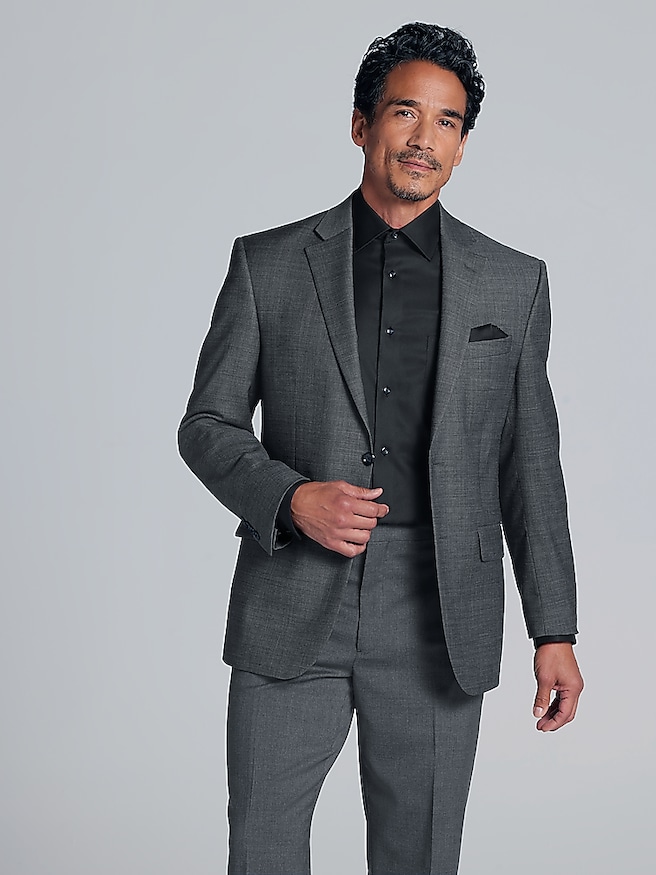
Shirts for men with broad shoulders fit best when the shoulder seams and chest have enough room before the waist is considered. On a shirt with a traditional set-in sleeve, the shoulder seam should sit close to the outer edge of the shoulder rather than pulling inward toward the neck or hanging down the upper arm. A chest that lies smoothly, with no persistent gaps between buttons, helps the entire shirt look more balanced. That foundation matters whether the shirt is worn beneath a suit jacket, tucked into dress pants, or left untucked with jeans. A broad-shouldered build can come with a narrower waist, a fuller midsection, or a long torso, so shoulder width alone does not determine the right cut. Athletic-fit shirts often provide more space through the upper body with shaping toward the waist, while classic or traditional fits generally offer a straighter line and more room through the torso. Slim fits vary considerably and are not automatically unsuitable, but a narrow chest or high, restrictive armhole can make an otherwise neat shirt uncomfortable. The useful distinction is how the garment sits and moves, not simply the wording on its label. Reaching across a conference table, settling behind the steering wheel, or lifting an arm to greet someone should not create pronounced pulling across the back. At the same time, choosing a much larger size just to gain shoulder room can leave excess fabric around the waist, an oversized collar, and sleeves that extend beyond the wrist. Broad shoulders also do not necessarily require tall sizing, which generally adds length rather than solving width alone. Size charts that include chest, neck, and sleeve measurements provide a stronger starting point than a familiar letter size by itself. Where the shoulders and chest fit well, modest waist shaping may be possible through alterations, depending on the shirt’s construction. Getting the upper body right first preserves the clean line that makes a shirt look intentional rather than simply oversized.
Fabric influences how that fit feels throughout the day. Cotton offers a familiar hand and can work across dressier and more relaxed settings, though weave, weight, and finishing make a substantial difference. Smooth poplin generally creates a crisp appearance beneath tailored clothing, while oxford cloth brings visible texture and a more substantial feel. Twill has a subtle diagonal weave and can offer a softer drape, helping fabric fall over the chest instead of standing away from it. Linen has a distinctive texture and a naturally relaxed appearance, with creasing that is part of its character rather than necessarily a sign of poor care. Blended fabrics can contribute stretch, easier maintenance, or wrinkle resistance, depending on their composition and finish. A small amount of stretch may make everyday movement more comfortable, but it should complement adequate shoulder and chest room rather than compensate for a shirt that is too tight. Constant tension can distort the button placket and place extra stress on seams. For a broad frame, the way fabric settles across the upper back is just as important as how it looks from the front. A back pleat can provide additional ease, while darts can shape the torso; neither feature guarantees the right fit without sufficient room elsewhere. Construction details also deserve attention, including even stitching, securely attached buttons, and neatly finished seams. Collars and cuffs receive frequent handling, so their structure and feel affect both appearance and everyday comfort. Solid colors provide a quiet backdrop for a textured tie or patterned jacket, while stripes and checks add interest when the rest of the outfit is simple. Pattern scale is largely a matter of preference, but a pattern that visibly bends around strained buttons can reveal a fit problem. For office days, ceremonies, dinners, and casual gatherings, the most versatile shirt is one whose fabric, cut, and finishing suit the occasion without restricting ordinary movement.
Sleeve shape completes the fit across a broad upper body. Enough space through the shoulders does not always mean enough room around the biceps, especially for men with muscular arms. Fabric should fall along the upper arm without gripping it, and the sleeve should allow the elbow to bend without pulling sharply at the cuff or shoulder. For builds that need additional room in this area, Shirts for Men With Big Arms addresses a closely related fit consideration. Length matters independently: long sleeves should reach the wrist appropriately without covering much of the hand, while short sleeves should have an opening that feels comfortable rather than pinched. A collar worn with a tie needs enough ease to fasten comfortably, and a collar worn open should sit naturally instead of being pulled backward by tight shoulders. Shirt length also affects intended use. A tucked shirt needs enough length to stay in place through sitting and reaching, whereas an untucked style should end at a proportionate point without overwhelming the body. Under a jacket or sweater, excess fabric can bunch at the armholes and waist, making a well-fitting outer layer feel unexpectedly tight. These details are especially useful when choosing a gift for someone whose shoulders make standard sizing inconsistent; measurements from a shirt that already fits well are more informative than guessing from height alone. Care helps preserve that fit over time. The garment’s care label should determine washing, drying, and ironing methods, since fiber blends and finishes have distinct requirements. Excessive heat can shrink some fabrics, leaving a previously comfortable chest or sleeve noticeably snug. Prompt attention to collar marks, gentle treatment of stains, and avoiding an overloaded washer can help limit unnecessary wear. Smoothing the placket, collar, and cuffs before drying may also reduce creasing. With appropriate care and balanced proportions, a broad-shouldered shirt can maintain a polished appearance while remaining comfortable through a full day of wear.