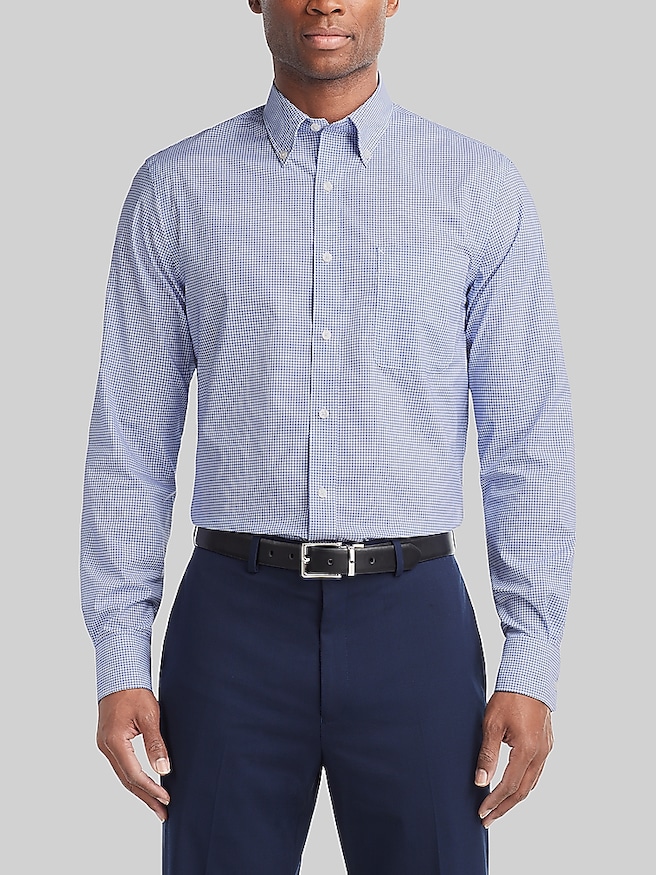
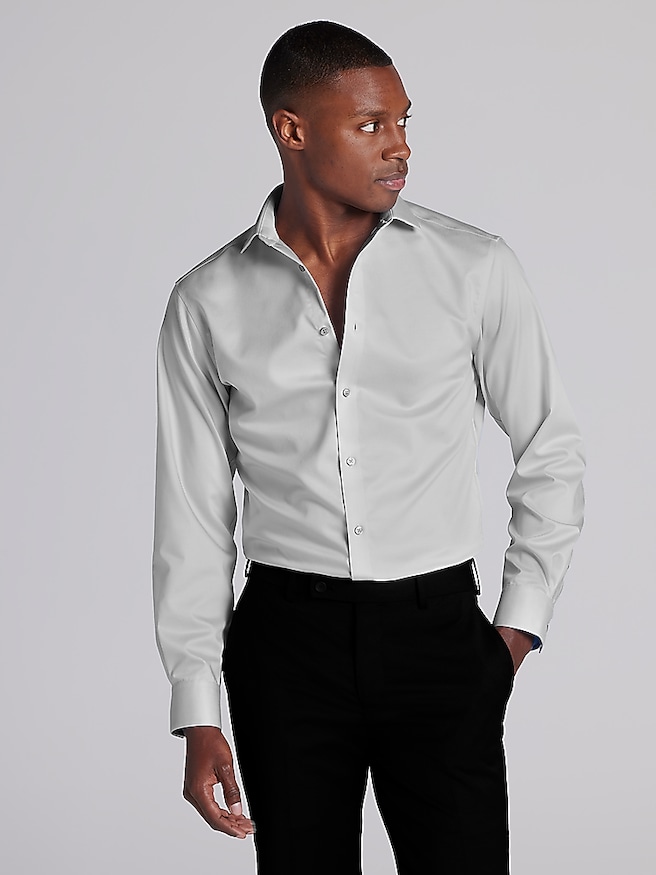
Clothes for men with broad shoulders fit best when they provide enough room through the shoulders, upper back, and chest without leaving unnecessary fullness at the waist. The goal is a clean line that follows the body while allowing comfortable movement, whether that means reaching across a desk, driving to an appointment, or sitting through a long reception. Broad shoulders can accompany a narrow waist, a fuller midsection, a tall frame, or a shorter build, so shoulder width alone does not determine the right size or silhouette. Athletic fits often accommodate a larger chest relative to the waist, while regular fits may offer a straighter line through the torso. Neither label guarantees the same proportions across every garment. The relationship between upper-body room and waist definition also connects this category with Clothing For Athletic Build Men, though an athletic silhouette is only one possibility for a broad-shouldered frame. In a shirt with set-in sleeves, shoulder seams generally sit near the outer edge of the shoulders rather than cutting inward toward the neck. A button front should lie smoothly across the chest, with enough ease to avoid gaps between buttons when seated. For tailored jackets, a comfortable shoulder line, a collar that rests against the neck, and lapels that lie flat create a balanced foundation. Persistent diagonal pulling around a closed button can signal that the chest, waist, or overall cut needs more room. Simply moving up a size may add excess fabric through the body or too much sleeve length without resolving the underlying proportions. A cut that accommodates the upper body from the start usually creates a cleaner result than an oversized garment taken in extensively. Waist shaping and sleeve length can often be refined through tailoring, while substantial changes to a jacket’s shoulder structure are more involved. That distinction matters for clothing intended to look composed in person and in photographs, without making everyday movement feel restricted.
Fabric and construction influence how clothing sits across a broad upper body just as much as the size on the label. Woven cotton shirts offer a defined shape, with poplin providing a smooth surface and Oxford cloth bringing more visible texture. Twill weaves can add a substantial feel, while stretch blends may offer useful give across the back and upper arms. Stretch is most effective as added flexibility within an appropriate fit, not as a substitute for enough fabric through the chest. Horizontal tension lines, strained seams, and a placket that twists away from the body can still appear in a garment with elastic fibers. Knitted fabrics naturally accommodate movement through their looped construction, making polos, sweaters, and knit shirts useful for relaxed office settings and everyday plans. A knit that skims the torso can preserve definition without clinging to every contour; one pulled tightly across the shoulders may also ride up at the waist. For suits and separate jackets, wool can offer drape, resilience, and a smooth finish, although performance varies with the weave, weight, and blend. Softer shoulder construction follows the body more closely, while structured tailoring creates a more defined outline. Neither is automatically better for broad shoulders: the amount and placement of structure determine whether the result feels balanced or overly extended. Sleeve shape matters, too. Enough room through the biceps allows the sleeve to hang cleanly, and well-proportioned armholes support movement without excessive fabric gathering underneath. Layering adds another consideration, since a jacket worn over a substantial knit needs more interior room than one worn over a lightweight shirt. Below the waist, trousers with adequate room through the seat and thighs can carry the outfit’s proportions through the whole body. Straight or gently tapered legs create a continuous line without requiring an exaggeratedly narrow opening. The most cohesive combination comes from compatible proportions rather than making every garment as fitted as possible.
Broad-shouldered clothing serves a wide range of routines, from client meetings and presentations to wedding celebrations, dinners, and casual weekends. For a desk-to-dinner outfit, a shirt that stays smooth beneath a jacket and remains comfortable once the jacket comes off can make the transition feel effortless. At a wedding, sufficient upper-back room matters during an embrace or a turn on the dance floor, while balanced jacket length helps the outfit look settled when standing for photographs. Casual clothing benefits from the same attention: a polo should allow an easy reach without pulling sharply across the chest, and a sweater should sit comfortably over the layer beneath it. These are practical qualities for anyone whose shoulders tend to fit one size while the waist fits another. Durability also depends on leaving enough ease at stress points. Seams under constant tension and buttons working against a tight chest can receive more strain than those in a properly proportioned garment. Even stitching, secure buttons, and fabric suited to the intended use support a wardrobe that earns repeat wear. Care should follow each garment’s label, especially when wool, structured tailoring, or blended fibers are involved. Appropriate washing and drying help preserve dimensions, while excessive heat can shrink some fabrics or affect stretch fibers. Broad, supportive hangers help tailored jackets retain their shoulder shape; heavier knits are generally better stored folded to reduce stretching. Allowing garments to air between wears and addressing small repairs promptly can help maintain their appearance. For a gift, the recipient’s chest, shoulder, sleeve, and waist measurements are more useful than a familiar size alone, particularly when fit labels vary. Clothing that respects those proportions offers more than a sharp outline: it provides room to move, a comfortable seated fit, and a polished appearance that does not depend on standing perfectly still. Across dressy and casual settings, that combination makes broad-shouldered dressing feel natural rather than like a compromise between comfort and shape.