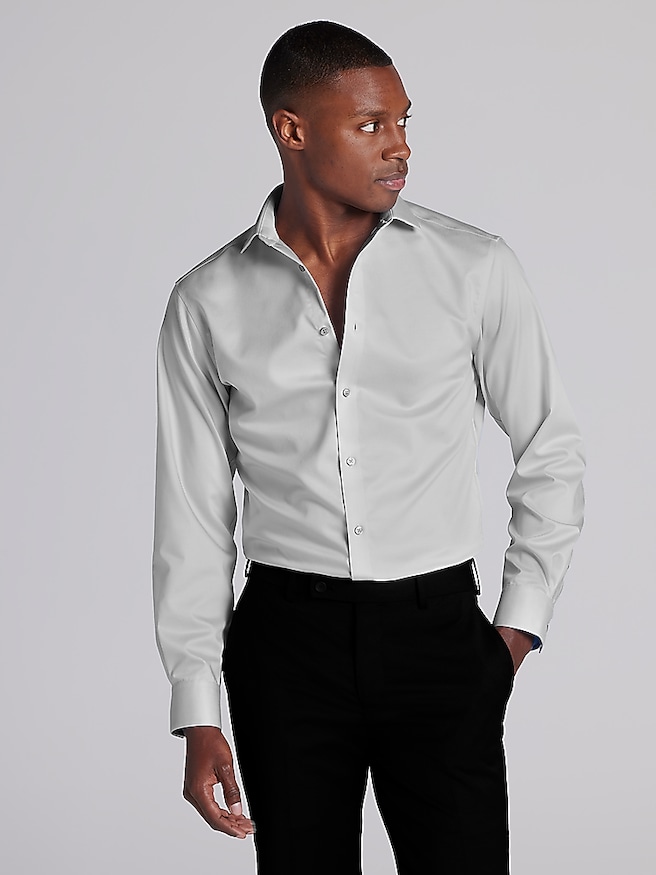
A crisp white dress shirt is the most classic and versatile shirt to wear with a black suit. The contrast gives the jacket a clean outline, frames the face, and creates a polished foundation for a wedding, an important presentation, or an evening reception. White also leaves room for accessories: a burgundy tie adds richness, a silver tie feels understated, and a black tie keeps the combination restrained. For business settings where a suit is appropriate, a plain white shirt with a modest spread or point collar offers a dependable balance of formality and simplicity. Light blue dress shirts soften the contrast without losing definition beneath a black jacket, making them another option for daytime celebrations and professional occasions. Pale pink introduces a warmer note, while lavender and light gray bring subtle color to a familiar combination. These lighter shades work especially well when the fabric is solid or has a fine texture that reads as nearly plain from across the room. Small checks and narrow stripes can also complement a black suit, although a quiet pattern is easier to coordinate with a tie than a bold one. A black dress shirt creates a distinctly different effect: sleek, tonal, and better suited to evening dinners, cocktail parties, and celebrations than to conservative business settings. With black on black, fabric texture helps keep the shirt and jacket from looking like one flat surface. A smooth shirt beneath a subtly textured jacket, for example, gives the outfit depth without adding another color. The shades of black matter, too; a faded shirt can look tired beside a richly colored suit. Dark navy and muted midtone shirts are not automatically off limits, but they offer less contrast and need more attention to texture and lighting. For the broadest range of occasions, white remains the simplest starting point, with light blue close behind for a softer impression.
Fabric and fit determine how comfortably a dress shirt works beneath a black suit, particularly through a ceremony, a seated dinner, or a full day of meetings. Cotton is a familiar choice for its breathable feel and range of finishes. Poplin typically has a smooth, closely woven surface that complements the clean lines of a tailored jacket, while twill often has a subtle diagonal texture and a slightly fuller drape. Pinpoint and fine oxford weaves offer another balance of structure and texture; the finer versions generally look dressier than a visibly coarse oxford cloth. Cotton blends can offer easier maintenance or added stretch, depending on the fabric composition and finish. Stretch may make reaching, sitting, and moving more comfortable, but it should support a good fit rather than compensate for a shirt that is too small. A well-fitting collar sits close to the neck without pinching when buttoned, and the shoulder seams meet the edges of the shoulders. Across the chest, the placket should lie flat rather than pull into gaps between the buttons. Through the torso, enough room to sit comfortably helps the shirt stay smooth under the jacket without excessive fabric gathering around the waistband. Sleeve length matters just as much: the cuffs should reach the wrist, with a small amount visible beyond the jacket sleeves when the arms rest naturally. A shirt intended to be tucked in needs enough length to stay anchored when reaching across a table or standing after a long meal. Durability comes from the fabric, construction, and care together. Even stitching, secure buttons, and neatly finished seams are useful details to consider for regular wear. Following the care label, treating marks promptly, and pressing or steaming only as directed help preserve the collar and cuffs. Easy-care finishes can reduce upkeep, though no fabric should be assumed to need no attention. A smooth placket and tidy collar make a noticeable difference against the dark backdrop of a black suit.
Collar shape and cuff style refine the shirt’s intended use. A point collar creates a narrow frame for a tie, while a moderate spread collar leaves room for a slightly fuller knot without overwhelming the jacket. The best proportion depends on the collar opening, tie width, and lapels together; an oversized knot can crowd a small collar, just as a very narrow tie can look lost beneath a broad spread. Button cuffs offer a straightforward finish for business wear, wedding guest attire, and dinners. French cuffs bring a dressier detail and make room for cufflinks when the occasion calls for extra polish. For an open-collar approach, the options in Dress Shirts to Wear Without a Tie | Men's Wearhouse put more emphasis on collar structure and a clean neckline. A collar that stays upright beneath the lapels looks more intentional than one that collapses or slips under the jacket. Leaving the top button undone is usually enough to relax the look without exposing too much of the chest, and an undershirt should remain out of sight. Accessories can then support the shirt rather than compete with it. A white shirt and burgundy tie create a rich focal point; a pale blue shirt and restrained dark tie feel quieter; a black shirt can work without a tie for an evening event with a flexible dress code. If a tie accompanies a black shirt, a subtle difference in sheen or weave adds definition. A pocket square does not need to duplicate the tie exactly, and simple black leather shoes provide a cohesive finish. The invitation or workplace expectations should set the level of formality: an open collar may suit a celebratory dinner, while a memorial service generally calls for a more reserved combination. An invitation specifying black tie calls for a tuxedo rather than a black business suit. Across these settings, a shirt with the right contrast, comfortable fit, and well-kept finish helps a black suit look deliberate without feeling overworked.