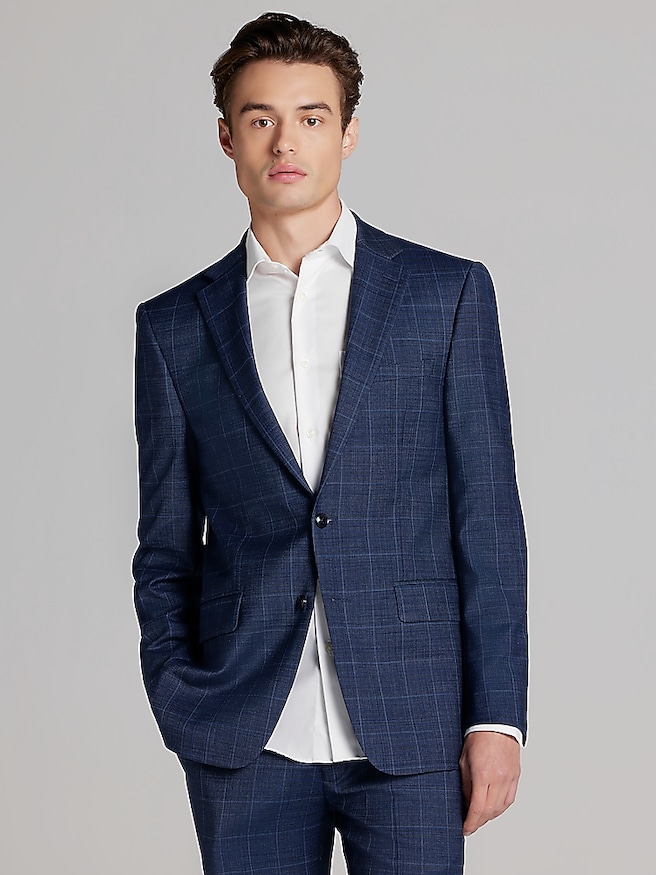
An early-fall wedding guest outfit balances the polish of occasionwear with the comfort needed for a ceremony, photographs, dinner, and a full evening of celebrating. Suits, dress shirts, tailored separates, and formal accessories offer different levels of dressiness, with the invitation and venue setting the tone. A navy or charcoal suit creates a dependable foundation for cocktail attire, while a black tuxedo with a formal shirt, bow tie, and appropriate dress shoes suits a black-tie celebration. Formal invitations generally call for darker, more refined tailoring, though the couple’s stated expectations take priority. For a relaxed reception at a vineyard or garden venue, a textured sport coat with dress pants can feel considered without looking overly ceremonial, provided the dress code allows separates. Color helps connect these pieces to the occasion: deep blue, olive, chocolate, and burgundy bring depth to an early-fall palette, while a white or pale-blue shirt keeps the overall look crisp. A subtly patterned tie can pick up one of those colors without matching every accessory. The effect is especially appealing in photographs, where a restrained pattern adds interest without drawing attention away from the couple. Daytime celebrations often suit softer contrasts and visible fabric texture; an evening ballroom reception typically favors darker tailoring and a cleaner finish. For outdoor settings with lingering heat, the breathable fabrics associated with a summer outdoor wedding guest outfit can also work with deeper accessories and a more structured jacket. The strongest combinations look complete with the jacket on, yet remain coordinated when it comes off at the reception. A well-fitting shirt, properly hemmed pants, and shoes that complement the formality of the outfit do much of that work. Belts, when worn, generally look most cohesive in a leather tone close to the shoes, while a pocket square can echo a secondary color rather than duplicate the tie.
Fabric and construction make a noticeable difference over a long celebration, particularly when the day includes an outdoor ceremony followed by an indoor reception. Lightweight to medium-weight wool is a versatile option for wedding guest suits because it offers breathability, a clean drape, and natural resilience against everyday creasing. Open-weave wool can feel airier than a dense fabric of similar weight, while a smoother worsted finish presents a more traditional dressed-up appearance. Cotton tailoring has a matte, relaxed character that works well for less formal venues, though it generally creases more readily. Linen and linen blends bring texture and airflow; their visible wrinkles are part of the fabric’s character, making them better suited to easygoing settings than strict formal dress codes. Blended fabrics may balance softness, wrinkle resistance, and stretch, but the fiber mix and garment construction matter more than a single feature on a label. Jacket lining also affects comfort: a partially lined design can feel less enclosed, while a fully lined jacket provides a smooth interior that slides easily over a dress shirt. Fit brings those fabric qualities into focus. Jacket shoulders should sit cleanly without extending noticeably beyond the natural shoulder, and the front should close without pulling into an X around the button. A collar that rests against the shirt, sleeves that reveal a little shirt cuff, and pants that fall cleanly over the shoes create a composed silhouette. Slim, tailored, and more relaxed cuts can all look appropriate when proportions suit the wearer. Comfort matters just as much as the standing view in a mirror: sitting through dinner, reaching across a table, and moving on the dance floor should not leave the waistband digging in or the jacket restricting the upper back. Hem length deserves attention, too, especially with tapered pants, since excess fabric can bunch around the ankles and undermine otherwise precise tailoring.
Finishing pieces help a wedding guest outfit feel intentional without requiring elaborate styling. A dress shirt with a collar that supports the chosen tie creates a neat frame for the face, while breathable cotton or a cotton blend can make extended wear more comfortable. Subtle texture in a tie, pocket square, or jacket adds dimension when the rest of the outfit is simple; combining several bold patterns can make the same look feel busy. Smooth leather lace-ups offer a traditional finish for suits, while refined loafers can suit less formal tailoring when the venue and invitation support them. Outdoor paths, gravel courtyards, and long stretches of standing make shoe fit and sole construction especially relevant. A secure heel, comfortable width, and dependable traction matter more than an unfamiliar silhouette worn for the first time at the ceremony. Dress socks that coordinate with the pants maintain a continuous line when seated, and a discreet undershirt can add comfort beneath a lighter dress shirt without becoming a visible focal point. For celebrations that extend into a breezy evening, a tailored outer layer keeps the outfit coherent without relying on a bulky casual jacket. Longevity also belongs in the selection process. Secure stitching, tidy buttonholes, smooth linings, and fabric that recovers well after movement support repeated wear beyond a single invitation. A versatile suit can serve future weddings, anniversary dinners, and other dressed-up occasions, with a change of shirt or accessories giving it a distinct character. Care depends on the fabric and garment label: many tailored pieces need professional cleaning, while some shirts allow home laundering. Airing garments after wear, brushing away surface dust, and hanging jackets on shaped hangers help preserve their appearance between cleanings. Pants benefit from careful hanging to protect the crease, and shoes retain their shape more effectively with suitable support and time to dry between wears. These practical details keep wedding attire looking composed from the first greeting through the last dance—and ready for another occasion.