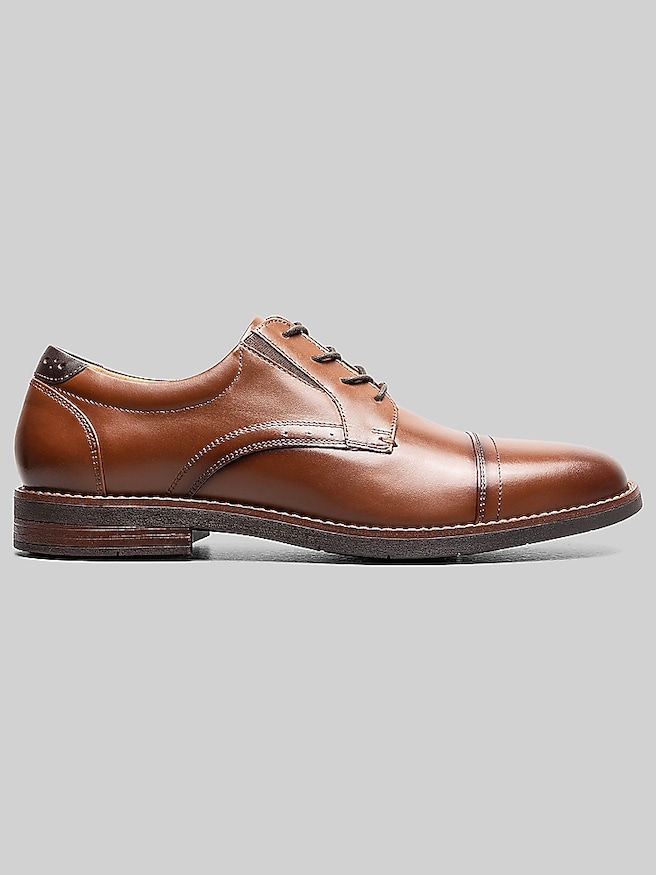
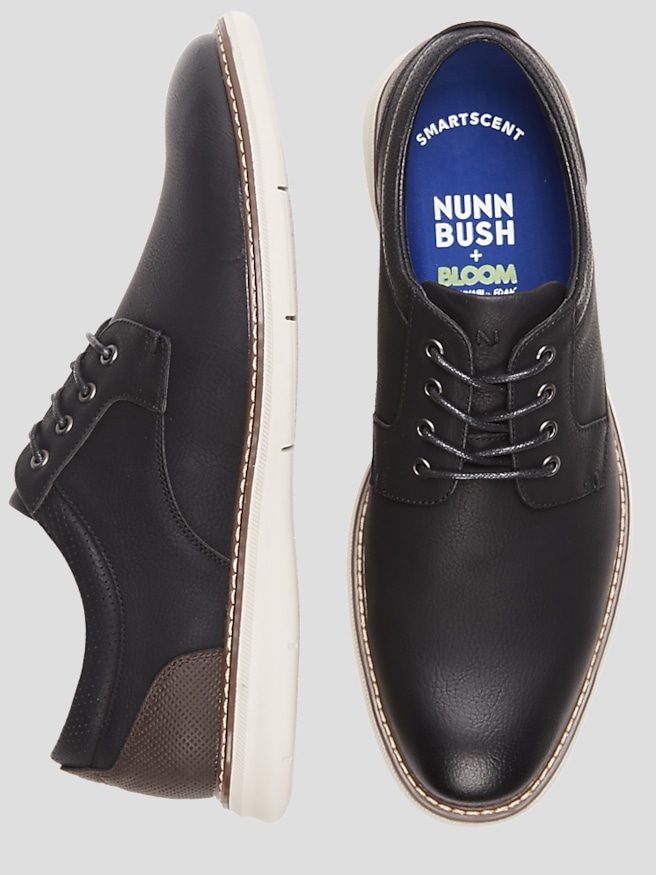
Semi-formal shoes are polished dress shoes that complement suits, tailored separates, and other outfits worn between casual and strictly formal dress. For men, this category commonly includes oxfords, derbies, loafers, and understated monk straps, with the right choice depending on the occasion and the rest of the outfit. Clean lines, balanced proportions, and well-kept materials matter more than elaborate detailing. A smooth leather oxford has a streamlined appearance that works naturally with a dark suit at a wedding or an evening reception. A derby, recognizable by its open lacing, brings a slightly more relaxed character to tailored trousers and a sport coat. Loafers offer a clean, slip-on silhouette for occasions where the dress expectations allow a less structured finish, while monk straps add a buckle detail without losing their dressy character. Broguing, the decorative perforations found on some dress shoes, introduces texture; restrained detailing generally looks dressier than extensive decoration. Black leather creates a crisp connection with charcoal, gray, and dark navy tailoring. Brown shades, from medium chestnut to deep espresso, bring depth to navy suits, earth-toned jackets, and neutral trousers. Burgundy offers another option when an outfit needs subtle color rather than a bright accent. The shape of the toe also changes the impression: rounded and almond-shaped profiles tend to blend easily with classic tailoring, while an exaggerated point or broad square can draw attention away from the outfit. For a ceremony followed by dinner and dancing, a polished lace-up gives the outfit continuity from one setting to the next. A restaurant celebration with a more flexible dress expectation may suit a refined loafer. Where the invitation explicitly allows a contemporary, relaxed interpretation, semi-formal sneakers provide a distinct alternative, though traditional dress shoes remain the more dependable choice for conventional semi-formal attire. Black-tie occasions follow a more formal standard, so the wording of an invitation still matters.
Materials and construction influence how semi-formal shoes look, feel, and hold up to repeated wear. Smooth leather offers a defined finish that can be conditioned and polished, making it especially useful for shoes worn with tailored clothing. Full-grain leather retains the hide’s natural surface and can develop character over time, although overall quality also depends on tanning, construction, and care. Suede has a soft, textured appearance that pairs well with less formal tailoring when the occasion permits it; its surface needs a different cleaning approach from smooth leather. Synthetic uppers offer another material option, with flexibility, breathability, and maintenance needs varying by construction. Inside the shoe, a smooth lining, unobtrusive seams, and a supportive footbed can make a noticeable difference through a ceremony, a long dinner, or several hours of standing. Cushioning should complement a secure fit rather than disguise a shoe that is too large. The heel should feel stable, the widest part of the foot should align comfortably with the widest part of the shoe, and the toes should have room without sliding forward. A little initial firmness in leather is different from pinching, numbness, or concentrated pressure, which should not be treated as necessary parts of breaking in dress shoes. Lace-up styles allow some adjustment across the instep, while loafers depend more closely on the match between the shoe’s shape and the foot. Trying shoes with the socks intended for the outfit gives a more useful sense of fit than switching between thick athletic socks and thin dress socks. Trouser length deserves attention, too: a clean hem allows the upper to show without fabric pooling over the laces. Leather soles can create a sleek profile, while rubber soles may add flexibility and traction, depending on their design. Welted construction may allow resoling, but repair options depend on the individual shoe. These details are particularly relevant for someone who wears dress shoes regularly rather than only for occasional celebrations.
The most useful pair of semi-formal shoes fits both the outfit and the way the occasion unfolds. Someone moving between a presentation, a reception, and a seated dinner may value a secure lace-up, a steady sole, and enough room to remain comfortable throughout the event. A guest wearing a navy suit to a wedding may prefer dark brown leather for a softer contrast or black for a sharper, more restrained finish. For a graduation ceremony or an awards dinner, understated shoes keep the attention on the complete outfit rather than a conspicuous buckle, oversized sole, or heavily distressed finish. Coordinating leather accessories by color family creates cohesion without requiring every shade to match exactly; deep brown shoes and a similarly toned belt usually look more considered than unrelated finishes. Dress socks that relate to the trousers help maintain a continuous line when sitting, while a subtle pattern can add personality without competing with the tailoring. Keeping shoes presentable is part of that finished appearance. Dust and grit should be removed before they work into the surface, and smooth leather benefits from suitable conditioner and polish used according to the maker’s care instructions. Suede needs a dedicated brush and material-appropriate treatments rather than conventional shoe cream. Testing a care product on an inconspicuous area helps reduce the risk of discoloration. A shoehorn protects the heel structure during dressing, and properly sized shoe trees help preserve shape between wears. Allowing shoes to dry naturally and giving them time to air between outings supports their condition; direct heat can damage leather and adhesives. Periodic attention to worn heel edges, loose stitching, and thinning soles can keep small problems from becoming larger repairs. Semi-formal shoes can also make a thoughtful gift for a graduate, a partner, or someone building a professional wardrobe, especially when the recipient’s size, width, and preferred style are already known. A familiar silhouette and a versatile color are often more useful than an unfamiliar design chosen solely for its appearance. With a comfortable fit, appropriate materials, and consistent care, dress shoes can become a dependable part of the wardrobe for meaningful occasions and everyday moments that call for a more polished finish.