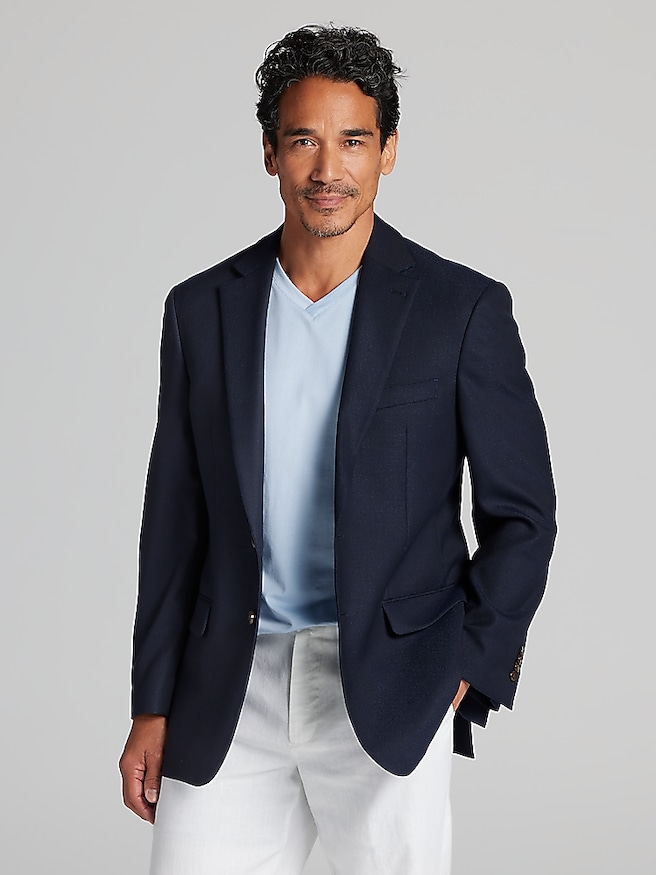
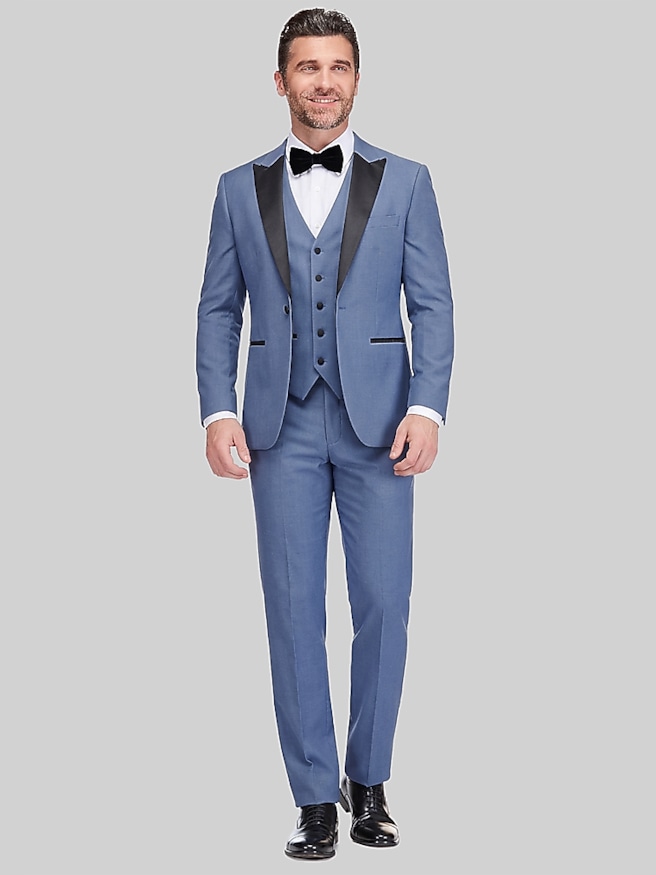
Same-sex wedding outfits for men range from matching suits and tuxedos to distinct, complementary looks that give each groom room for personal style. For two grooms, a cohesive appearance comes from a shared level of formality, a connected color palette, or a few repeated details—not necessarily identical clothing. Matching black tuxedos create a unified silhouette, while navy and charcoal suits can look equally intentional when paired with similar shirts and accessories. Two suits in the same color can also feel individual through different lapel shapes, waistcoats, or ties. The right balance depends on the ceremony, the setting, and how each person likes to dress. A black-tie celebration generally calls for tuxedos, dress shirts, bow ties, and polished formal footwear; a less formal ceremony leaves more room for suits, textured fabrics, and open-neck shirts when the dress code permits. At a courthouse ceremony followed by dinner, a sharply fitted suit can feel celebratory without the full structure of evening formalwear. In a grand ballroom, satin lapels and a crisp shirtfront bring the visual definition associated with a tuxedo. Neither groom needs to dress exactly like the other to belong in the same picture. One might prefer a double-breasted jacket, while the other feels more comfortable in a single-breasted shape. Keeping their colors and accessories connected helps those choices read as a pair. A shared boutonniere, matching pocket-square fabric, or coordinated metal accents can provide that connection without making every detail identical. Wedding-party attire can echo the grooms’ colors while leaving a distinctive element, such as waistcoats or contrasting ties, for the couple. The broader range of Wedding Outfits reflects these different levels of formality, from understated ceremony dressing to traditional evening attire. The result is most convincing when both grooms look comfortable, appropriately dressed for the occasion, and recognizably themselves.
Fabric and fit give wedding attire its shape, movement, and staying power. Wool suiting is valued for its drape, resilience, and ability to release some wrinkles between wears, making it useful for clothing intended for both the ceremony and future occasions. Smooth worsted wool has a clean surface that suits a polished, formal look, while more visibly textured cloth gives a suit depth without relying on a bold pattern. Wool blends can combine that tailored appearance with other qualities, such as added stretch or resistance to creasing, depending on the composition and construction. Linen has a relaxed texture and develops visible creases, which makes it a distinct aesthetic choice rather than a substitute for the crisp finish of traditional formalwear. Velvet introduces a richer surface, while satin or grosgrain accents distinguish many tuxedo lapels from those on ordinary suit jackets. Lining, seams, and fabric weight also affect how clothing feels through a ceremony, photographs, dinner, and dancing. A jacket should sit cleanly across the shoulders, with lapels that lie flat and a collar that rests close to the shirt collar. Pulling at the button or excess fabric bunching behind the neck can distract from an otherwise well-coordinated outfit. Trousers need enough room through the seat and thighs for sitting comfortably, with a hem that meets the shoes neatly rather than collecting in folds. Slim, tailored, and classic fits offer different proportions; the most flattering choice is the one that works with the wearer’s build and allows natural movement. Two grooms with different heights or proportions may look more cohesive in individually balanced cuts than in the same cut worn by both. Sleeve length, trouser rise, and jacket length help establish that balance. Small alterations can make familiar formalwear feel personal, especially when a shirt cuff shows cleanly beneath the jacket and the trousers maintain a smooth line while standing or walking.
Shirts, footwear, and accessories complete same-sex wedding outfits without needing to compete with the tailoring. A white dress shirt creates a clear, versatile foundation, while a subtle color can connect a suit to the ceremony palette. Collar shape matters because it frames both the face and the tie; a collar that holds its shape helps the whole outfit look finished even after the jacket comes off. Bow ties are closely associated with tuxedos, while neckties offer a broad range of textures and patterns for suited looks. Pocket squares can pick up a color from a tie or boutonniere without repeating the exact pattern. For two grooms who want distinct accents, related shades can create a softer connection than identical accessories: a deep green tie on one and a pocket square with a small green detail on the other, for example. Dress shoes should complement the formality of the clothing and feel secure through standing, walking, and dancing. Familiarity matters as much as polish when the celebration involves hours on foot. Coordinated attire also works for wedding-party members and guests, although their clothing should follow the invitation’s dress code rather than duplicate every detail of the couple’s looks. A tie, pocket square, or pair of cuff links can make a thoughtful wedding-party gift when chosen around the recipient’s style and the planned attire. After the celebration, careful handling helps preserve both the fabric and the fit. Care follows the garment label, with professional cleaning when specified, gentle brushing where appropriate, and prompt attention to spills. A broad, supportive hanger helps a jacket retain its shoulder shape, while properly hung trousers are less likely to develop unwanted folds. Clothing should be clean and fully dry before extended storage in a breathable garment bag. These details matter for suits intended to appear again at anniversaries, formal dinners, and other celebrations. Well-chosen wedding clothing can hold the memory of a particular day while remaining a useful, personal part of a wardrobe.