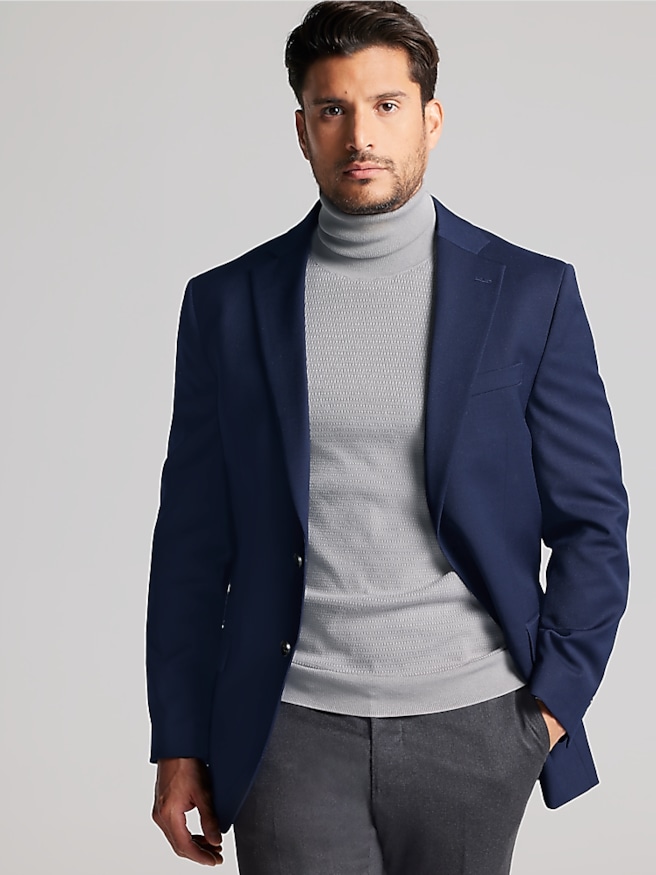
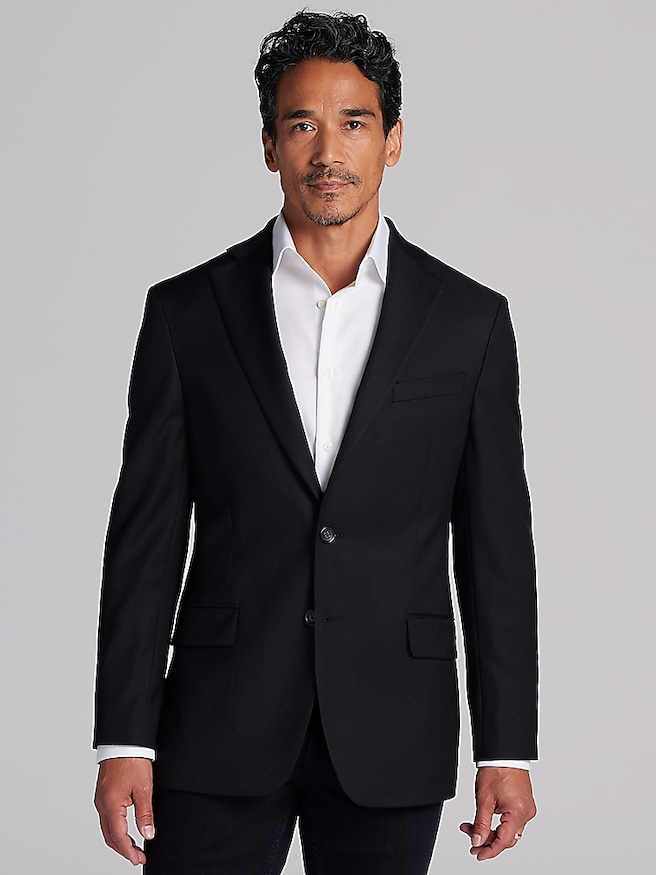
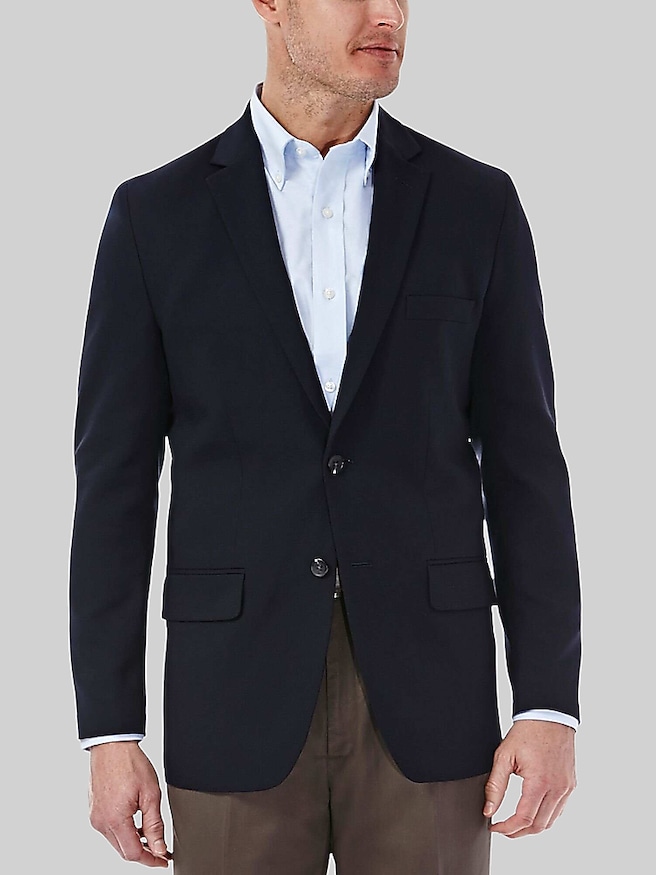
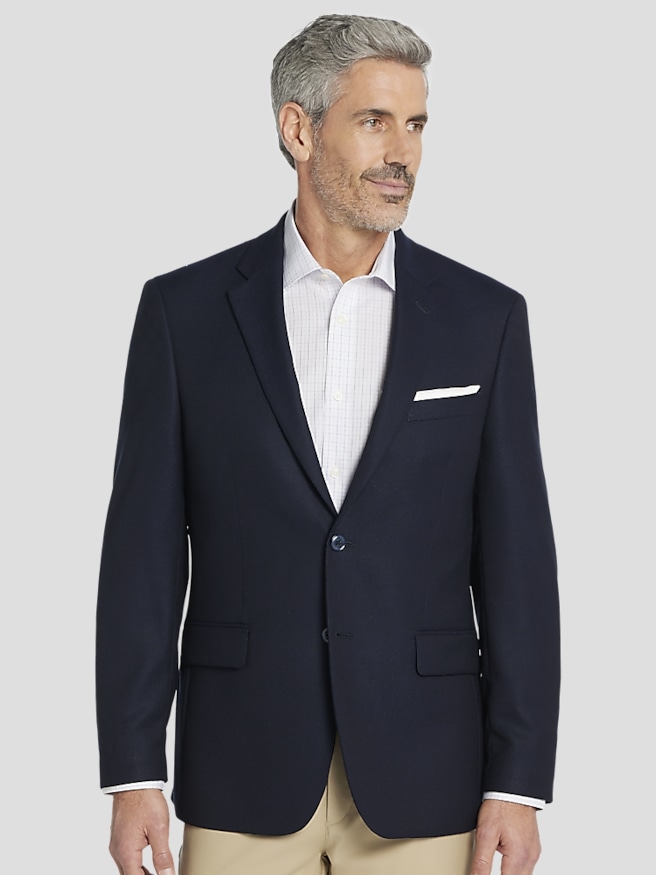
Rose blazers are men’s tailored jackets in pink tones that range from pale blush and dusty rose to deeper shades with mauve undertones. Worn as separates, they bring color to an outfit without the coordinated formality of a full suit. A muted rose blazer can feel understated beside charcoal trousers and a white shirt, while a clearer pink shade creates a stronger focal point against navy. The distinction matters: rose describes a family of colors rather than one exact shade, and the fabric’s texture can make that color appear softer, richer, or more pronounced. Matte weaves tend to keep the look grounded, while a subtle sheen gives the jacket a dressier character. For wedding guests, graduation celebrations, dinner dates, and social receptions, a rose blazer offers an expressive alternative to familiar neutral tailoring. In a workplace that welcomes business-casual dressing, a subdued rose jacket can also work with dark trousers, a simple shirt, and polished leather shoes. More conservative professional settings may call for a quieter color, so the occasion’s dress expectations remain important. Styling is usually strongest when the surrounding pieces give the jacket room to stand out. White, ivory, light blue, gray, and navy create dependable combinations, with brown or burgundy leather adding depth. A patterned shirt can work when its scale is restrained and one of its colors relates to the jacket. Likewise, a textured tie or a neatly folded pocket square can add interest without turning every part of the outfit into a competing statement. Rose is especially effective for someone who enjoys classic menswear but wants more personality than a standard dark jacket provides. Its appeal comes from that balance: recognizable tailoring, a distinctive color, and enough flexibility to move between dressed-up celebrations and relaxed occasions where a full suit would feel excessive.
Fabric and construction shape how a rose blazer looks, moves, and holds up to repeated wear. Wool and wool-blend cloth can provide a clean drape and natural resilience, helping the jacket maintain its shape between outings. Cotton often creates a more relaxed impression, with a surface that pairs easily with chinos or dark denim. Linen and linen blends introduce visible texture and a less structured character; their tendency to crease is part of that look rather than necessarily a sign of poor quality. Synthetic fibers may contribute strength, wrinkle resistance, or easier maintenance, depending on the blend and construction. A small amount of stretch can make sitting and reaching more comfortable, but it does not replace an accurate fit. Lining also affects the experience: a fully lined jacket can slide smoothly over a shirt, while partial lining may give the garment a lighter, less enclosed feel. The best choice depends on how often the blazer will be worn and whether the intended outfit calls for crisp definition or softer tailoring. At the shoulders, the jacket should follow the body without extending conspicuously beyond it or pulling across the upper back. The lapels should rest against the chest, and the front should close without strong tension lines radiating from the button. A comfortable fit leaves room to sit, shake hands, and reach across a table without the entire jacket lifting sharply. Sleeve length should allow a small amount of shirt cuff to show, while the jacket’s overall length should look balanced with the wearer’s torso and trousers. Slim, tailored, and classic fit labels are useful starting points, but their proportions can vary. Attention to the actual chest, waist, shoulder, and sleeve measurements is more reliable than the label alone. Secure buttons, even stitching, smooth seams, and a lining that does not tug or bunch are useful construction details to assess. Thoughtful alterations can refine sleeve length or the waist, although a well-fitting shoulder is a better starting point than a jacket that needs extensive reshaping.
The most useful rose blazer is one that works with clothing already in regular rotation. For a wedding reception with a jacket-and-trousers dress code, a dusty rose blazer with navy dress pants, a white shirt, and dark brown lace-ups creates a composed outfit without looking like a mismatched suit. For dinner at a neighborhood restaurant, the same color family can feel more relaxed over a fine-gauge knit with charcoal trousers and loafers. Dark, clean-finished denim offers another option when the setting allows it; minimal fading and a neat hem help preserve the jacket’s polished effect. Trouser rise and shape matter as much as color, since an extremely narrow leg or a low waistband can disrupt the proportions of a longer jacket. Accessories work best when they support the overall level of formality. A leather belt that relates to the shoes, a restrained watch, and a pocket square with a small amount of rose can make the outfit feel connected rather than overly coordinated. For anyone drawn to Elevated Blazers, rose brings an expressive color choice to the familiar appeal of a well-cut separate. It can also make a thoughtful gift for someone who regularly wears tailored clothing, especially when their preferred measurements, fit, and shade are already known. A soft, muted rose may suit a recipient who favors understated color, while a stronger pink may appeal to someone with a more expressive wardrobe. Good care helps preserve both the color and the shape. Follow the garment’s care label, address marks promptly with fabric-appropriate treatment, and avoid repeated cleaning that the jacket does not need. A gentle clothes brush can remove surface dust from suitable fabrics, while a broad, supportive hanger helps maintain the shoulders. Let the jacket air after wear, empty the pockets before storing it, and leave space around it rather than compressing it between other garments. These habits help a rose blazer remain a dependable part of a wardrobe, ready for its next occasion.