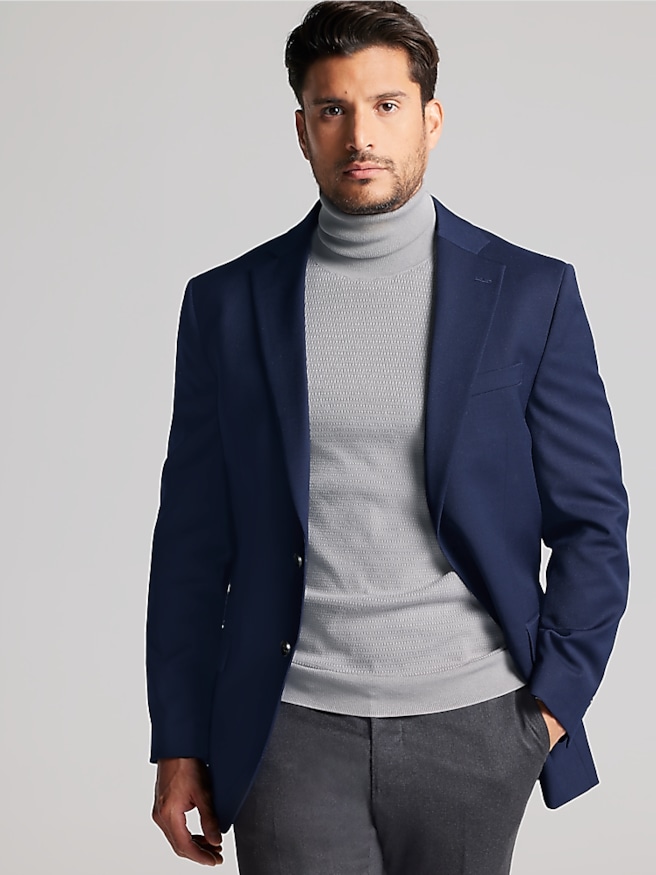
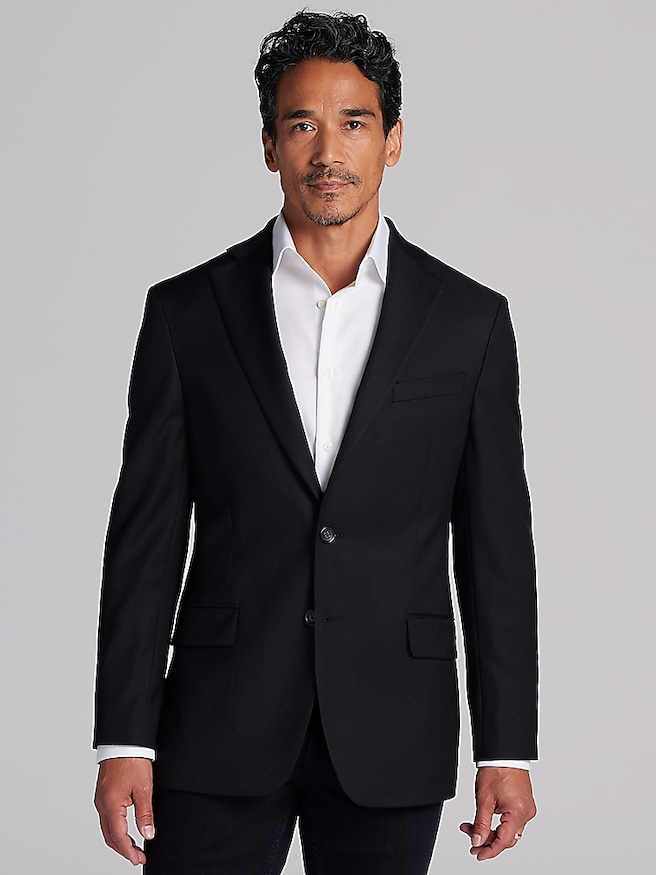
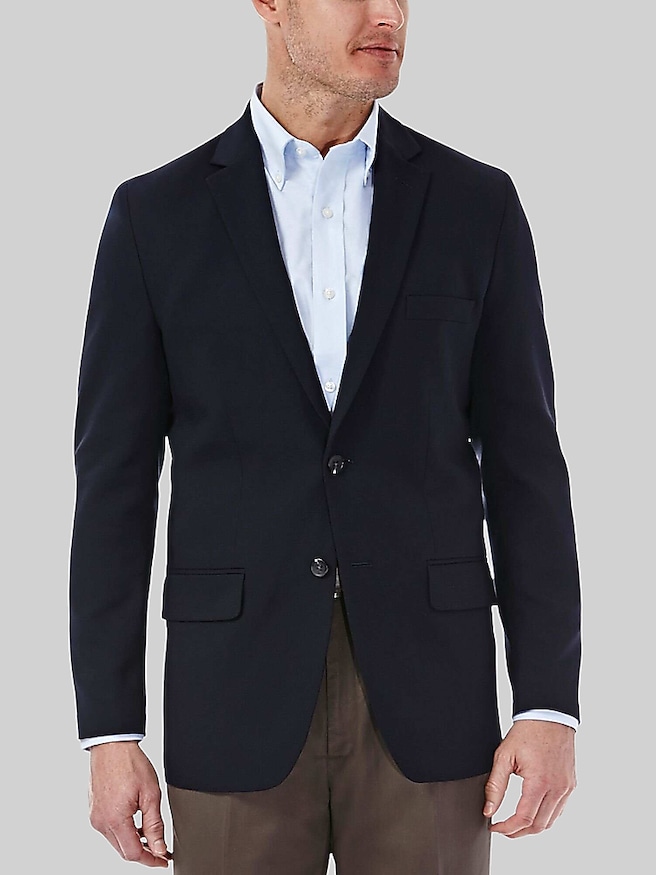
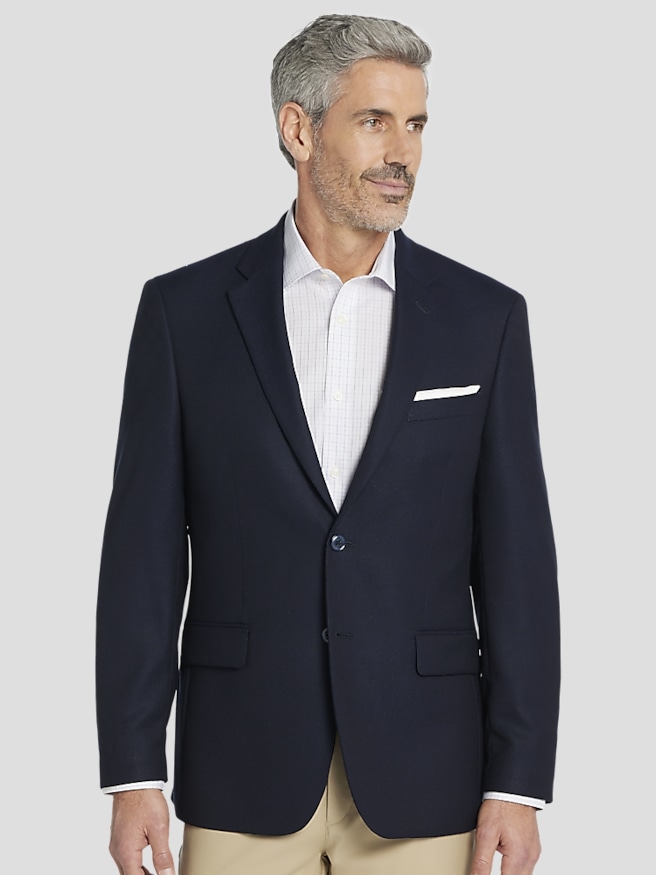
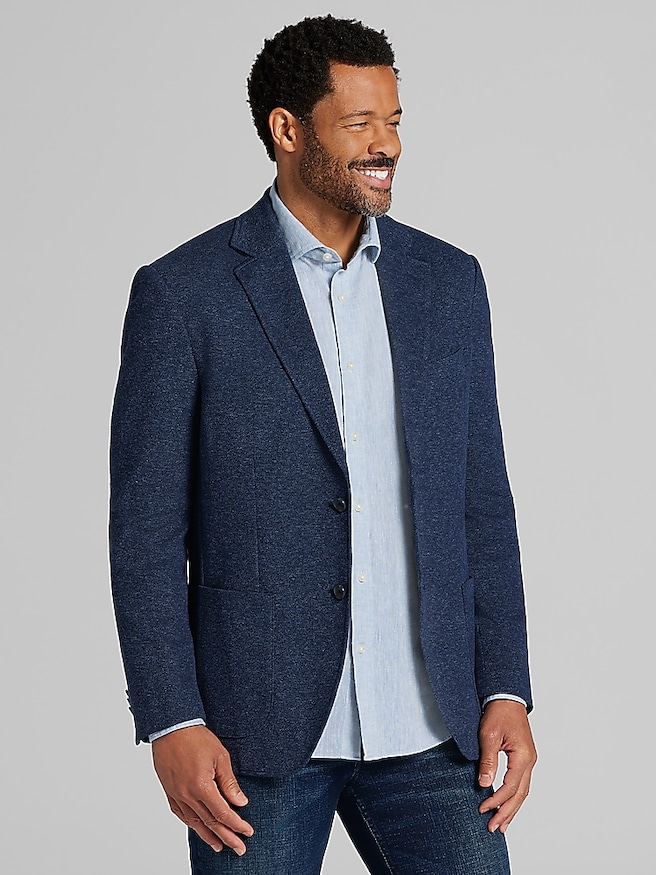
Elevated blazers combine tailored shape, expressive fabric, and considered finishing details to give an outfit a more polished appearance without requiring a matching suit. A clean shoulder line, balanced lapels, and a defined waist can make a simple shirt and trousers feel intentional, while texture or an unusual weave adds interest without relying on a bold pattern. The appeal is versatility: the same general silhouette belongs at a business presentation, an anniversary dinner, a gallery opening, or a wedding with a dress code that calls for tailored separates. Unlike a suit jacket designed around coordinating trousers, a blazer works as a distinct layer, with enough character to stand comfortably on its own. Navy, charcoal, brown, and softer neutral shades offer a useful foundation, while checks, subtle herringbone, and dimensional weaves introduce depth. A single-breasted front often feels straightforward and adaptable; a double-breasted shape creates a stronger visual statement through its overlapping front and broader lapel line. Notch lapels keep the look understated, while peak lapels add definition and a slightly more dressed-up character. Pocket construction contributes to the overall impression, too. Patch pockets tend to feel relaxed, while flap or welt pockets can support a cleaner, more formal appearance. These details matter most in combination rather than isolation. A textured blazer over a fine-gauge knit and flat-front trousers can look polished without feeling stiff, while a smooth, dark blazer with a crisp dress shirt provides a sharper frame for an occasion. Dark, un distressed denim can also work when the setting allows it, particularly with a shirt that has a neat collar and footwear with a clean finish. The most convincing combinations share a sense of proportion and purpose: the blazer adds structure, the layers beneath it sit smoothly, and the other pieces support the look rather than compete for attention. A pocket square or textured tie can add personality, but neither is necessary when the fabric and fit already provide enough distinction.
Fabric plays a large role in how elevated blazers look, move, and hold their shape. Wool is valued for its natural resilience, drape, and ability to recover from ordinary creasing, although the feel and performance depend on the weave, weight, and finishing. Wool blends can introduce added softness, texture, or stretch, with the precise fiber composition offering a better indication of performance than the fabric name alone. Cotton often gives a blazer a more relaxed surface and a slightly crisper hand, while linen contributes visible texture and a naturally creased appearance that suits less formal styling. Velvet offers a richer surface for dressier occasions, especially when the surrounding pieces remain simple. Knit constructions can feel more flexible than firmly woven cloth, creating a useful middle ground between a tailored jacket and an easy layer. Stretch can support movement, but it does not replace a well-proportioned fit. Across fabric types, the shoulder seam should sit near the natural edge of the shoulder unless the design intentionally uses a broader silhouette. The lapels should lie smoothly against the chest, and the front should close without pronounced pulling or an X-shaped crease around the button. Enough room through the upper back makes everyday movements, such as reaching for a door or sitting through a meeting, feel less restricted. Sleeve length is usually most balanced when a small amount of dress-shirt cuff remains visible, though the intended styling and the wearer's proportions also matter. Jacket length should relate to the torso and seat rather than follow a trend at the expense of balance. Slim, tailored, and roomier silhouettes can all look refined when the shoulders, chest, and sleeves work together. Interior construction influences the result as well: a structured chest creates a more defined outline, while softer construction allows the fabric to follow the body more closely. Lining can help a blazer slide over a shirt, and partial lining may offer a lighter feel. Clean stitching, neatly finished seams, and securely attached buttons are useful signs of careful workmanship, particularly in a layer expected to see repeated wear.
An elevated blazer earns its place through the range of occasions it can handle and the ease with which it fits into an established wardrobe. For a professional who moves between desk work, client conversations, and dinner plans, restrained color and moderate texture can make those transitions feel natural. For someone who usually dresses casually, a softer shoulder and an uncomplicated pattern can make tailoring feel familiar rather than ceremonial. Celebrations allow a little more expression through a distinctive weave, a deeper color, or a more pronounced lapel, with the invitation and venue helping establish the appropriate level of formality. For an understated starting point, Classic Blazers provide a useful reference for enduring shapes that pair easily with shirts, knits, and separate trousers. Small finishing decisions keep the overall effect cohesive: a belt and shoes with a similar degree of formality, a shirt collar that sits comfortably beneath the lapels, and trouser proportions that complement the jacket's shape. Care helps preserve those details over time. The garment's care label should determine the cleaning method, since fiber content, lining, and internal structure may require specific handling. A broad, shaped hanger supports the shoulders better than a thin wire hanger, while space between garments helps prevent compression and unnecessary wrinkles. Emptying the pockets after wear reduces strain on the fabric, and gently brushing away surface dust can keep it from settling into the weave. Rest between wears gives resilient fibers time to recover. Stains are best addressed promptly according to the care instructions rather than rubbed aggressively, and pressing should respect the fabric's recommended heat settings. When given as a gift, a blazer is most personal when its shape and character reflect the recipient's actual routine, whether that means frequent presentations, milestone dinners, or simply enjoying a more finished everyday appearance. Knowing the recipient's measurements, preferred silhouette, and usual color palette makes the choice more thoughtful. Lasting appeal comes from that balance of individuality, comfort, and construction: a blazer that looks distinctive, feels natural in motion, and remains relevant beyond a single occasion.