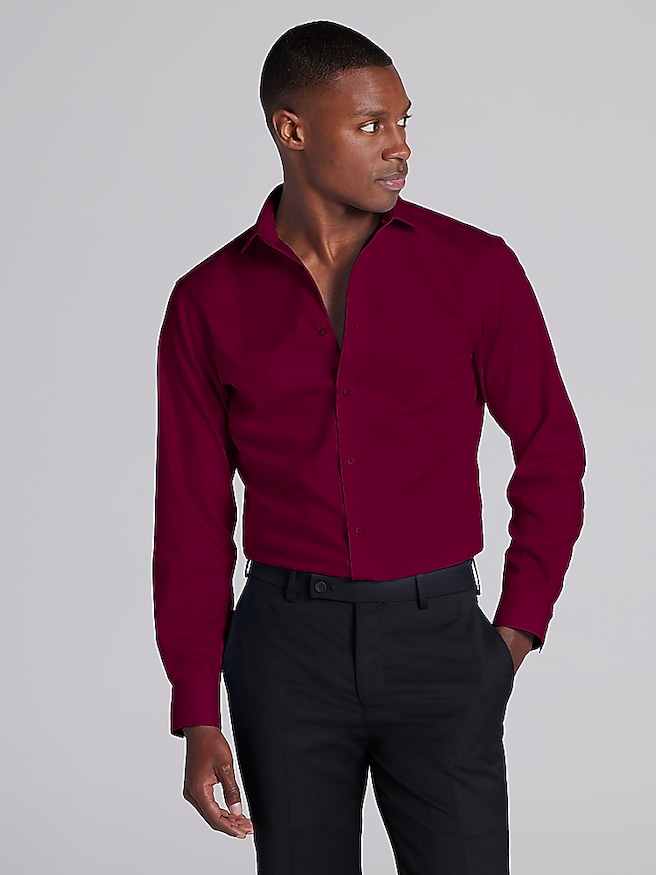
Red cotton shirts for men come in styles that go well beyond the basic crewneck. A soft cotton tee can give jeans and sneakers a little more color, while a red collared shirt can look right at home with chinos at the office or under a sport coat at dinner. The shade often makes as much of a difference as the cut. A bright cherry red stands out against charcoal or dark denim, especially when the rest of the outfit is simple. Burgundy and wine shades are more subdued and work well with navy tailoring, gray trousers, and brown leather. A muted brick red has an earthy quality that pairs easily with olive or khaki. Solid red lets the color do most of the work; a heathered knit breaks up the color, while a plaid can make the red feel less prominent by mixing it with navy, cream, or other neutrals. For that patterned look, Cotton Plaid Shirts offer another way to wear red without making it the only color in the outfit. The way a shirt is worn changes its character, too. A red cotton button-front worn open over a plain tee reads as casual, even if the same shirt looks polished tucked into trousers with a belt. With a jacket, only part of the shirt shows, so even a saturated red can work without overpowering the rest of the outfit. If the jacket already has a visible texture or pattern, a solid shirt gives the eye somewhere to rest. And when the shirt is the main feature, simple details tend to be enough: dark jeans with a clean hem, a plain leather belt, or shoes that pick up one of the quieter colors in a plaid. Red is distinctive on its own, and it doesn’t need to be repeated in every accessory.
The feel of a red cotton shirt depends on how the fabric is made as much as it does on the fiber itself. Cotton jersey, common in tees, is a knit that typically has some natural give and drapes close to the body. A woven cotton oxford has a more noticeable texture and enough body to look tidy with the collar open. Cotton poplin is smoother, with a cleaner surface that suits a tucked-in shirt or a tailored jacket. Fabric weight matters within each of those categories: a substantial jersey can hold its shape better than a very light knit, while a finer weave can sit more smoothly beneath a jacket. Pure cotton is generally breathable and can soften with wear, though it may crease after a long stretch at a desk or in the car. A cotton blend can offer added stretch or wrinkle resistance, depending on the other fibers and how the fabric is constructed. For fit, the shoulders are a useful starting point. On a traditionally cut shirt, the shoulder seams should sit near the edge of the shoulders rather than pulling inward or falling well down the arms. A button-front should lie flat across the chest when seated, with enough room to reach forward without tugging at the buttons. The intended use helps determine the right length: a shirt worn untucked should have a hem that looks balanced on its own, while a shirt meant to stay tucked needs enough length to remain in place when reaching or bending. Little construction details matter for durability, particularly on a shirt that sees frequent wear. Even stitching around the cuffs and side seams, a neckline that lies flat, and neatly sewn buttonholes are worth noticing. A heavier fabric isn’t automatically more durable; how well the seams are sewn and how much strain the fit puts on them also affect how well a shirt holds up.
Care makes a noticeable difference with red cotton, particularly when the goal is to keep a deep shade looking even. The garment label is the best starting point because the weave, dye, and finish can all affect how a shirt responds to washing. A strongly dyed red shirt may release some color in its first few washes, so it makes sense to wash it with similar colors rather than with white tees or pale dress shirts. Turning it inside out can reduce rubbing against other garments, especially along the seams and collar, where fading tends to show first. Cool water is often a good choice if the label allows it, and avoiding unnecessary heat in the dryer can help limit shrinkage. Reshaping a shirt while it’s still slightly damp can smooth the collar, hem, and button placket before they dry. For a woven shirt that needs a crisper finish, pressing it inside out at the recommended setting can help avoid leaving shiny marks on the fabric. These small habits are useful for a tee worn repeatedly with denim and for a collared shirt that needs to look neat under a jacket. As a gift, a red cotton shirt is a good fit for someone who likes some color but tends to stick with familiar silhouettes. A crewneck in a favorite shade can slip easily into a wardrobe built around jeans, while a muted red button-front makes sense for someone who regularly wears chinos or layers shirts under a jacket. The best clues are often in the shirts the recipient already reaches for: a collar that stays open without fuss, a cut with more room through the chest, or a hem that’s typically left untucked. Matching those preferences leaves room to choose a red that feels a little more expressive without asking the recipient to dress in a whole new way.