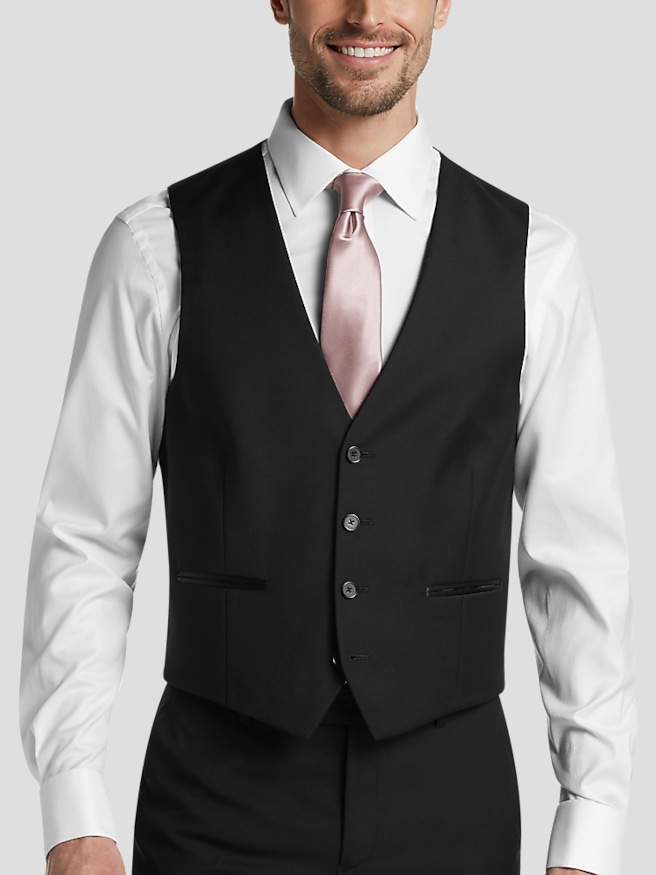
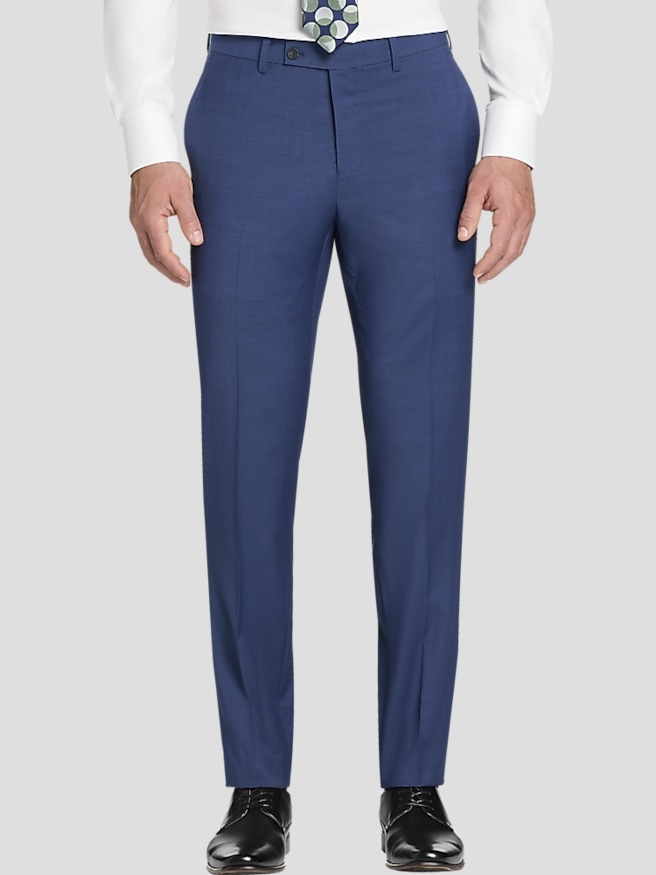
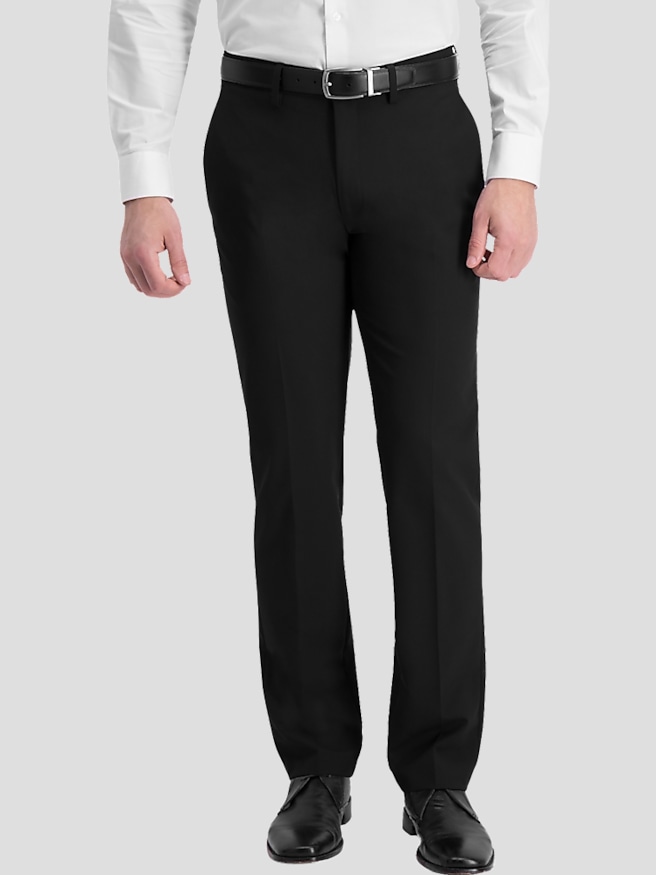
Red carpet styles for men pair formal tailoring with details that show up well in photographs: a defined shoulder, a clean trouser line, and a deliberate touch of color, texture, or shine. A black tuxedo with satin lapels, a crisp white dress shirt, a black bow tie, and polished black dress shoes is the classic black-tie look. Peak lapels give the jacket a sharper outline, while a shawl collar has a smooth, rounded line that puts more emphasis on the shirt and bow tie. For a black-tie-optional wedding or gala, a dark suit with a white shirt and dark tie can strike much the same note without the satin trim and other hallmarks of a tuxedo. A premiere, reception, or celebration with a more flexible dress code leaves room for a burgundy dinner jacket, a deep green suit, or a tonal combination in which the shirt and jacket are close in color but not quite a match. The effect can be subtle: a navy jacket may read nearly black in a dim room, then show its color in a flash photograph. Fabric makes a difference, too. Smooth wool suiting drapes cleanly and gives a strong color room to stand on its own. Velvet catches the light along the collar and sleeves, bringing depth to a solid jacket without the need for a bold pattern. A woven jacquard can look restrained from across the room and reveal its pattern up close. Satin is particularly effective in small areas, such as lapel facings, where its sheen frames the face instead of competing with it. A matte trouser can balance a lustrous jacket, and a simple shirt can give a patterned jacket enough space to stand out. The same contrast works in reverse: understated tailoring leaves room for a silk pocket square or a pair of patent leather shoes.
Fit is what makes red carpet formalwear look as good in a candid photo as it does in a posed portrait. On a traditionally cut jacket, the shoulder seam should sit near the edge of the shoulder without a dent below it or a ridge at the sleeve. The collar should rest against the back of the shirt, and the jacket should close without pulling into an X across the waist. A neat sliver of shirt cuff, often about a quarter to half an inch, creates a visible boundary between jacket and hand. Trouser length depends on the cut and the shoes: a narrow leg can finish just above the shoe or meet it with little to no break, while a fuller leg often looks better with a slight fold at the front. The aim is a hem that falls cleanly rather than stacking in folds at the ankle. Those details matter in motion, not just in a fitting-room mirror. A jacket that looks sharp with both arms at rest should still allow an easy handshake, and trousers should have enough room to sit through dinner without binding at the thigh. A longer jacket or wider trouser can make a strong statement when the proportions are intentional; a slim cut isn't the only way to look put together. For an awards dinner that moves from portraits to a seated meal, a comfortable fit through the back and waist matters more than an aggressively tapered silhouette. At a school dance, where group photos may give way to hours on the dance floor, secure dress shoes and a jacket with room to move can make just as much difference as the lapel shape. The suits and accessories in Men's Homecoming Red Carpet Looks bring that photo-ready approach to a school celebration, with room for personal touches that suit the dress code.
What makes a red carpet look memorable is often one detail that feels at home with the rest of the outfit. A small lapel pin can stand out against a plain jacket, while a pocket square can pick up a secondary color in a patterned tie without matching it exactly. When the jacket is already the focal point, as with a plush velvet or tonal jacquard, a plain shirt and quietly finished accessories let the fabric show. At a less formal reception, a fine-knit top or an open-collar dress shirt can soften the lines of a suit, but neither is a substitute for a formal shirt and bow tie at a traditional black-tie event. Intended use matters beyond the dress code. A dark wool suit can go from a wedding reception to an awards dinner with a change of accessories, while a richly textured dinner jacket suits occasions where a more distinctive look feels appropriate. For a gift, a silk pocket square offers a personal touch without requiring measurements, and cuff links make sense for someone who already wears French-cuff shirts. Tailored clothing is more dependent on the recipient's measurements and preferred cut, especially through the shoulders and chest. With repeated wear, fabric and construction help determine how well formalwear keeps its shape. A smooth, tightly woven suiting fabric is generally less prone to snagging than an ornate weave, while a raised pile like velvet can show pressure marks if it's crushed in storage. A broad hanger supports jacket shoulders, and a breathable garment bag can protect rarely worn pieces from dust. Letting wool tailoring air out before putting it away can help keep it fresh between cleanings. The care label is the best reference for cleaning and pressing, especially on jackets that combine a wool body with satin facings or have a textured finish. Shoes benefit from a quick wipe after wear and time to air out before storage. These small habits keep the details that show in photographs, from a straight lapel edge to a clean shoe finish, looking sharp the next time the outfit comes out.