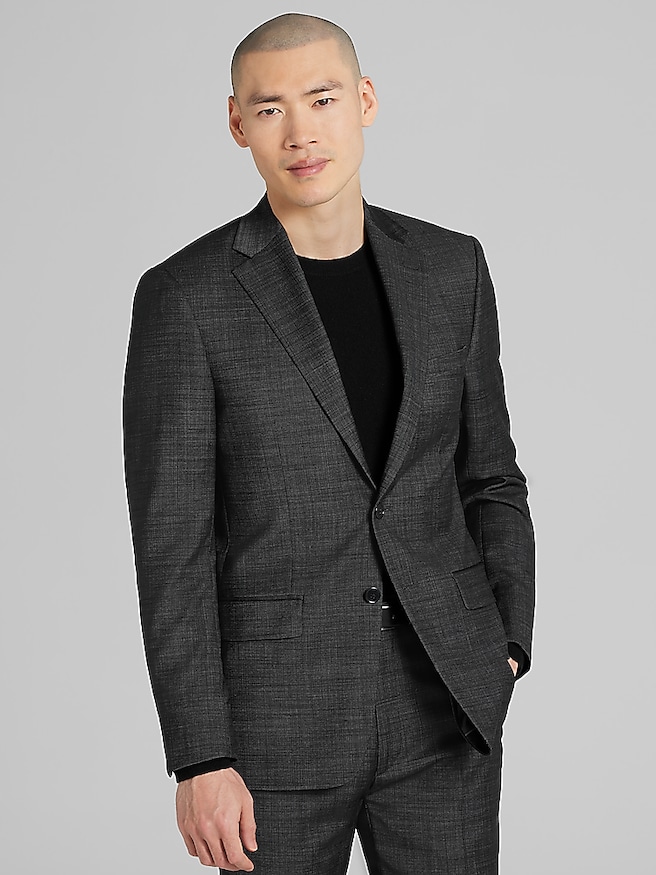
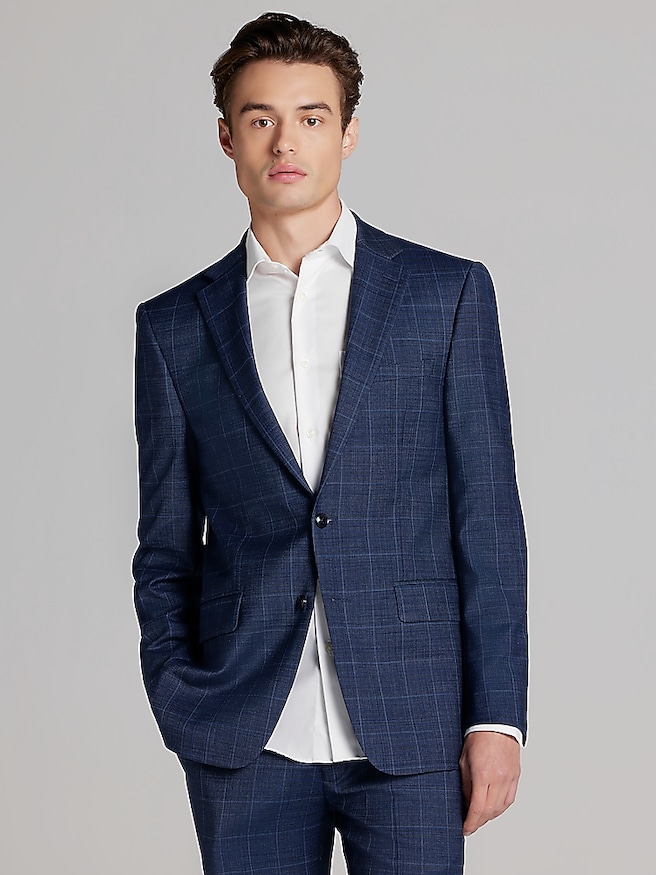
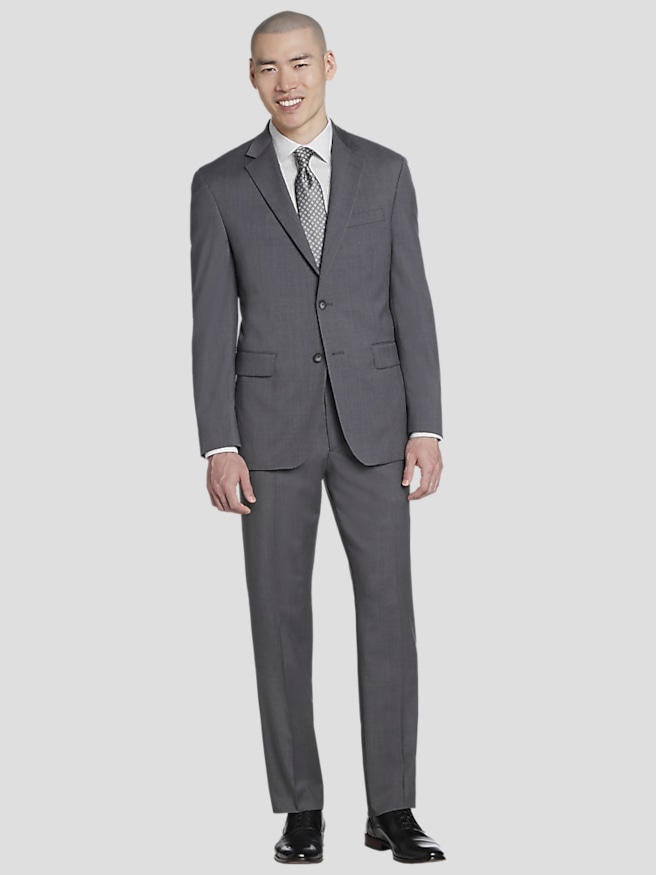
Red carpet-inspired prom suits translate the polish and personality of celebrity eveningwear into a look made for a memorable school celebration. Rich jewel tones, velvet textures, patterned jacquard, and contrasting lapels give these suits their distinctive character, while balanced proportions keep the result sharp rather than costume-like. A deep burgundy or emerald suit can make a statement through color alone; a midnight blue look can feel just as expressive when its fabric catches the light. Black remains a strong foundation, especially when smooth trousers contrast with a textured jacket. The appeal lies in those deliberate details: a defined shoulder, a lapel with a subtle sheen, or a woven pattern that becomes visible up close. Velvet has a directional pile that creates depth as the wearer moves, while jacquard incorporates its pattern into the weave rather than relying on a printed surface. Brocade can introduce a more ornate effect, though its weight and texture vary by fabric. These finishes bring visual interest to portraits, group photos, and the entrance to the dance without requiring elaborate accessories. Lapel shape also changes the mood. Peak lapels create a pronounced upward line, shawl collars give dinner jackets a smooth, rounded finish, and notch lapels offer familiar suit styling that can feel less ceremonial. Tuxedo styling typically adds satin or grosgrain accents, while a suit generally uses the main jacket fabric on its lapels. Either approach can suit prom when it matches the event’s dress expectations. For someone who usually wears casual clothing, a clean silhouette with one expressive feature can feel more natural than several competing statements. For a confident dresser, a bold woven motif or saturated color provides room for personal expression. The strongest red carpet influence is not necessarily the loudest look; it is the sense that the fabric, shape, and finishing details belong together. That balance makes an outfit feel intentional in a posed portrait and equally convincing during an unplanned moment on the dance floor.
Fit gives a statement suit its structure, and comfort determines how well that structure holds up through the evening. A jacket’s shoulder should follow the wearer’s shoulder line without extending noticeably beyond it or pulling tightly across the upper back. The chest needs enough room for an easy breath, and the lapels should lie against the body rather than bow outward. A trim silhouette can look crisp, but slim fit does not mean restrictive fit. Sitting through dinner, reaching for a phone, and lifting both arms while dancing all require movement that a mirror-only fitting can miss. A jacket that forms pronounced pulling lines around the button may need more room or a cut better suited to the wearer’s proportions. Sleeve length works best in relation to the shirt beneath it, often allowing a small amount of shirt cuff to show. Trouser fit deserves the same attention: a waistband that stays comfortably in place, a smooth seat, and enough space through the thigh help the outfit look composed when standing or seated. A shorter trouser break creates a clean finish above the shoe, while a slight break offers a more traditional line; excessive fabric pooling at the ankle can distract from either effect. Fabric composition influences the experience as much as cut. Wool suiting can offer breathability, resilient drape, and recovery from light creasing, with performance varying by weave and weight. Blended fabrics may contribute wrinkle resistance or easier maintenance, depending on their composition. Stretch can improve ease of movement, but it cannot compensate for a jacket or trousers that are too small. Lining, pocket construction, and seam finishing also affect comfort and durability. Smooth lining helps a jacket move over a shirt, while neatly finished seams and secure buttons support repeated wear. For teens still growing, alterations are best considered with the event date in mind, since changes in height or build can affect sleeve length, trouser hems, and overall balance.
Finishing pieces work best when they support the suit’s character instead of competing with it. A crisp white shirt gives rich colors and patterned jackets a clear backdrop, while a dark shirt can create a more tonal evening look when the event’s dress code allows it. A bow tie emphasizes formal styling, and a long tie can give a suit a streamlined finish. With an intricate jacket fabric, restrained neckwear and a simple pocket square leave room for the texture to stand out. Exact matching is not essential: a pocket square that picks up a secondary color can look more considered than repeating the same fabric everywhere. Shoes should suit the outfit’s level of formality and feel secure enough for hours on foot. A smooth leather lace-up offers a polished foundation, while a dress loafer can work with a less traditional combination. Time spent wearing the shoes before prom can reveal rubbing or slipping that is easy to overlook during a quick try-on. For celebrations with a more relaxed dress code, Trendy Smart Casual Suits For Prom Night offers a related direction with a less formal feel. Care matters after the celebration, especially for distinctive fabrics. The garment label should determine cleaning methods, since wool, velvet, decorative weaves, and contrasting trims may need different treatment. A broad, supportive hanger helps preserve jacket shape, and trousers benefit from hanging without being crowded into a packed closet. Allowing the outfit to air after wear before storing it helps release everyday odors. Velvet pile can flatten under pressure, so direct ironing is best avoided unless the care instructions specifically permit an appropriate method. Prompt attention to spills and loose stitching can prevent a small issue from becoming lasting damage. With thoughtful care and a fit that remains comfortable, a prom suit can have a life beyond one evening, whether worn to a formal celebration or graduation photos, or separated into a jacket and trousers for occasions that call for a different level of polish.