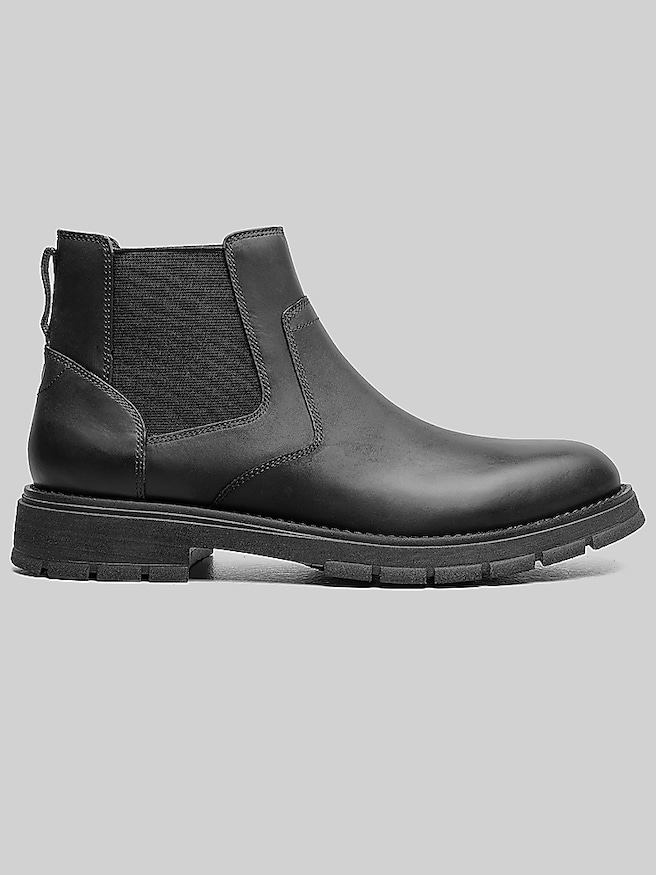
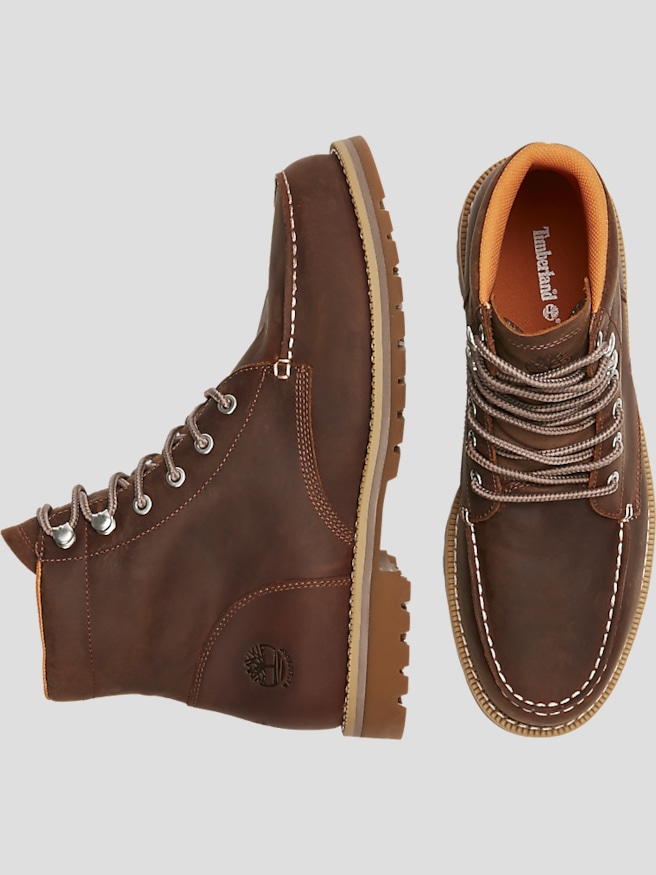
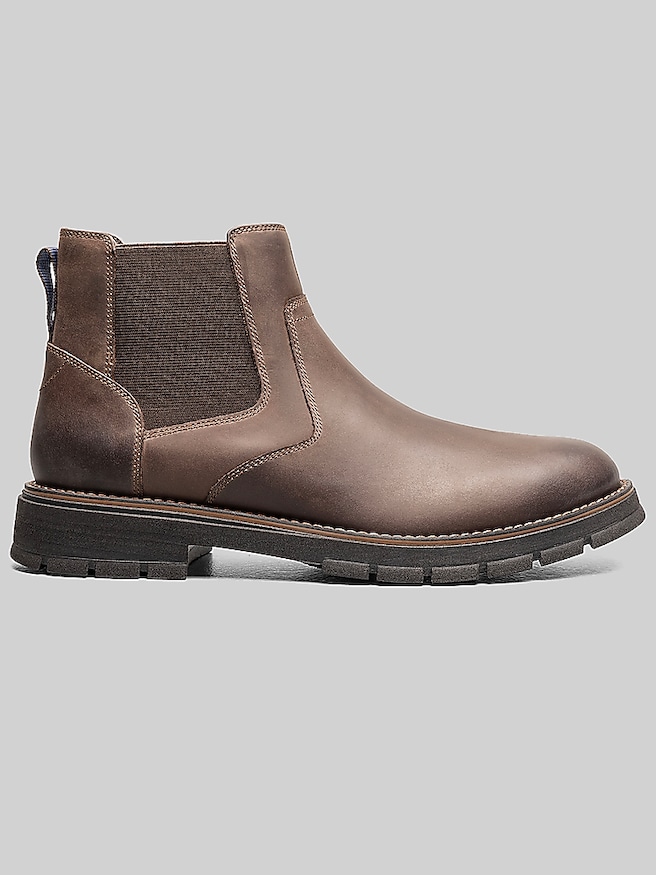
Men’s pull-on boots offer the coverage and structure of a boot without laces, using elastic side panels, an open shaft, or pull tabs to make getting dressed straightforward. The category spans close-fitting Chelsea silhouettes, taller Western-inspired shapes, and purpose-built work footwear, so the right choice depends on how the boots will be worn. An ankle-height pair with a clean leather upper can sit comfortably beneath chinos for an office day, while a taller shaft and substantial outsole may suit more demanding everyday tasks. Full-grain leather retains its natural surface character and can develop a distinctive patina with wear; its performance also depends on thickness, finishing, construction, and upkeep. Suede has a softer, textured appearance that works well with denim and relaxed tailoring, although it calls for care products designed specifically for its nap. Synthetic uppers offer another option, with flexibility, breathability, and abrasion resistance varying by material rather than by appearance alone. Inside the boot, lining, cushioning, and footbed shape influence comfort just as much as the upper. A smooth lining can make entry easier, while a removable footbed may provide room for a compatible replacement insole. Underfoot, rubber outsoles are common for everyday traction and cushioning, and leather soles can contribute to a slimmer, dressier profile. Neither material guarantees comfort or grip on its own; tread, sole flexibility, and the surfaces underfoot matter. Work-oriented pull-on boots may include reinforced toes or other protective features, but those features should be evaluated through the footwear’s stated specifications and relevant safety standards. Steel and composite safety toes serve a different purpose from a roomy, unreinforced toe box. Likewise, a rugged appearance is not evidence of slip resistance or electrical-hazard protection. For someone moving between a desk, a commute, and a casual dinner, an understated everyday boot may be the practical choice. For someone whose workplace requires protective footwear, documented performance requirements take priority over styling. This distinction keeps convenience from being mistaken for suitability: easy entry is a shared feature, not a promise that every pull-on boot belongs in every setting.
Fit deserves particular attention with men’s pull-on boots because there are no laces to tighten across the foot. The instep, heel, and opening work together to hold the boot in place, and the best fit feels secure without squeezing. In a leather pull-on design, a small amount of heel movement can occur before the sole becomes more flexible, but pronounced slipping, rubbing, or a foot sliding forward suggests a fit problem rather than a normal adjustment period. Toes need room to move without pressing against the front or top of the boot. Width matters separately from length: sizing up to solve a narrow fit can leave too much space at the heel and change where the foot bends inside the shoe. Trying boots with the socks intended for regular wear gives a more useful picture than relying on size alone, especially when switching between thin dress socks and thicker everyday socks. Elastic-sided styles should stretch enough for entry and then settle close to the ankle, while taller designs need an opening that accommodates the foot without an uncomfortable struggle. Toe shape also affects both feel and appearance. A rounded toe often has an easygoing character, a gently tapered toe looks more refined with tailored trousers, and a square toe gives Western-inspired footwear a broader visual profile. Actual interior space still depends on the last, so the outline is only part of the fit story. Color and finish help connect the boot to the rest of a wardrobe. Black leather creates a restrained line with dark trousers, while brown tones complement indigo denim, olive chinos, and textured sport coats. For that warmer color palette, Men's Brown Pull On Boots offers a focused category to explore. Trouser shape matters, too: a straight leg can fall neatly over a taller shaft, whereas a narrow hem may bunch around it. A modest break keeps the boot visible without letting excess fabric collect at the ankle.
Durability comes from the relationship between materials, construction, and use, not simply from how heavy a boot feels. Reinforced seams, securely attached pull tabs, and well-finished edges can support repeated wear, while a stable heel and appropriately flexible sole help the boot move naturally with the foot. Some stitched or welted constructions can allow resoling, depending on the design and the condition of the upper; other constructions are not intended for that kind of repair. A substantial outsole may be useful for long periods on hard surfaces, but added weight is not automatically an advantage for someone walking between appointments. Everyday comfort is often a balance of cushioning, support, flexibility, and a shape that matches the foot. Regular care helps preserve those qualities. Smooth leather benefits from removing surface dirt with a soft brush or cloth and using a conditioner suited to the finish when needed. Too much product can alter the leather’s appearance, so restrained application and a discreet spot test are sensible. Suede generally needs a suede brush and compatible cleaner rather than the creams used on smooth leather. Boots should dry naturally after cleaning, away from direct heat, and any care instructions supplied with the footwear should take precedence over general advice. Allowing the interior to dry between wears helps manage moisture from normal use, and properly sized boot trees can help maintain shape without stretching the upper. Inspecting tread, heels, seams, and elastic panels occasionally can reveal wear before it affects comfort or footing. Pull-on boots can also make a thoughtful gift for a partner, parent, sibling, or friend whose wardrobe and routines are familiar. The most useful choice reflects what that person already wears: a clean ankle boot for tailored casual outfits, a more relaxed shape for denim, or appropriately specified work footwear for a job with defined requirements. Because instep height and width strongly affect fit, an established boot size and preferred silhouette are more helpful than a guess based on sneakers. A well-chosen pair earns its place through repeat wear, bringing together convenient entry, dependable construction, and a look that feels natural with the clothing around it.