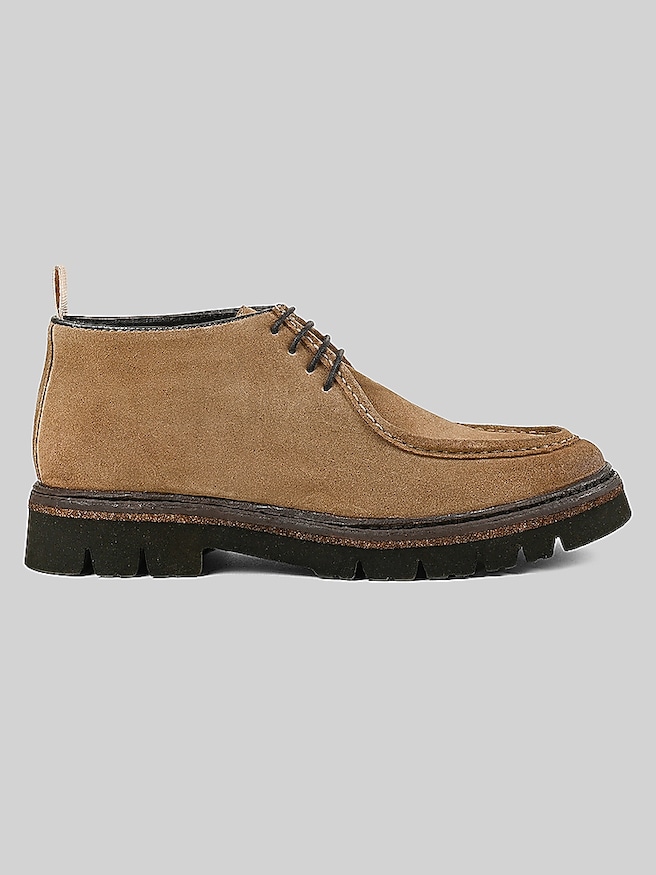
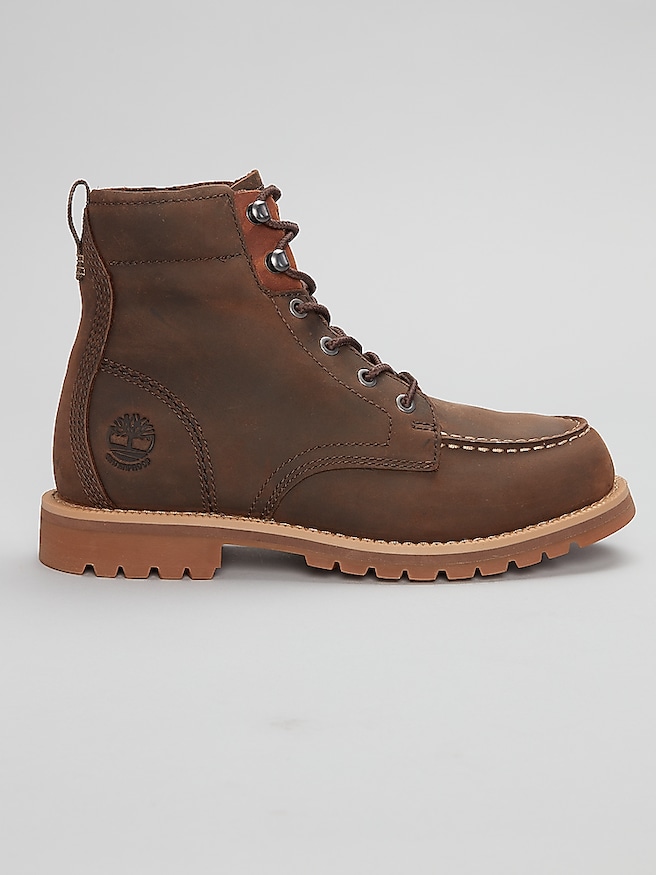
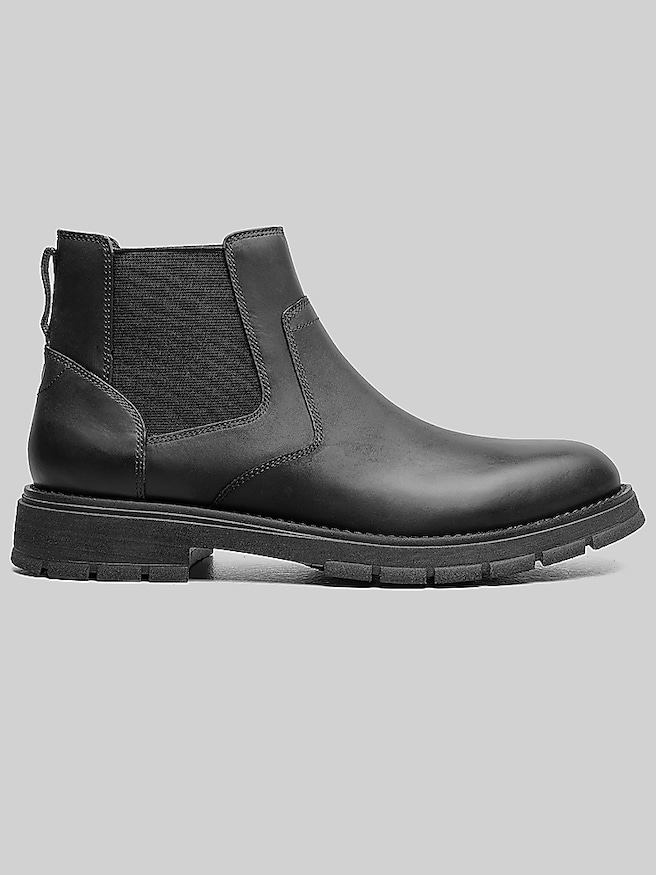
Men's brown pull-on boots are lace-free boots that combine easy entry with a secure fit through elastic side panels, shaped shafts, or both. The category includes streamlined Chelsea boots, western-inspired silhouettes, and substantial work-oriented designs, with each style serving a distinct purpose. Chelsea boots typically have ankle-height shafts and elastic side panels, making them a natural match for straight-leg jeans, chinos, and relaxed tailoring. Western-inspired pull-on boots often have taller shafts, shaped heels, and decorative stitching that give denim and casual trousers a more distinctive finish. Work-oriented styles generally emphasize sturdy uppers, substantial outsoles, and room for practical socks, though protective features should always be confirmed in the product specifications. Brown brings its own range of character: light tan feels casual, medium brown complements blue denim, and deep chocolate can look understated with charcoal or navy trousers. Smooth leather creates a cleaner appearance, while suede adds a soft, textured finish. A rounded toe usually feels relaxed and versatile; a tapered profile can look more polished without becoming overly formal. These distinctions matter when picturing a pair at a desk, across a restaurant table, or beside a well-worn pair of jeans. A slim ankle boot can sit neatly beneath a narrower trouser opening, while a taller, broader shaft needs enough fabric to fall comfortably over it. Shaft height and shape also affect how easily the boot slips on and how it feels against the leg. For someone building a small footwear rotation, brown pull-on boots can bridge everyday casual outfits and occasions that call for something sharper than sneakers. They can also make a thoughtful gift for a father, partner, brother, or friend whose usual wardrobe already includes denim, chinos, or casual sport coats. Knowing that person's preferred boot shape and typical shoe size is more useful than choosing by color alone, since the right silhouette makes the boots easier to wear regularly.
Materials and construction play a large part in how brown pull-on boots feel, wear, and age. Full-grain leather retains the hide's natural surface and can develop creases and a patina with use, although its performance still depends on thickness, finishing, and care. Other smooth leathers may have a more uniform appearance, while suede offers a napped surface that needs its own cleaning tools and protective treatment. Synthetic uppers vary considerably, so material descriptions are useful for understanding care requirements rather than assuming every brown finish behaves like leather. Inside the boot, lining materials, seams, and cushioning can be just as noticeable as the upper. A smooth lining can make entry easier, while an interior seam that presses against the ankle may become distracting over a long day. Fit is particularly important in a lace-free design because there are no laces to fine-tune the hold. The instep should feel comfortably secure without pressure across the top of the foot, and the toes should have enough room to move without hitting the front. Some heel movement can occur in a new pull-on boot, but pronounced lifting or a foot that slides forward can indicate a poor match in size or shape. Leather may soften with wear, but a painful fit should not be treated as a necessary break-in stage. Trying boots with the socks intended for everyday wear gives a more useful sense of space than switching to unusually thin socks just to make a pair fit. Underfoot, cushioning and support should suit the amount of standing and walking involved. Flexible soles may feel comfortable for ordinary errands, while deeper tread and more substantial construction can suit demanding casual use. Traction, water resistance, and job-specific protection are separate features, not automatic benefits of a rugged appearance. For workplace use, any required safety toe, electrical hazard protection, or slip-resistance rating needs to be verified explicitly. A sturdy-looking boot is not a substitute for footwear that meets an employer's requirements.
The details that make brown pull-on boots easy to live with often become clear through everyday wear. Elastic panels should recover their shape after stretching, pull tabs should feel securely attached, and the sole should suit both the wearer's routine and the boot's intended use. Some construction methods allow worn soles to be replaced, while others do not; repairability depends on the individual design and is worth confirming before assuming a pair can be resoled. Consistent care helps preserve both appearance and comfort. Loose dirt can be removed from smooth leather with a soft brush or cloth, followed by a cleaner appropriate for the finish when needed. A compatible conditioner can help maintain suitable leather uppers, but applying too much may darken the surface or leave residue. Testing care products on a discreet area is especially useful with lighter brown shades. Suede needs a suede brush and suitable spot treatment rather than ordinary leather cream, which can flatten or alter its texture. If boots become damp, allowing them to dry naturally away from direct heat helps protect the uppers and construction. Giving footwear time to air between wears and storing it without crushing the shafts can also help maintain its shape. Styling is equally practical: a modest trouser break keeps fabric from bunching over the boot, and a straight or gently tapered leg usually works well with ankle-height designs. Dark jeans and a textured sweater create an easy casual combination, while chinos and an unstructured jacket bring a smoother leather pair into a relaxed office setting. A brown belt in a compatible tone can connect the outfit without requiring an exact color match. For wardrobes centered on black denim or sharper monochrome combinations, men's black pull-on boots offer an alternative. Brown remains especially versatile alongside navy, olive, cream, and gray, with the finish, proportions, and fit determining how comfortably a pair moves between everyday settings.