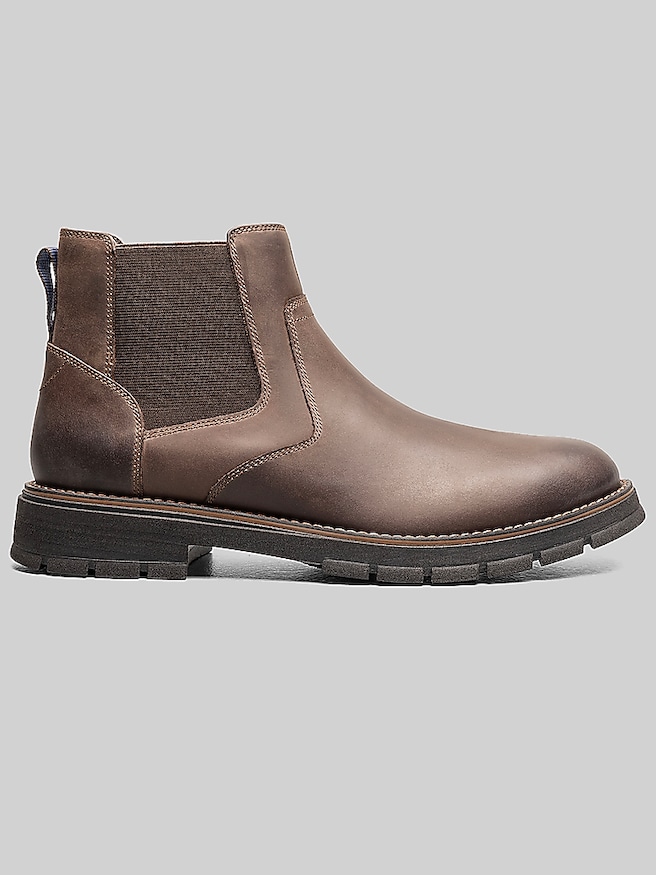
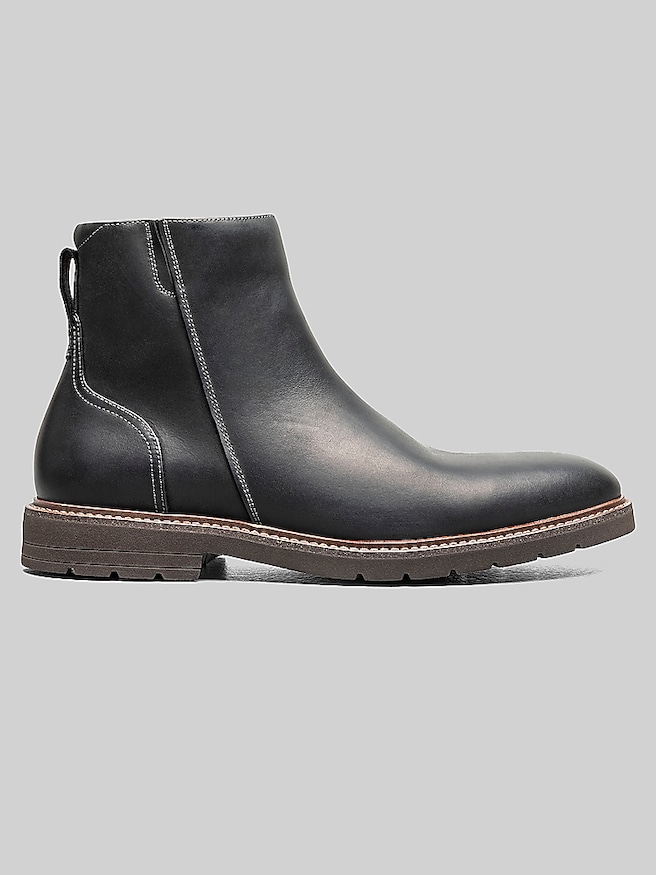
Men’s black pull-on boots combine a lace-free design with a dark, adaptable finish that works with everything from denim to tailored trousers. The category includes close-fitting Chelsea boots with elastic side panels, Western-inspired shapes with taller shafts, and substantial utility silhouettes with broader toes and thicker soles. Each has a distinct presence: a slim Chelsea boot can sit neatly beneath a narrow trouser opening, while a rounded, heavier profile gives straight-leg jeans a more grounded look. Black keeps the overall effect understated, allowing the shape of the toe, the texture of the upper, and the edge of the sole to define the boot’s character. Smooth leather typically creates the cleanest line for business-casual outfits and dinners, especially when the finish has a soft sheen rather than a heavy gloss. Suede brings a matte surface and visible texture that pairs naturally with denim, chinos, and unstructured jackets. Synthetic uppers offer another construction option, with flexibility, breathability, and care requirements that depend on the material used. Leather can soften and develop creases with wear, but its feel and longevity also depend on thickness, finishing, lining, and overall construction. A supple upper may feel comfortable quickly, while a firmer one can hold a more structured shape. Neither quality alone determines how well a boot will perform over time. Even stitching, secure sole attachment, neatly finished edges, and resilient elastic panels all contribute to a dependable design. Pull tabs can make entry easier, particularly on boots with a snug opening, though they work best as a gentle assist rather than a handle for forcing the foot inside. For someone who moves between a desk, appointments, and an evening out, the appeal is straightforward: the right pair provides a consistent foundation without the visual detail of laces or buckles. That simplicity also makes black pull-on boots easy to repeat across a wardrobe without every outfit feeling identical.
Fit matters especially in pull-on footwear because there are no laces to tighten across the instep or loosen over the forefoot. A well-matched pair should hold the middle of the foot securely without squeezing, leave enough room for the toes to rest naturally, and allow the foot to enter without an excessive struggle. Some heel movement may occur in a new boot, depending on its construction, but pronounced lifting, rubbing, or a foot that slides forward can indicate a poor match. Length alone does not tell the whole story; foot width, instep height, heel shape, and shaft opening all affect comfort. A longer size is not necessarily the answer to a boot that feels too tight across the widest part of the foot. Trying boots with the type of socks intended for everyday wear gives a more useful sense of fit, and walking across a clean indoor surface can reveal pressure points that standing still may not expose. Elastic side panels should flex comfortably while helping the upper return to shape, rather than feeling stretched to their limit before walking begins. Underfoot, cushioning can soften the feel of each step, while a supportive footbed and stable heel contribute to comfort during longer periods on the feet. Sole design also changes how a boot feels and looks. A low-profile outsole keeps the silhouette refined beneath tailored pants; a thicker rubber sole adds visual weight and can provide a more cushioned feel, depending on its composition. Tread, flexibility, and traction vary, so a substantial appearance should not be mistaken for a verified performance feature. Boots intended for workplace hazards require the appropriate documented protective features, not simply a rugged shape. For everyday use, durable construction also means choosing a design suited to the actual routine. Frequent walking, mostly seated office days, and occasional dinners place different demands on footwear. Replaceable components can extend useful life on some constructions, while consistent care helps preserve both the upper and the sole connection.
Black pull-on boots are particularly useful when an outfit needs a clear line from the trouser hem to the shoe. Dark denim with a modest opening can fall over the shaft without bunching, while charcoal trousers create a restrained combination for an office with a relaxed dress code. A smooth, tapered boot can also complement a softly tailored jacket, provided the overall outfit is appropriately informal; it is not a substitute for footwear required by a strict formal dress code. With chinos, a knit polo, or an overshirt, a rounded toe and matte finish keep the effect easygoing. The styling range associated with Men's Casual Black Boots makes trouser shape worth considering: a very narrow hem may catch on a broad shaft, while excessive fabric can hide the boot and collect around the ankle. A clean drape usually looks more intentional than a stack of heavy folds. Keeping that appearance takes modest, regular attention. Surface dust can be removed with a soft brush or cloth, and smooth leather may benefit from a compatible conditioner used according to the care directions. Black cream or polish can refresh suitable finished leather, but suede needs its own brush and material-appropriate treatment rather than products intended for smooth surfaces. Testing any care product on a discreet area helps avoid an unwanted change in color or texture. Boots should dry naturally after cleaning, away from direct heat, and rest between wears when possible. Shoe trees can help maintain shape in compatible styles, while early attention to worn heel edges or separating soles may prevent more extensive damage. For gifting, these boots can suit a partner, father, brother, or friend who already favors straightforward footwear and neutral clothing. Knowing the recipient’s usual size, width, and preferred toe shape is more useful than choosing by appearance alone. A familiar silhouette with thoughtful construction is likely to become part of an everyday routine rather than remain reserved for an occasional outfit.