Plaid outfits for men range from casual shirt-and-denim combinations to coordinated suits, with the size, color, and placement of the pattern setting the overall tone. Plaid is defined by intersecting horizontal and vertical lines, but the effect can be quiet or expressive. A fine gray check may read almost like a solid from across a room, while broad red and navy blocks give a shirt a more relaxed, workwear-inspired character. Tartan patterns combine bands of varying widths and colors; glen plaid has a more intricate arrangement of small checks; windowpane uses widely spaced lines for an open, uncluttered look. These differences help explain why plaid works for a neighborhood dinner, an office presentation, or a wedding reception without making every outfit feel alike. For everyday wear, a plaid button-down with dark jeans and leather sneakers creates a straightforward combination that feels considered without being dressy. A brushed plaid shirt worn open over a plain T-shirt has a softer, more casual effect, especially with straight-leg denim or chinos. Olive, navy, charcoal, and brown provide easy foundations because they often repeat colors already present in the fabric. Picking up one of those background shades in the pants makes the outfit look connected without requiring an exact match. Large checks generally become the focal point, so simple layers and understated footwear give the pattern room to stand on its own. Smaller checks can sit comfortably beneath a solid sweater or jacket, with just the collar and a little of the shirt front visible. An untucked shirt works best when its hem is designed for that purpose and does not extend too far below the hips. A tucked shirt creates a cleaner line with chinos or dress pants, particularly when the belt and shoes have a similar level of polish. The result depends as much on proportion and finishing details as it does on the plaid itself.
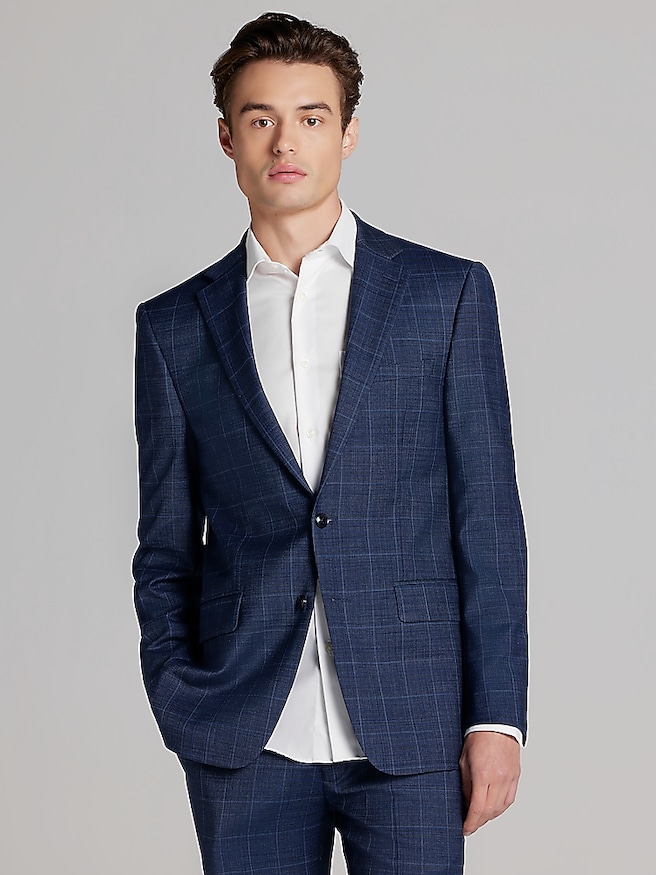
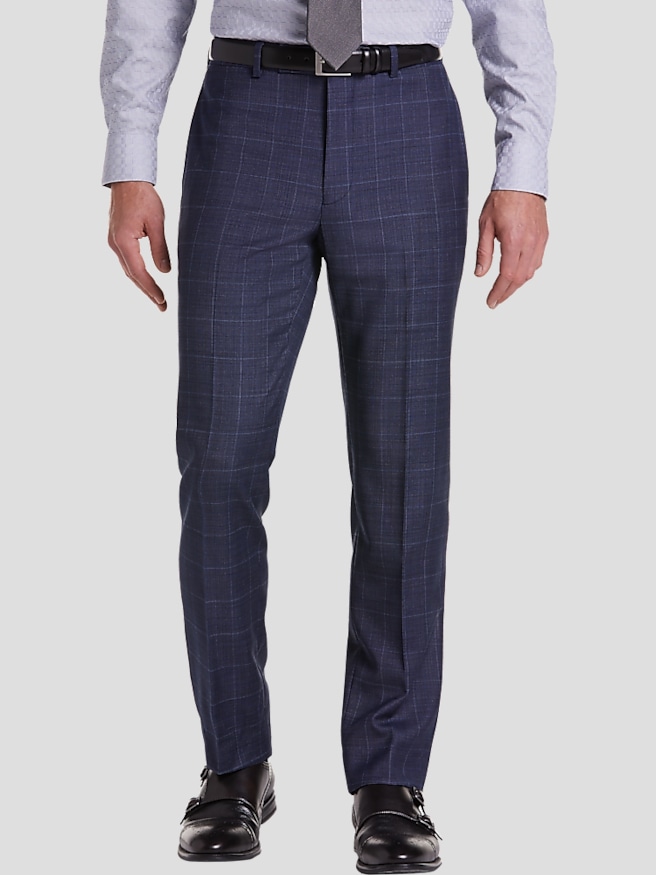
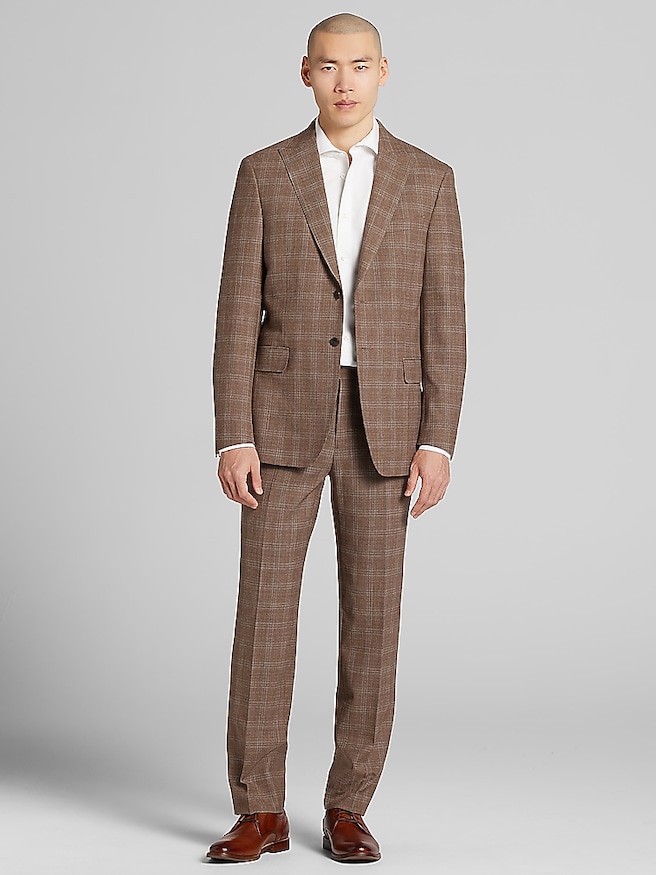
Tailored plaid brings the same visual interest to office clothing, dinner outfits, and occasion dressing. A navy or charcoal plaid suit can offer more dimension than a solid while remaining restrained, especially when the lines are subtle and close in color to the background. More pronounced windowpane patterns make a stronger impression and tend to look balanced with a plain dress shirt and a tie that does not compete for attention. For weddings, the invitation and venue remain important: plaid tailoring can suit many cocktail or dressy celebrations, but it does not replace a tuxedo when black tie is specified. A separate plaid jacket offers another way to introduce the pattern without committing to a matching suit. The range of looks associated with Plaid Jackets For Men extends from understated checks paired with wool trousers to more visible patterns worn with chinos or dark denim. A jacket with distinct blue lines, for example, can look cohesive over a pale blue shirt and solid gray pants. Keeping the trousers solid also makes the separation between jacket and pants look intentional rather than like an almost-matching suit. Fit is especially noticeable in plaid because the lines make pulling, twisting, and uneven drape easier to see. Jacket shoulders should sit cleanly, lapels should lie flat, and the buttoned front should not strain into an X shape. Sleeves need enough room for comfortable movement without excessive fabric bunching at the wrists. Pants should hang smoothly through the seat and thighs, with a hem length that suits the shoe and the intended silhouette. Slim, tailored, and classic fits describe different proportions, not different levels of polish; the strongest choice is the one that follows the wearer’s shape without restricting it. When two patterns share an outfit, a clear difference in scale helps them remain distinct. A fine plaid shirt beneath a broader check jacket can work, though a solid shirt is a simpler foundation for a patterned suit.
Fabric gives plaid clothing much of its character, influencing the surface, drape, comfort, and care requirements. Cotton shirting can feel crisp and smooth or soft and brushed, and those finishes create noticeably different impressions even when the colors are similar. Flannel refers to a fabric with a soft, napped surface rather than to the plaid pattern itself, so not every plaid shirt is flannel. Oxford and twill weaves can add texture and substance to casual shirts, while wool suiting fabrics often provide the fluid drape associated with tailored jackets and trousers. Blends may introduce stretch, wrinkle resistance, or other performance qualities, but the fiber content and garment construction determine how those benefits feel in practice. A little stretch can make seated work and everyday movement more comfortable, provided the garment still has adequate room through the shoulders, waist, and thighs. Durability depends on more than fabric weight: secure buttons, tidy seams, reinforced stress points, and an even surface all contribute to clothing that holds up to repeated wear. Pattern alignment at prominent seams can also help a tailored piece look more carefully finished. Care should follow the garment label, since a washable cotton shirt and a structured wool jacket need different treatment. For washable pieces, appropriate water settings and avoiding excessive dryer heat can help limit shrinkage and preserve the intended fit. Tailored jackets benefit from supportive hangers, space between wears, and professional cleaning when the care instructions call for it. Storing matching suit pieces together helps keep the outfit complete, while rotating everyday shirts reduces constant wear on any one garment. Plaid can also make a useful gift for a father, brother, partner, or friend whose wardrobe already includes solid shirts and neutral pants. Familiar colors and an established fit are more dependable starting points than an unusually bold pattern. Whether worn for a regular workday or a milestone gathering, well-chosen plaid adds personality through color and proportion while leaving room for the wearer’s own style.