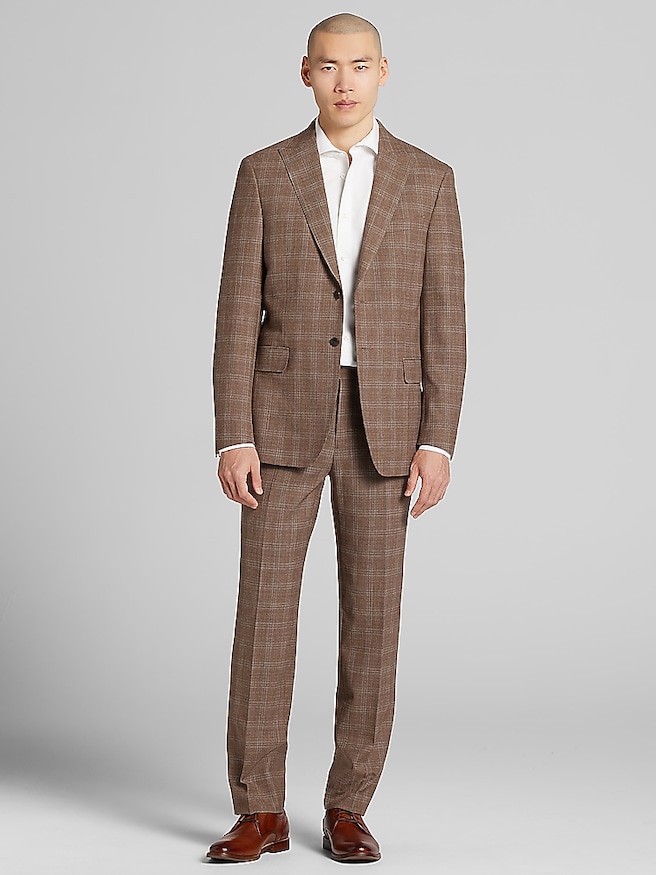
Men’s plaid suits bring depth and personality to tailored clothing without requiring a loud color or an elaborate outfit. Their intersecting lines create a pattern that can look restrained from across a room and more detailed up close, making plaid a distinctive choice for business settings, weddings, dinners, and celebrations. The character of the suit depends on the scale, contrast, and spacing of those lines. A fine glen plaid blends small checks into a textured surface, while a broad windowpane creates a more open, architectural effect. An overcheck introduces another line of color, sometimes subtle enough to notice only at close range. These differences matter when imagining how a suit will look across a conference table, in a wedding photograph, or beneath the lighting of a restaurant. Smaller, lower-contrast patterns tend to feel quieter; larger checks and stronger contrasts give the outfit a more expressive presence. Navy and charcoal grounds keep the overall impression familiar, while gray can make the pattern more visible without overwhelming the tailoring. The earthy tones of men’s brown plaid suits pair naturally with cream, pale blue, burgundy, and textured leather accessories. Color is only part of the effect, though. A soft, muted plaid can feel relaxed even in a traditionally cut suit, while sharply defined lines can make a simple silhouette look crisp and deliberate. For a professional who regularly wears solid suits, plaid offers variety while maintaining a polished appearance. For a wedding guest or someone dressing for an anniversary dinner, it adds visual interest without depending on novelty details. The occasion’s dress code still sets the boundaries: plaid can work well in many business and dressy social settings, but a formal black-tie requirement calls for the appropriate evening attire. The most versatile pattern is often one that feels comfortable in more than one setting, whether that means a quiet check for presentations or a bolder plaid reserved for memorable celebrations.
Fabric and fit determine how that pattern feels in daily wear. Wool is a traditional suiting material because it can combine a smooth drape with breathability and resilience, although the weight, weave, and finish make a substantial difference. A tightly woven fabric may hold a clean outline, while a softer construction can produce a more fluid shape. Wool blends vary considerably, so the fiber percentages and care label provide more useful information than the blend description alone. Cotton can give plaid a less formal character, and fabrics with stretch may offer additional movement, depending on their composition and construction. Surface texture also changes the impression of the check: a smooth finish emphasizes the lines, while a more textured weave can soften their edges. Lining, internal structure, and seam finishing contribute to comfort and shape, particularly for someone spending hours seated at a desk or moving between meetings and an evening event. A good fit allows the plaid to sit cleanly rather than pulling it out of alignment. Jacket shoulders should follow the body without extending noticeably beyond it, and the chest should remain smooth when the jacket is buttoned. Diagonal tension around the button, bowed lapels, or fabric gathering beneath the collar can distract from both the pattern and the silhouette. Slim, tailored, and classic fits describe different proportions, not a ranking of quality, and those descriptions can vary between suit designs. The right choice accommodates the wearer’s frame and preferred amount of room. Trousers need enough ease through the seat and thighs for sitting, walking, and climbing stairs without strain. Their length also affects the pattern’s presentation: excess fabric bunching at the shoe can interrupt the clean vertical line. Alterations can refine sleeve length, trouser hems, and some aspects of the jacket’s shape, while major shoulder or structural changes are more involved. For someone attending a ceremony followed by a long reception, comfort in motion matters just as much as the appearance of the suit while standing still.
Styling a plaid suit is often most successful when the surrounding pieces give the pattern room to stand out. A solid white or light blue shirt creates a clear foundation, especially when the suit includes several intersecting colors. A solid tie can echo a minor shade in the plaid, bringing the outfit together without matching every element exactly. Texture provides another way to add interest: a quietly textured tie or a pocket square with a simple fold can complement the suit without introducing another prominent grid. Multiple patterns can work together when their scales differ, but a small checked shirt beneath an equally small plaid jacket may create visual clutter. Shoes and belts help establish the level of formality, with polished leather lending a dressier finish and more textured leather giving the outfit a slightly softer character. Whether a suit jacket also works separately depends on its fabric, structure, and pattern; some read naturally as tailored separates, while others look best with their matching trousers. For frequent wear, thoughtful care helps preserve both the cloth and the suit’s shape. Follow the garment’s care instructions, use a supportive jacket hanger, and hang trousers neatly to limit unnecessary creasing. Letting the suit air between wears and removing surface dust with an appropriate clothing brush can reduce the need for repeated cleaning. Professional cleaning should reflect the care label and the garment’s condition rather than an automatic schedule, and the jacket and trousers generally benefit from being cleaned together to help maintain a consistent appearance. Direct heat or heavy pressing can affect certain fabrics, so stubborn wrinkles are best handled according to the material’s requirements. Over time, areas such as trouser hems, pocket edges, and the seat may show wear first, making fit and careful handling important to longevity. A plaid suit can also be a meaningful gift for a partner, parent, or graduate marking a professional milestone, provided sizing, personal style, and any needed alterations are considered. A pattern that suits the wearer’s personality, supported by comfortable proportions and considered finishing details, makes the suit feel like part of a real wardrobe rather than an outfit intended for only one photograph.