Pink dress jackets bring color to tailored dressing without giving up the clean lines of a blazer or suit jacket. Defined by their pink fabric and structured silhouette, these jackets can range from pale blush and muted rose to salmon and more saturated shades. The effect depends as much on texture and construction as on color: a soft, matte rose jacket feels understated, while a brighter pink with a smooth finish makes a stronger entrance. For men who usually wear navy, gray, or black, pink creates another way to dress for weddings, proms, anniversary dinners, and celebrations where personal style belongs alongside a polished appearance. A blush jacket over a white shirt with charcoal trousers can look composed in a family portrait or at a reception. A deeper rose paired with dark trousers and a simple tie brings more contrast, especially when the rest of the outfit stays quiet. Pink does not automatically make a jacket casual, but the event’s dress code still matters. A colored blazer works differently from a matching suit, and neither should be treated as a substitute for required black-tie attire. In a workplace that welcomes expressive tailoring, a subdued pink jacket with navy trousers can also feel professional without looking like a conventional business suit. The distinction between a separate jacket and a suit jacket is worth noting: a standalone blazer is intended to coordinate with contrasting trousers, while a suit jacket is designed as part of a matching outfit. That difference influences how naturally the finished look comes together. Pink is particularly effective when the jacket becomes the focal point rather than competing with several equally bold pieces. A restrained shirt, well-proportioned trousers, and clean shoes leave room for the color to do its work, whether the setting is a ceremony, a dinner reservation, or a gathering with friends.
Fabric and fit determine how a pink dress jacket feels through an entire event, not just how it looks on a hanger. Wool and wool-blend fabrics can provide a smooth drape and help a tailored silhouette recover after sitting, although performance depends on the specific weave and blend. Cotton often has a more matte, approachable character, while linen contributes visible texture and a naturally less pristine finish. Creasing is part of linen’s appearance rather than necessarily a sign of poor quality. Polyester and other blended fibers can influence wrinkle resistance, shape retention, and care requirements; the fiber percentages and care label tell more than a broad fabric name alone. A subtle woven texture can soften the impact of pink, while a smooth surface makes the color appear more uniform. Construction matters, too. A fuller lining creates a finished interior and helps the jacket slide over a shirt, while partial lining leaves more of the interior fabric exposed. Neither construction guarantees better quality; neat seams, secure buttons, a flat collar, and a balanced drape are more useful details to examine. At the shoulders, the jacket should follow the body without extending into a pronounced ridge or pulling across the upper back. When buttoned as intended, the front should lie reasonably smooth rather than forming a tight X around the closure. Slim fits tend to sit closer through the chest and waist, while roomier cuts allow more ease, but those labels are not standardized across every garment. Sleeve length, jacket length, and the relationship between the lapels and the wearer’s frame all affect proportion. Someone seated through a ceremony or reaching across a dinner table needs enough room to move without the collar lifting dramatically or the chest feeling restricted. Tailoring can refine sleeve length and waist shape, but shoulders and overall proportions deserve attention from the start. Frequent wear also makes sound stitching, resilient fabric, and comfortable movement especially important.
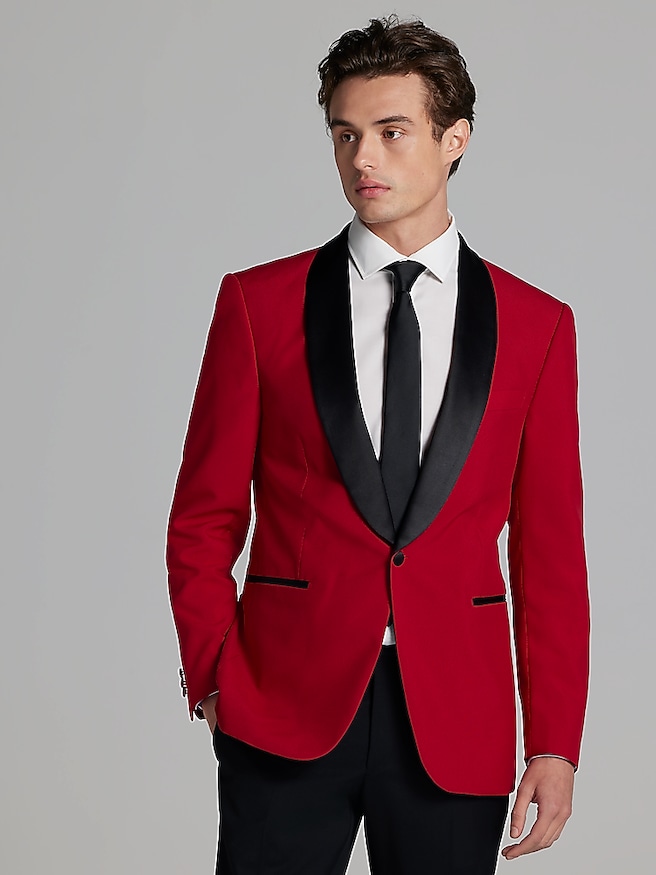
Styling a pink dress jacket usually works best with a clear balance of color, texture, and formality. White shirts give pale and vivid pinks a crisp backdrop, while light blue adds a softer contrast that pairs naturally with navy trousers. Gray trousers can make a rose jacket feel more restrained; dark navy creates a sharper outline. With black trousers, a muted pink jacket can look graphic and deliberate, especially when the shirt and shoes remain simple. Patterns are easiest to combine when their scale and intensity differ. A faint stripe in a shirt can sit comfortably beneath a textured jacket, while a bold check and a bright pink fabric may compete for attention. Ties and pocket squares do not need to match the jacket exactly. Burgundy, navy, gray, or a small pattern containing a touch of pink can connect the outfit without making every accessory look coordinated to a single swatch. For a related color direction with a stronger presence, Red Tailored Jackets provide another reference point for expressive tailoring. Footwear should follow the occasion: polished leather dress shoes reinforce a formal outfit, while loafers can suit a more relaxed combination when the dress code allows. A pink jacket can also make a thoughtful gift for someone who enjoys dressing for milestone occasions or already wears color confidently. Accurate measurements and a sense of the recipient’s preferred fit matter more than assuming a familiar shirt size will translate directly to a jacket. Once part of a wardrobe, careful handling helps preserve both shape and finish. A broad, supportive hanger protects the shoulders, and space around the garment reduces crushing. The care label should govern cleaning and pressing, since fabric blends, linings, and internal construction can respond differently to moisture and heat. Avoid rubbing spills into the fabric, and have persistent marks assessed by a qualified cleaner. Emptying the pockets after wear and avoiding unnecessary cleaning also help the jacket retain its intended lines, leaving the color and tailoring—not preventable wear—to make the impression.