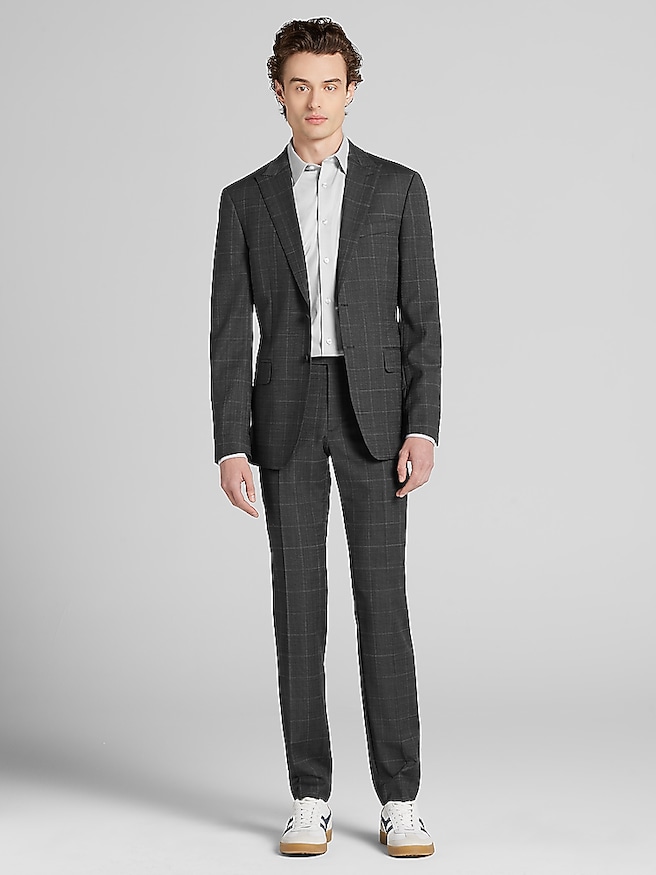
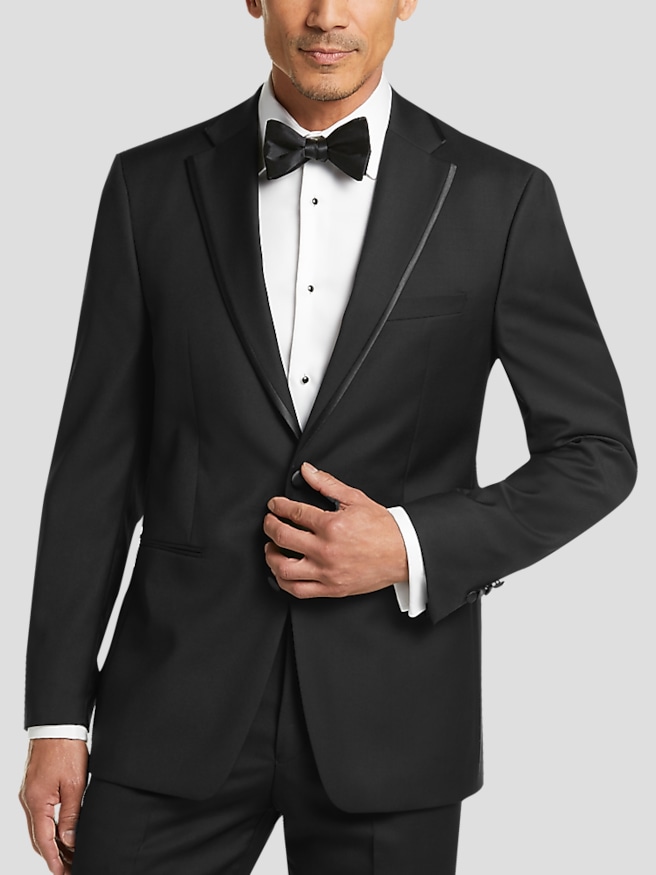
A peak lapel tuxedo is a formal ensemble distinguished by lapels with pointed tips that angle upward toward the shoulders. Those sharp edges frame the chest and give the jacket a structured, confident silhouette, making this style a classic choice for black-tie weddings, galas, formal receptions, and proms. Unlike a shawl collar, which forms a continuous curve, a peak lapel creates distinct angles that emphasize the jacket’s shape. Unlike a notch lapel, its upper points rise beyond the collar junction rather than forming a small inward cutout. The effect can be striking without needing elaborate accessories: a crisp shirt, a neatly tied bow tie, and polished shoes let the lapels provide the visual emphasis. Satin or grosgrain lapel facings commonly distinguish a tuxedo jacket from a conventional suit jacket, while matching formal trousers often carry a coordinating stripe along the outer seam. Satin has a smooth, reflective finish; grosgrain has a fine ribbed texture with a more restrained sheen. Both create contrast against the body fabric and help define the tuxedo’s formal character. Peak lapels appear on both single-breasted and double-breasted jackets, with each construction offering a distinct balance of shape and coverage. A single-breasted front keeps the center of the jacket visually clean, while an overlapping double-breasted front creates a fuller, more architectural appearance. Lapel width also changes the impression: a narrower peak feels streamlined, while a broader peak brings more emphasis to the chest and shoulders. Black remains a traditional foundation, and midnight blue offers a subtle alternative that can appear nearly black in evening settings. For occasions that call for tailored clothing without tuxedo detailing, Peaked Lapel Suits carry the same upward-pointing lapel shape into a less ceremonial category. The distinction matters when an invitation specifies black tie, since a peaked lapel alone does not turn a suit into a tuxedo.
Fabric and fit determine how a peak lapel tuxedo feels over an entire event, not just how it looks in a photograph. Wool is a traditional tuxedo fabric because it can drape cleanly, breathe comfortably, and recover from minor wrinkles. A fine wool cloth can give the jacket a smooth surface that allows the lapel facing to stand out, while wool blends may combine that appearance with other performance or texture characteristics. Fiber content, weave, fabric weight, and construction all influence the result, so a fabric’s name alone does not tell the whole story. A touch of stretch may ease movement, but it does not replace adequate room through the shoulders, chest, seat, and thighs. The jacket should follow the shoulders without extending far beyond them, and the collar should sit close to the shirt collar rather than pulling away. When the jacket is fastened as intended, the front should lie smoothly without pronounced pulling around the closure or lapels. Peak lapels look their best when they rest flat against the chest instead of lifting or curling outward. A slim silhouette can look sharp without feeling restrictive, while a more relaxed cut can remain polished when the proportions are balanced. Jacket length, sleeve length, and trouser rise all contribute to that balance. A glimpse of shirt cuff gives the sleeve a deliberate finish, and trousers should meet the shoes cleanly rather than gathering in heavy folds. Sitting through a ceremony, reaching across a dinner table, and moving onto a dance floor reveal fit issues that standing still can hide. Comfortable arm movement and a waistband that stays secure without digging in are practical advantages throughout a long celebration. Alterations can refine sleeve length, trouser hems, and some aspects of the jacket’s shape, although major shoulder corrections are more complicated. Starting with the right overall proportions generally produces a cleaner result than relying on extensive changes to reshape the garment.
The supporting pieces help a peak lapel tuxedo read as a cohesive formal outfit rather than a collection of dress clothes. A white formal shirt creates clear contrast against dark lapels, and a black bow tie is the traditional companion for black tie. Shirt fronts may be pleated, textured, or clean and understated, with the choice influencing how much detail appears between the lapels. French cuffs and cuff links add a polished finish, while shirt studs belong with shirts designed to accommodate them. A cummerbund or an appropriately cut formal waistcoat can cover the waistband in a traditional single-breasted ensemble; a double-breasted jacket often creates that coverage through its overlapping front. Formal trousers are commonly designed for side adjusters or suspenders rather than a visible belt, helping maintain an uninterrupted line beneath the jacket. Smooth, well-polished black leather shoes or patent leather formal shoes complement the tuxedo’s finish, and dark dress socks keep the transition from trouser hem to shoe discreet when seated. A simple pocket square adds definition without competing with the pointed lapels. For a groom, coordinated lapel finishes and a consistent level of formality can bring a wedding party together without requiring every person to wear an identical fit. For a guest or gala attendee, restrained accessories keep the outfit appropriate across photographs, dinner, and dancing. Care also matters to the tuxedo’s lasting appearance. The garment’s care label should govern cleaning, particularly when the jacket combines wool, specialty facings, and structured internal layers. A broad, supportive hanger helps preserve the shoulders, while a trouser hanger can maintain the crease without bunching the fabric. Allowing the ensemble to air after wear and storing it in a breathable garment bag helps protect it between events. Direct heat and heavy pressing can damage delicate lapel finishes, so professional attention is worthwhile when the jacket needs more than light maintenance. With thoughtful fit, compatible accessories, and careful storage, a peak lapel tuxedo can remain a dependable foundation for repeated formal occasions.