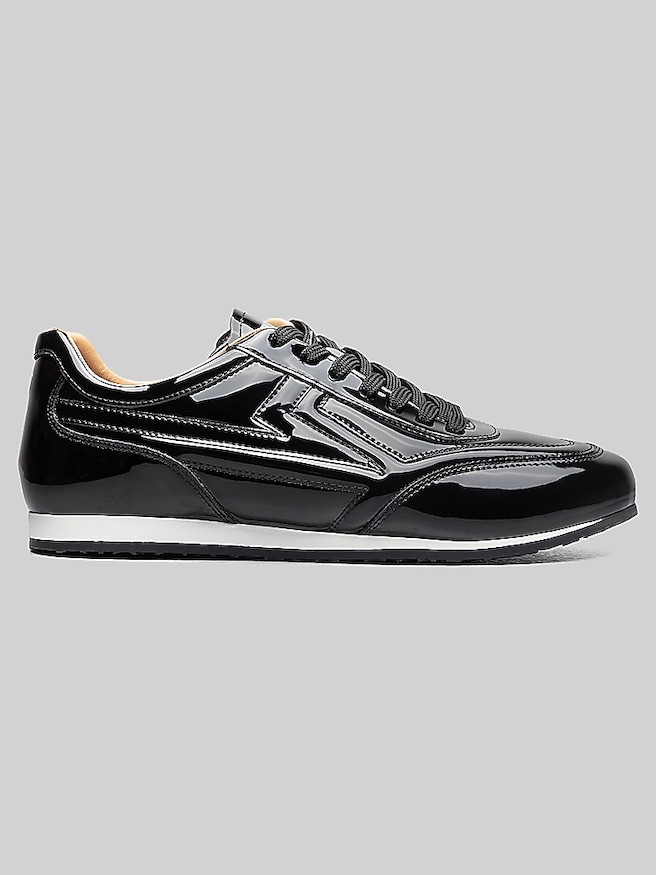
Patent leather shoes are traditionally paired with tuxedos and black-tie evening wear rather than standard business or daytime suits. Their reflective finish creates a distinctly formal impression, making them especially relevant to weddings, galas, proms, and other dressed-up celebrations. Patent leather shoes with a suit can also work for an evening occasion when the invitation permits a dark suit, although glossy footwear does not turn a business suit into black-tie attire. The distinction matters: a tuxedo has its own formal details, including satin or grosgrain accents, while a conventional suit generally looks more understated with smooth, polished leather shoes. For someone choosing patent footwear to accompany a suit, a dark, well-tailored outfit with restrained accessories provides a balanced setting for the shine. A navy or charcoal suit, a crisp white shirt, and a simple silk tie leave room for the shoes to stand out without making the outfit feel busy. Black is the most traditional footwear color for formal evening dressing, and the appeal of Black Patent Leather Dress Shoes lies in that clean contrast between a dark surface and reflected light. The silhouette changes the effect, too. A plain-toe lace-up has a quiet, classic appearance, while a streamlined slip-on can feel more expressive and requires closer attention to the event’s dress expectations. Minimal decoration generally keeps the focus on the finish; extensive perforations, heavy stitching, or bulky soles create a less formal impression. Trouser length also affects the overall look. A clean hem with little excess fabric allows the shape of the shoe to remain visible, rather than burying it beneath folds at the ankle. For a groom standing for portraits, a prom attendee arriving at an evening venue, or a guest attending a formal celebration, the strongest pairing is one in which the shoes support the outfit’s level of dress instead of competing with it. Dark dress socks that coordinate with the trousers usually maintain that continuous line, especially when sitting reveals more of the ankle.
The defining feature of patent leather is its high-gloss surface coating, not a particular shoe shape. Genuine patent leather combines a leather base with a glossy finish, while footwear described as patent-finish may use synthetic materials; the material description helps distinguish the two. That distinction can influence flexibility, breathability, and care, but neither appearance nor material alone establishes comfort. Lining, toe shape, heel structure, and the way the sole bends all contribute to how a dress shoe feels over several hours. A leather lining may help manage moisture, while a smooth interior with unobtrusive seams can reduce rubbing against the foot. Cushioned footbeds can soften the feeling underfoot, though substantial cushioning cannot compensate for a shoe that is too narrow or too short. Patent finishes may feel less forgiving than soft, uncoated leather, so a comfortable fit from the start is more useful than expecting a tight pair to stretch substantially. Toes need space without sliding forward, the widest part of the foot should sit comfortably within the shoe, and the heel should remain secure without being pinched. Lace-up designs allow some adjustment across the instep; slip-ons depend more heavily on the match between the shoe’s shape and the wearer’s foot. Trying formal shoes with the dress socks intended for the event gives a more realistic sense of fit than wearing thick casual socks. An evening that includes a ceremony, a reception, and time on the dance floor asks more of footwear than a brief fitting while seated. Walking, turning, and standing reveal pressure points that may otherwise go unnoticed. Sole construction matters here as well: leather soles offer a traditional appearance, while discreet rubber components may provide added traction, depending on the surface and design. A slim profile and practical comfort can coexist, especially when the shoe fits securely without squeezing.
Patent leather’s shine is part of its appeal, but keeping that surface neat calls for care suited to a coated material. Dust and light marks often respond to a soft, slightly damp cloth followed by gentle drying with a clean cloth. Conventional wax polish intended for ordinary smooth leather is generally unnecessary on patent leather and may leave residue or dull the appearance. Any cleaner or conditioner should be labeled as appropriate for the shoe’s material and used according to the maker’s directions, with a small test on an inconspicuous area first. Surface scuffs and deeper damage are not the same: a light transfer mark may be removable, while a scratch through the coating or a crack in the finish can be difficult to repair invisibly. That makes thoughtful handling more useful than aggressive buffing. Shoes should be allowed to air out after wear, kept away from direct heat, and stored without glossy surfaces pressed tightly against one another, since contact can sometimes cause sticking or color transfer. Separate soft shoe bags can help protect the finish from rubbing against other footwear. Properly sized shoe trees may help maintain the shape of suitable leather shoes, but they should not force the upper outward or distort the toe. Durability depends on construction, frequency of wear, fit, and treatment; a glossy surface is not a promise of resistance to scratches or creasing. For someone who attends formal events only occasionally, having a dependable pair can simplify getting dressed when an invitation calls for evening attire. Patent footwear can also make a thoughtful gift for a graduate preparing for formal occasions, a partner planning wedding attire, or a family member who enjoys dressing for special events. Shoe size alone does not capture width, instep height, or heel fit, so familiarity with the recipient’s preferences matters. The lasting appeal is straightforward: a sleek shape, a clear shine, and a level of formality that belongs with carefully chosen evening clothes.