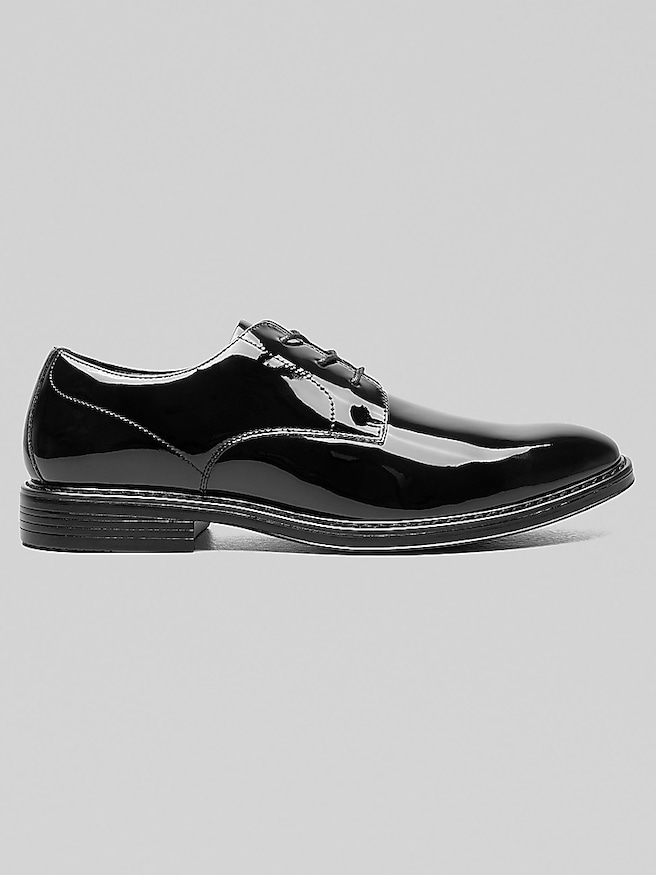
Patent leather dress shoes are defined by a smooth, high-gloss coating that gives their surface a reflective, almost mirrorlike shine. Traditionally made with a leather upper beneath a glossy protective finish, they bring a distinctly formal look to evening clothing without the repeated buffing needed to achieve a similar shine on ordinary calfskin. That clean reflection is especially suited to tuxedos, dinner jackets, and the crisp lines of black-tie attire. Under soft ballroom lighting, a polished toe adds a finishing touch without competing with the rest of the outfit. Weddings, galas, formal dances, and evening celebrations are natural settings for patent footwear, whether the wearer is standing at the altar, greeting guests, or stepping onto the dance floor. Black remains the most traditional choice for evening wear because it sits comfortably alongside black trousers, satin lapels, and a white formal shirt. The appeal of Black Patent Shoes lies in that versatility within a formal wardrobe: the same understated silhouette can complement a classic tuxedo or an evening jacket with a little more personality. Shape and detailing influence the overall effect. A plain-toe oxford has closed lacing and a restrained profile that works particularly well with traditional black tie. A cap toe introduces a subtle line across the front, while a wholecut construction creates an especially uninterrupted surface with minimal seams. Derby styles use open lacing, giving the upper a slightly less formal appearance and more adjustment over the instep. Patent loafers offer a slip-on alternative, with their suitability for an occasion depending on the shape, ornamentation, and expected dress code. Across these silhouettes, a balanced toe and discreet sole tend to keep the emphasis on the shine. Patent leather is usually more at home with formal evening clothing than with relaxed daytime outfits, making it a purposeful choice for occasions when ordinary office shoes can feel too understated.
The glossy exterior is only one part of how patent leather dress shoes look and feel over an evening. Upper material, lining, footbed, sole construction, and fit all contribute to the experience, particularly when a celebration involves several hours of standing. A patent finish generally uses a polymer coating over leather, although glossy synthetic uppers can have a similar appearance; the material description matters more than shine alone when distinguishing the two. The coating limits airflow through the upper, so lining materials and the overall construction deserve attention when comfort is a priority. Leather linings can help manage moisture, while cushioning under the heel and forefoot may soften the feel of hard event floors. Neither feature makes up for an unsuitable fit. A well-fitting pair should hold the heel securely, leave enough space for the toes to lie naturally, and feel supportive through the middle of the foot without pinching. Trying formal shoes with the socks intended for the occasion gives a more useful impression than testing them with thick athletic socks. Lace-up styles allow some adjustment as feet change slightly over a long evening; slip-ons depend more closely on a secure match through the heel and instep. Because the coating can limit how readily the upper adapts, a painfully tight pair should not be expected to become comfortable through wear. A short period of indoor wear before an event can reveal rubbing at the heel or pressure across the toes. Sole materials also make a practical difference. Leather outsoles often create a slim, traditional profile, while rubber outsoles or rubber inserts may offer useful traction and flexibility, depending on their design and the surface underfoot. For a ceremony followed by photographs on stone steps and a reception on polished flooring, those less visible details matter as much as the shape of the toe. During cooler months, covered arrivals and a change from outdoor footwear can help keep formal shoes away from slush and rough pavement.
Caring for patent leather is less about building shine and more about preserving the smooth coating already in place. Routine attention usually starts with a soft cloth to lift dust, followed by a lightly dampened cloth for surface marks and gentle drying. Traditional wax polish and ordinary leather creams are generally unnecessary on the coated exterior and can leave residue rather than improve the finish. Any cleaner should be suitable for patent leather and consistent with the maker’s care instructions, with a small test in an inconspicuous area before broader use. Light smudges may wipe away easily, but a deep scratch, cracked coating, or pronounced crease can be difficult to restore. That distinction is important for durability: the glossy layer offers some protection from light surface moisture, yet the shoe as a whole is not necessarily waterproof. Seams, linings, and soles can still be affected by wet conditions. Radiators, hair dryers, and prolonged direct sunlight are poor shortcuts for drying because excess heat can damage the finish and other components. Allowing shoes to dry naturally at room temperature, then storing them clean and fully dry, helps protect their appearance between occasions. Properly sized shoe trees can support the shape, while individual soft bags or a divider help prevent the glossy surfaces from rubbing against each other. Contact with strongly colored materials should also be avoided because some patent finishes are vulnerable to color transfer. For occasional formal wear, careful storage can be just as important as what happens during the event itself. Patent dress shoes can be a thoughtful gift for someone building an evening wardrobe, preparing for a wedding, or attending formal functions regularly, provided size and preferred fit are known. Their value within that wardrobe comes from a clear purpose rather than everyday versatility. Paired with trousers hemmed to fall neatly over the upper and fine dress socks appropriate to the outfit, they provide a deliberate finish that feels composed from the first greeting to the last dance.