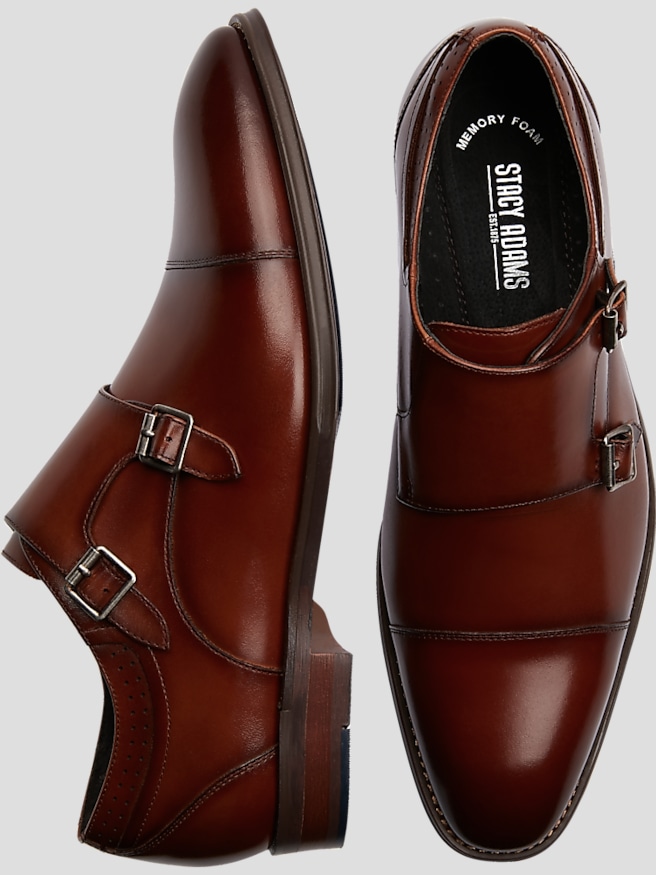
Men’s patent dress shoes are formal footwear distinguished by a smooth, high-gloss finish that reflects light more sharply than traditionally polished leather. Closely associated with tuxedos and black-tie attire, they bring a crisp finishing touch to wedding outfits, gala looks, and other ensembles built around tailored eveningwear. Their appeal comes from contrast: a reflective shoe beneath a clean trouser hem adds definition without competing with a carefully fitted jacket or satin lapels. Black is the most traditional choice, especially with a black tuxedo or a midnight blue dinner suit. For that classic direction, Black Patent Leather Dress Shoes complement formal accessories while keeping the overall look restrained. Shape and detailing make a noticeable difference within this category. A plain-toe oxford has a particularly uncluttered appearance, with closed lacing that keeps the upper neat across the instep. A cap-toe design introduces a seam across the front for slightly more definition, while a wholecut silhouette emphasizes an uninterrupted expanse of glossy leather. Derby construction uses open lacing, which can provide more adjustment over the top of the foot, though the resulting profile is generally less formal than an oxford. Patent loafers and other slip-on silhouettes offer another approach, with their suitability depending on the design and the event’s dress expectations. Minimal decoration usually keeps attention on the finish and works naturally with a tuxedo. Toe shape matters, too: a gently rounded or softly tapered toe tends to sit comfortably within traditional formal dressing, while an exaggerated point or broad square creates a stronger visual statement. For a groom standing at the altar, a guest arriving at a formal reception, or a performer walking onto a concert stage, the right silhouette helps the footwear feel like part of the outfit rather than an afterthought. The most successful pairing balances shine, proportion, and the formality of the occasion.
Materials and construction influence how patent dress shoes feel just as much as how they look. Patent leather is leather finished with a glossy coating; synthetic patent-look uppers achieve a similar reflective effect using manufactured materials. The appearance can be comparable at a glance, but flexibility, breathability, and long-term wear depend on the underlying material, coating, lining, and overall construction. A high-gloss surface alone does not establish quality or comfort. Leather linings can help manage moisture, while a smooth interior with well-finished seams reduces the chance of irritation during extended wear. Underfoot cushioning may soften the experience of standing through a ceremony or greeting guests for several hours, but it should work alongside a stable fit rather than compensate for the wrong size. Patent finishes can feel firmer than softer, uncoated leather, so a pair should not require painful wear in the hope that it will eventually stretch enough. A comfortable fit leaves space for the toes to move without allowing the foot to slide forward. The heel should feel secure, and the upper should hold the foot without pressing sharply across the instep or the widest part of the forefoot. Trying formal shoes with the dress socks intended for the occasion gives a more useful sense of fit than trying them with thick athletic socks. For broader feet, an appropriate width is usually a better starting point than extra length, which can place the flex point incorrectly and leave excess room at the heel. Lace-up styles allow small adjustments, while slip-ons depend more closely on the match between the shoe’s shape and the foot. Sole construction also deserves attention. Leather outsoles maintain a traditional dress profile, while rubber components can add flexibility and traction; actual grip varies with the tread and floor surface. A low-profile sole and balanced heel preserve the sleek appearance expected of formal footwear. For an evening that includes photographs, dinner, and dancing, comfort is most useful when it supports the occasion without changing the character of the shoe.
The distinctive shine of men’s patent dress shoes calls for care that differs from the routine used on ordinary smooth leather. Dust and fingerprints often lift with a soft cloth, and a lightly dampened cloth can remove surface residue before the upper is gently dried. Any cleaner should be labeled as suitable for the shoe’s material and used according to the manufacturer’s directions, with a test on an inconspicuous area first. Conventional wax polish, stiff brushes, abrasive pads, and household solvents can leave buildup or damage the glossy coating rather than improve it. Scuffs deserve a gentle approach because a superficial mark may be removable, while a scratch through the finish generally cannot be buffed away like a mark on uncoated leather. Durability depends partly on protecting that surface from repeated abrasion, sharp edges, and unnecessary pressure. Some creasing at the natural flex point is normal, but a properly fitting shoe is less likely to bend awkwardly because the foot is shifting inside it. After wear, allowing the interior to dry naturally before storage helps keep the pair ready for another occasion. Appropriately sized shoe trees can support the shape without overstretching the upper, and separate soft shoe bags help prevent the glossy surfaces from rubbing against each other in a closet or travel bag. Direct heat and prolonged strong sunlight are best avoided, and nothing heavy should rest on the toe boxes. These habits are particularly useful for formal footwear that may spend time stored between events. Patent dress shoes can serve someone attending black-tie functions regularly or someone assembling a complete outfit for a single important celebration. They can also make a thoughtful gift for a graduate entering a profession with formal events, a musician with performance attire requirements, or a partner preparing for a wedding, provided the recipient’s size and fit preferences are known. Their role is specific rather than everyday: a clean, reflective finish, an understated shape, and comfortable construction bring a sense of completion to attire chosen for meaningful occasions.