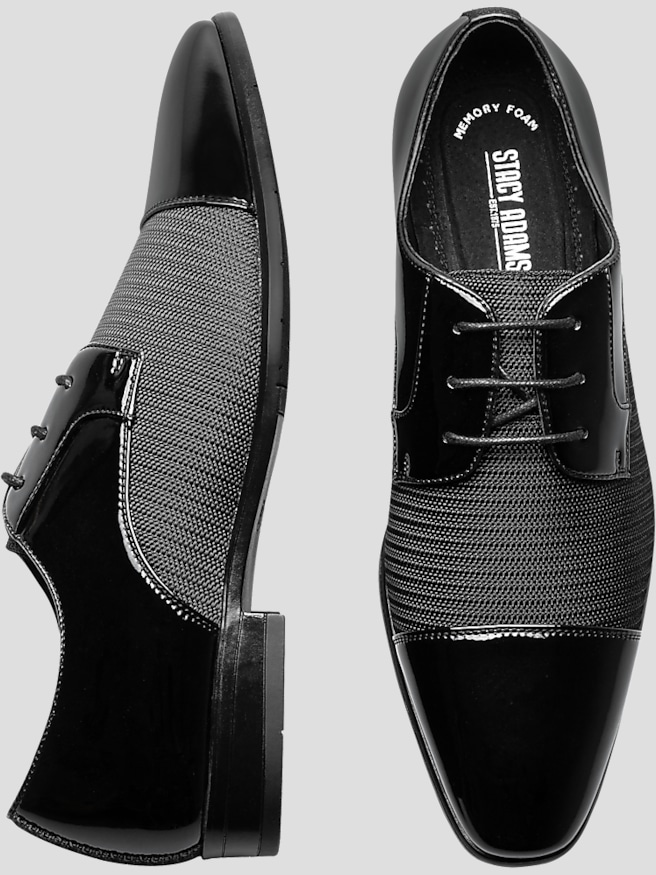
Black patent shoes give formal clothing a crisp, reflective finish that ordinary polished leather does not quite duplicate. Patent refers to the glossy surface treatment rather than a particular shoe shape: patent leather has a high-shine coating over a leather base, while synthetic patent finishes create a similar appearance on other materials. That smooth, mirrorlike surface makes black patent dress shoes a natural companion to tuxedos, especially for black-tie weddings, galas, awards ceremonies, and formal receptions. Against dark trousers, the shine provides definition without introducing another color or a busy decorative detail. Plain-toe lace-ups offer an understated look, while patent loafers create a different profile with an uninterrupted upper and no visible lacing. An oxford’s closed-lacing construction produces a particularly neat silhouette, though the overall level of formality also depends on the toe shape, sole, and detailing. A gently rounded or almond-shaped toe tends to complement traditional tailoring; a more elongated shape makes a stronger visual statement. The appeal of Patent Leather Dress Shoes comes partly from the contrast between that reflective surface and the softer texture of tailored fabric. A trouser hem that rests lightly over the shoe keeps the front visible without exposing too much sock when standing. Thin, dark dress socks generally preserve the line from trouser to shoe and avoid the bulk of everyday athletic socks. For a groom, wedding guest, prom attendee, or performer in formal evening attire, these details help the footwear feel connected to the complete outfit rather than added at the last minute. Patent footwear is most closely associated with evening formality, but the invitation and dress code matter more than the time on the clock. At an event where a dark suit is appropriate, a simple patent style can add a dressier note; for routine office wear, its conspicuous shine may feel more formal than the setting calls for.
Materials and construction influence how black patent shoes feel as much as how they look. A glossy upper does not, by itself, reveal whether the base is leather or synthetic, so material descriptions are useful when comparing footwear. Leather-backed patent can develop creases as it flexes, and its coating does not respond to conventional conditioning in the same way as exposed smooth leather. Synthetic patent materials vary in flexibility and structure, making the lining, seams, and overall construction important considerations rather than relying on appearance alone. Smooth interior seams, a comfortable heel lining, and appropriate cushioning can make a noticeable difference during an evening that includes standing for photographs, walking between venues, and spending time on a dance floor. Sole construction also affects the experience: leather outsoles have a traditional dress-shoe appearance, while rubber components may provide added flexibility or traction, depending on their design and the surface underfoot. Neither a formal appearance nor a glossy finish guarantees grip on polished floors. Fit should feel secure through the heel and midfoot without pinching across the ball of the foot. Toes need room to rest naturally, and the upper should not press sharply into the foot where it bends. A small amount of heel movement can occur in some new dress shoes, but persistent slipping, rubbing, or toe pressure suggests that a different size or shape may be needed. Patent uppers should not be expected to stretch enough to correct a fundamentally tight fit. Trying formal shoes with the dress socks intended for the occasion gives a more realistic sense of space than trying them with thick casual socks. Lace-ups allow some adjustment across the instep, while loafers rely more heavily on the relationship between the foot and the shoe’s shape. For someone who spends much of an event on their feet, balanced support and comfortable proportions deserve as much attention as the shine.
The glossy finish of black patent shoes is distinctive, but it benefits from care suited to a coated surface. After wear, a soft, slightly damp cloth can remove dust and light surface marks, followed by a dry, lint-free cloth to lift remaining moisture. A soft cloth is especially useful around the toe and heel, where fingerprints, floor dust, and incidental contact can interrupt the shine. Stubborn scuffs call for a cleaner specifically labeled for the material, used according to its directions and tested first on an inconspicuous area. Conventional shoe wax, abrasive brushes, harsh household cleaners, and improvised solvents can leave residue or damage the finish rather than improve it. Patent footwear generally does not need the same polishing routine as ordinary smooth leather because the shine comes from its coating. That coating is not indestructible: repeated sharp bending, deep scratches, and prolonged exposure to direct heat can affect its appearance, and a cracked finish may be difficult to restore. Letting shoes air out after an event helps the interior dry before storage, while appropriately sized shoe trees can help maintain shape without forcing the upper outward. A soft shoe bag or separate compartments keep glossy surfaces from rubbing against other footwear; storing patent shoes against dyed materials or some plastics can also risk color transfer. Although the coated upper may shed a light splash, that does not make the complete shoe waterproof, since moisture can enter around seams and soles. These practical details matter for footwear that may spend time stored between special occasions and then be expected to look sharp for a major event. Black patent shoes can also make a thoughtful gift for someone building a formal wardrobe, celebrating a graduation, or preparing for a wedding, provided the recipient’s size and fit preferences are known. A restrained shape is easier to coordinate across several formal outfits, while comfort encourages repeated use. With suitable fit, careful handling, and material-appropriate cleaning, the same pair can become a familiar finishing touch for many memorable occasions.