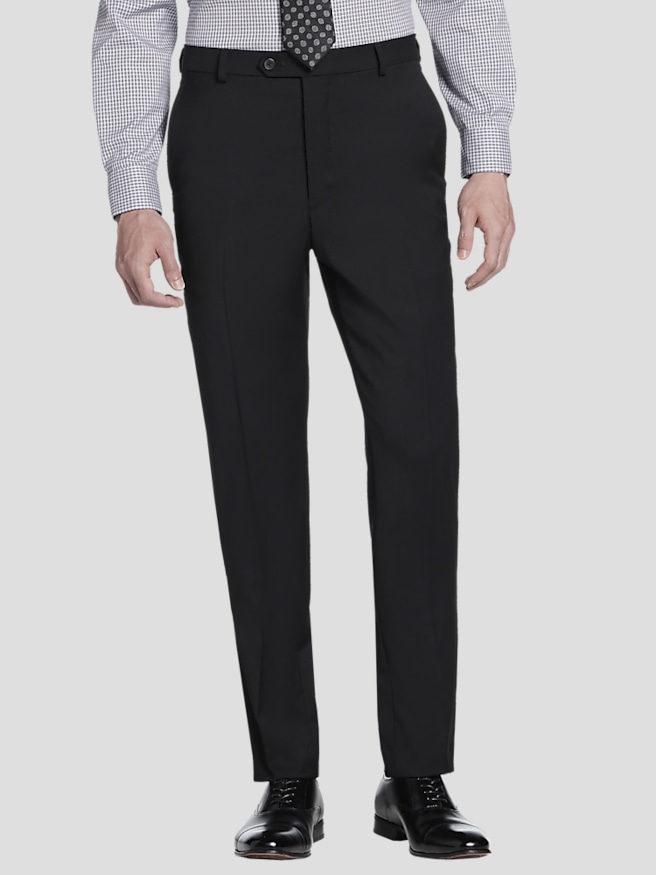
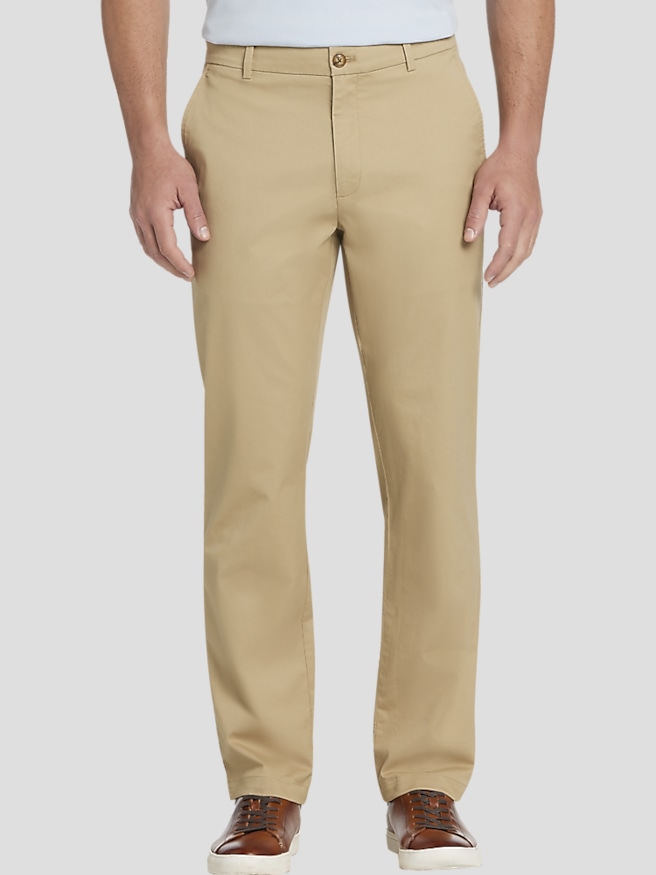
Pants for tall guys need enough length through the leg and proportions that make sense from the waistband down. Many tall men look for inseams between 34 and 40 inches, but height alone does not determine the right measurement. Two men of the same height can have different leg lengths, torso lengths, and preferred waistband positions. Inseam measures the inside leg from the crotch seam to the hem, while rise describes the distance from the crotch seam to the waistband. Both affect how pants sit and move. An extended inseam can solve a short hem without solving a rise that feels restrictive when seated or a seat that pulls across the back. Tall sizing and big sizing also address separate needs: a taller frame may need additional length without additional width at the waist or thigh. Well-proportioned pants leave comfortable room through the seat, follow the thigh without excessive tension, and let the leg fall cleanly toward the shoe. Slim fits create a closer outline, straight fits keep a more consistent line from knee to hem, and relaxed fits allow more room for fuller thighs or a preference for an easier drape. None of those shapes is automatically best for every tall build. A narrow waist and athletic thighs may call for a different balance than a lean frame with long legs. The point where a tapered leg begins to narrow matters as well; tapering too high can make an otherwise long pair feel tight through the knee. Hem length finishes the proportions. Dress trousers often look balanced with a slight break, the small fold where the fabric meets the shoe, while chinos can sit with little or no break for a cleaner outline. Excess fabric stacked at the ankle can obscure the shape of the leg just as noticeably as a hem that ends too high. Comfort should hold up beyond standing in front of a mirror, including sitting at a desk, taking stairs, and getting into a car.
Fabric gives pants much of their character, influencing whether they feel structured, soft, flexible, or especially polished. Cotton chinos bridge everyday and business-casual dressing because their woven texture works with a tucked-in button-down, a knit polo, or a simple crewneck. Cotton twill has a diagonal weave that gives it substance, though fabric weight and construction affect how sturdy any pair feels. Denim brings a more casual appearance and can develop a softer hand and individual fading with wear. Wool and wool-blend trousers tend to drape smoothly, making them a natural match for dress shirts, sport coats, and occasions that call for a sharper finish. Depending on the blend and weave, synthetic fibers can contribute shape retention, strength, or resistance to wrinkles. A small amount of elastane can add useful give through the seat and knees, particularly for long stretches of sitting or a day that includes walking between meetings. Stretch complements a suitable cut; it does not make an overly tight waist or insufficient rise fit correctly. The weave, lining, pocket construction, and waistband all contribute to comfort, too. A waistband that stays flat under a belt looks neater beneath a tucked shirt, while pockets that rest smoothly against the hip help preserve the trouser’s outline. Pocket openings that flare outward can indicate that the fit is too close through the seat or hips. Intended use helps distinguish one type of pant from another. A pair worn to client appointments needs a clean drape and a finish that works with dress shoes; pants for casual dinners or weekend errands can have more visible texture and an easier silhouette. For someone who spends much of the day seated, freedom through the upper leg may matter more than an especially narrow ankle opening. Durable seams, secure pocket edges, and fabric suited to repeated wear are valuable across these uses. A tall fit is most useful when its length is matched by comfortable construction, rather than simply extending a shorter cut at the hem.
Styling long inseams is largely a matter of keeping the whole outfit in proportion. A shirt that stays tucked during ordinary movement, a jacket with an appropriate body length, and pants that sit at a comfortable height create a connected silhouette without relying on oversized clothing. Dark neutrals give dress trousers and chinos a straightforward place in a work wardrobe, while lighter neutrals and textured fabrics introduce variety without requiring a complicated outfit. For casual combinations, Straight Fit Jeans For Tall Men work naturally with an untucked button-down and low-profile sneakers, or with a tucked shirt and leather boots. The shoe changes how the hem falls: a fuller boot can support a little more break, while a streamlined loafer often looks cleaner with less fabric resting on top. Tailoring can refine the final length when the waist, seat, and rise already fit well, but a hem adjustment cannot correct every proportion issue. Extra length can usually be shortened; adding length depends on how much usable fabric is inside the existing hem. Care is equally important to keeping those proportions intact. The care label determines whether pants can be machine washed, need a gentler process, or require professional cleaning. High heat can shrink some fabrics or affect stretch fibers, making the recommended washing and drying method especially important when inseam length is already precise. Prompt stain treatment, with a method appropriate to the fabric, helps protect the finish. Hanging dress trousers neatly supports their drape, and avoiding tightly packed storage helps limit unwanted creases. Repeated friction at the inner thighs, pocket edges, and hem is worth checking because those areas often show wear first. For a gift, familiar waist and inseam measurements are more useful than height alone, along with a sense of whether the recipient prefers dress trousers, chinos, or denim. Across workdays, celebrations, and everyday plans, pants that combine the right length with a comfortable rise and balanced leg shape make getting dressed simpler.