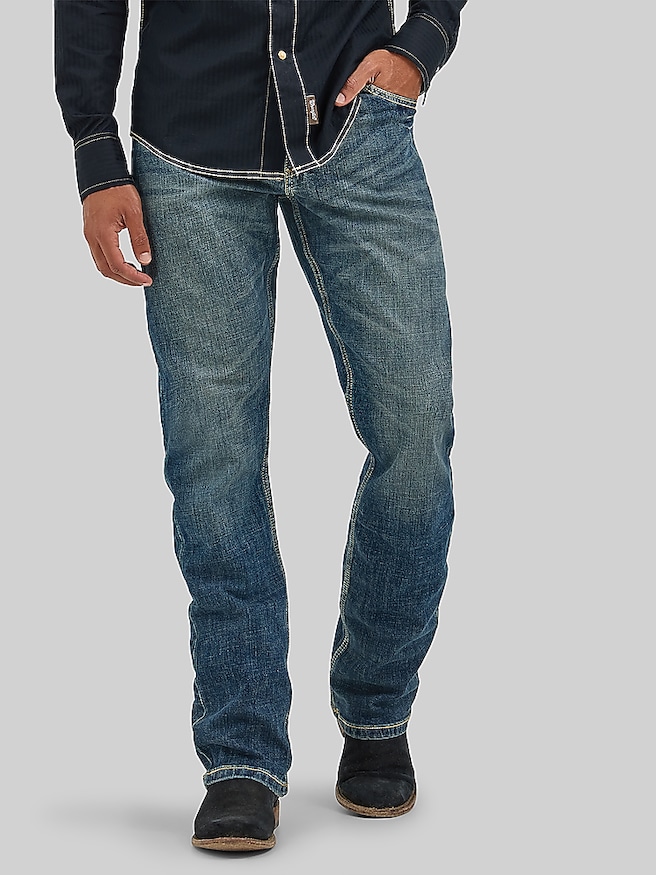
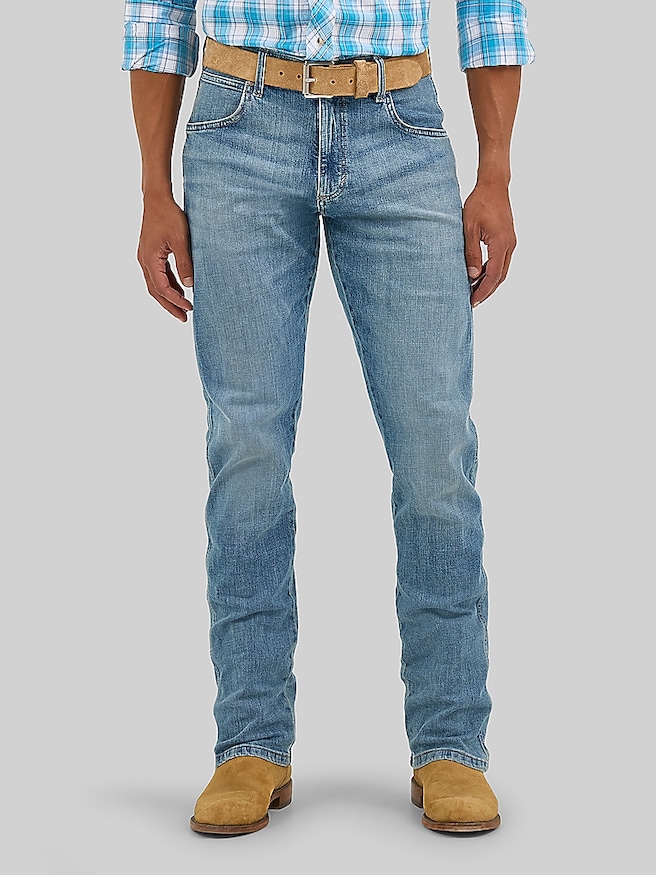
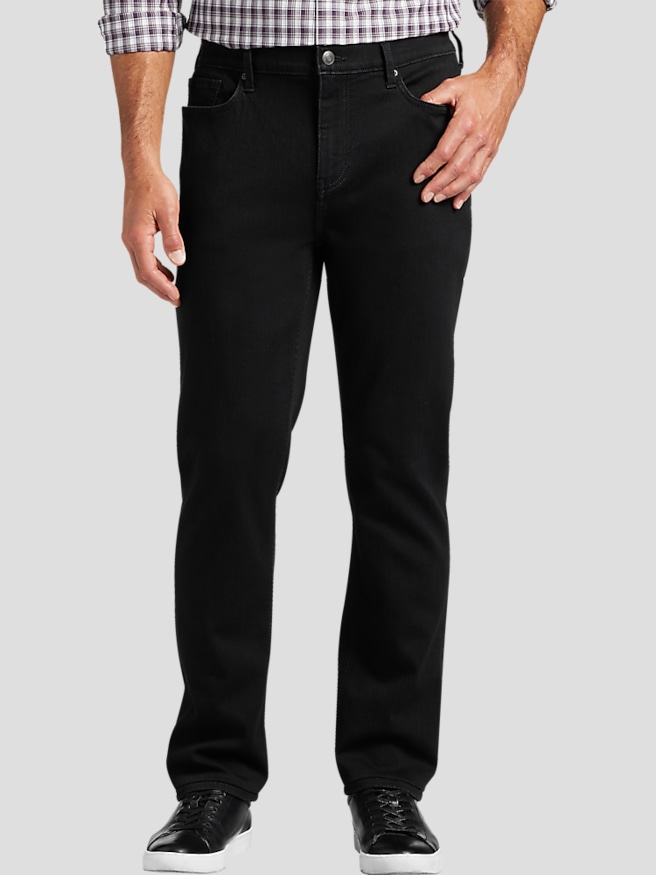
Straight-fit jeans for tall men pair extended inseams with a leg that falls relatively straight from the knee to the hem, creating a balanced shape without the close taper of slim jeans or the extra volume of a relaxed cut. For men around 6 feet tall and above, the right proportions matter as much as the extra length. Tall sizing may include inseams of approximately 34 to 40 inches, though measurements and size definitions vary by manufacturer. Height alone does not determine the best inseam: two men of the same height can have noticeably different leg lengths, torso proportions, and preferred waistband positions. A well-fitting pair of jeans provides enough length to meet the shoes comfortably while keeping the seat, thighs, and waist in proportion. The inseam is measured along the inside leg, from the crotch seam to the hem, making it a more useful reference than height by itself. Mid-rise and higher-rise designs can provide comfortable coverage and help balance a longer torso, while the best rise ultimately depends on body shape and where the waistband feels natural. Extra fabric at the ankle cannot compensate for a rise that pulls when sitting or a seat that feels restrictive. Likewise, sizing up at the waist simply to gain legroom can leave excess fabric around the hips. Tall and big sizing address separate needs, so a taller frame does not automatically call for a larger waist or a fuller cut. The appeal of a straight fit is its clean, uncomplicated line: enough room for everyday movement, with a leg opening that sits comfortably over many casual shoes. A slight break over the shoe gives the hem a relaxed finish, while minimal break looks neater. Heavy bunching can interrupt that straight silhouette, particularly when excess fabric gathers above the heel. These details distinguish jeans that are merely long enough from jeans that look and feel proportionate throughout.
Fabric gives straight-fit denim much of its character, from the way the knees bend to how the leg hangs after a full day of wear. All-cotton denim often feels structured at first and gradually softens, developing creases and faded areas that reflect regular use. Denim blended with a small amount of elastane or another stretch fiber can offer more give through the seat and thighs, which may feel especially comfortable during a commute, a long meal, or hours spent seated at a desk. Stretch does not replace the need for correct sizing, and a comfortable waistband should not rely on the fabric being pulled tight. Recovery matters, too: denim that returns toward its original shape helps limit sagging at the knees and seat. Fabric weight also affects the silhouette. More substantial denim generally gives a straight leg a firmer outline, while lighter fabric tends to drape more softly and feel less rigid in motion. Neither construction is automatically better; intended use and personal preference make the distinction. Dark, evenly colored washes have a clean appearance that pairs easily with tailored casual clothing, while faded blue denim brings more visible texture and a broken-in feel. Whiskering, abrasion, and pronounced fading change the visual effect, so a consistent wash is often the simpler choice for understated outfits. Durability also depends on details such as secure pocket attachments, even seams, and a waistband that stays comfortable without excessive strain. Care helps preserve both fit and finish. Following the care label is especially important for extended inseams, since unwanted shrinkage can leave a previously comfortable hem sitting too high. Washing inside out with similar colors can reduce surface abrasion, and limiting unnecessary heat can help protect stretch fibers and dimensions. Deeply dyed denim may transfer color, particularly before its early washes, so care around light upholstery and footwear is sensible. Regular wear, appropriate cleaning, and attention to small areas of damage can support a longer useful life without expecting denim to remain unchanged.
The consistent leg line associated with Straight Cut Jeans makes this silhouette useful across a wide range of everyday outfits. On a taller frame, a straight fit provides enough visual weight below the waist to balance a substantial shirt, a textured sweater, or an unstructured jacket without making the lower half look oversized. Dark denim with a tucked-in button-down and leather shoes can suit a casual office where denim is permitted, while a washed finish with a T-shirt and sneakers feels natural for errands, an informal lunch, or a relaxed evening with friends. The same jeans can support several combinations because the shape does not depend on a dramatic taper or an exaggerated leg opening. Shirt length still plays a role in the overall proportions. An untucked shirt that extends too far down the thighs can visually shorten the legs, whereas a shirt with an appropriate tall-length body can provide coverage without overwhelming the outfit. A tucked shirt draws attention to the waistband, making a smooth waist fit and comfortable rise especially noticeable. Footwear changes how the hem settles: a substantial boot may fill the leg opening more than a low-profile sneaker, so the same inseam can produce a slightly different break with each. Large cuffs consume usable length and create a strong horizontal line at the ankle; a clean hem keeps the look simpler. Straight-fit jeans can also make a thoughtful gift for a tall man who regularly struggles with hems that stop short or waistbands that fit only when the rest of the jeans are too roomy. A known waist measurement, preferred inseam, usual rise, and preference for stretch or rigid denim offer better clues than height alone. Whether intended for daily rotation, travel, or casual gatherings, the most useful pair combines sufficient length, comfortable movement, and a balanced fit that works naturally with the clothes already in the closet.