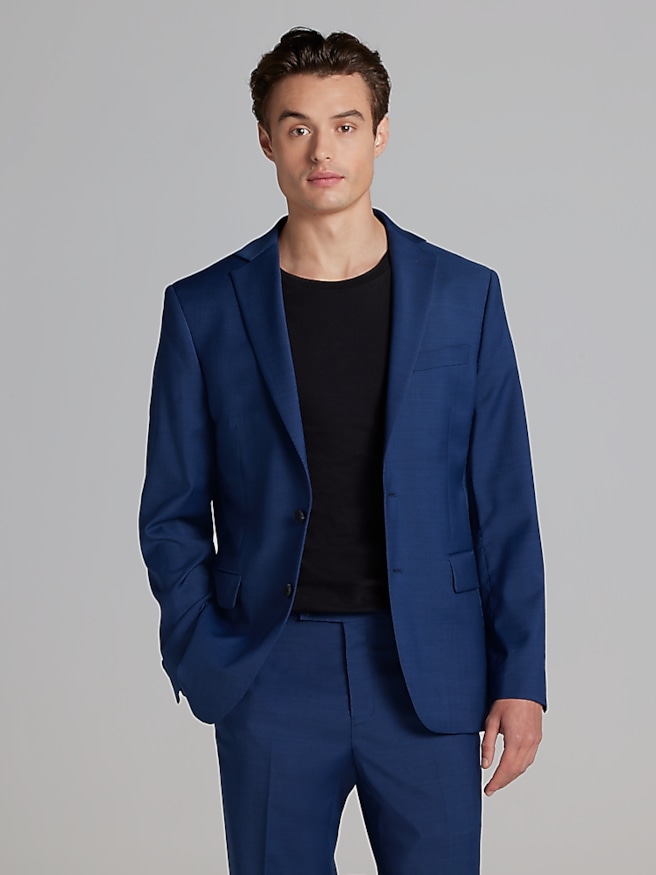
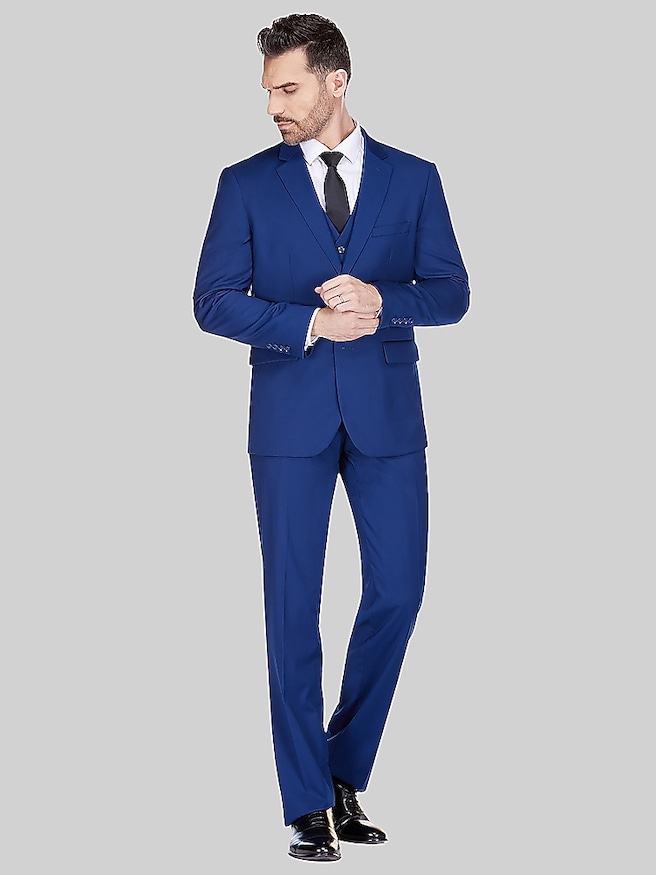
A pale blue suit offers a softer alternative to navy or charcoal for weddings, proms, graduations, and business occasions where lighter colors fit the dress code. Its appeal comes from the balance between familiar tailoring and a color that feels distinctive without needing a bold pattern. Shades can lean toward powder blue, clear sky blue, or a slightly grayed blue, and those subtle variations influence the entire outfit. A muted tone creates a quieter impression, while a brighter blue gives photographs and celebration attire more color. For a groom, wedding guest, graduate, or someone refreshing a dress wardrobe, the result can feel polished without looking overly severe. A crisp white dress shirt provides the clearest contrast and keeps attention on the suit’s color and shape. Pale pink adds warmth, while a light gray shirt creates a more understated combination. Navy, charcoal, and muted burgundy ties give the pale fabric a defined focal point; small patterns work particularly well when the shirt and suit are solid. Dark brown leather oxfords make a dependable pairing for a dressy occasion, while medium brown derbies or refined loafers can support a less formal invitation. A belt close to the shoe color helps the outfit feel cohesive without requiring every leather detail to match exactly. An open collar can look natural at a relaxed reception or a creative workplace, provided the shirt collar holds its shape beneath the lapels. For a ceremony or presentation, a tie and neatly folded pocket square bring more structure. The pocket square does not need to repeat the tie exactly; a simple white fold often provides enough contrast. Pale blue works best when the invitation or setting welcomes a suit rather than requiring a tuxedo. It is not a substitute for black-tie attire, and more conservative professional settings may call for a darker color. Within the right dress code, its soft tone leaves room for individual style while retaining the clean outline expected of tailored clothing.
Fabric and construction determine how a pale blue suit looks in motion, feels through a long event, and holds its shape after repeated wear. Wool is valued for its drape and natural ability to recover from minor wrinkles, making it a useful choice for trousers that need to hang cleanly and a jacket that should settle smoothly after sitting. Wool blends can combine that tailored appearance with other characteristics, depending on the fiber mix and construction. A small amount of stretch may make reaching, sitting, and dancing more comfortable, although stretch does not replace a well-proportioned fit. Cotton often has a more matte, relaxed character, while linen introduces visible texture and a naturally creased appearance. Neither should be expected to behave exactly like a smooth wool suiting fabric. A fine weave can make pale blue appear sleek and uniform; a textured weave adds depth that becomes more noticeable at close range. Lining, seam finishing, and reinforcement at frequently used areas also contribute to comfort and durability. Fit brings these details together. Jacket shoulders should follow the body without extending into a pronounced ridge, and the collar should rest against the shirt rather than leaving a gap. When the jacket is buttoned, the front should lie smoothly instead of pulling into an X around the closure. Slim, tailored, and classic cuts describe broad approaches to shape, not guarantees of fit, so chest, waist, seat, and thigh proportions still matter. Trousers should sit securely at the intended waist position and allow comfortable movement without strained pockets or pulling across the front. A clean hem with little or modest break keeps the pale color from gathering into distracting folds above the shoes. Sleeve length that reveals a narrow edge of shirt cuff helps the jacket look intentional. For someone expecting to stand for photographs, sit through a ceremony, and spend time on a dance floor, ease through the shoulders and seat matters as much as the silhouette in a mirror.
The occasion gives a pale blue suit its final direction. At a wedding, a matching jacket and trousers create a cohesive foundation, while a vest can add another layer of formality when appropriate to the dress code. Coordinating a wedding party involves more than choosing a color name: pale blue fabrics can have distinct undertones, so comparing fabric swatches under similar lighting helps establish whether the shades belong together. Accessories can connect the group without making every outfit identical, such as navy ties with related textures or pocket squares that share a restrained accent color. For students planning a coordinated celebration, Baby Blue Prom Suits offer another expression of this soft blue palette. A white shirt, dark tie, and polished shoes keep the overall effect sharp, while a textured tie or subtle pocket-square pattern adds personality without competing with the suit. A pale blue suit can also make a thoughtful gift for a graduate or partner who enjoys dressing for meaningful occasions, particularly when the recipient’s measurements, preferred cut, and tailoring needs are understood. Beyond those events, the jacket may work with contrasting trousers when its fabric and construction suit a more relaxed combination. Keeping the complete suit in good condition preserves that versatility. Care should follow the garment label, especially when the fabric contains a blend of fibers or structured internal components. Allowing the suit to air after wear, brushing away surface dust, and using a broad, shaped hanger help maintain a clean appearance between professional cleanings. Trousers benefit from careful hanging along their crease rather than being left folded over a chair. Pale fabric makes small marks noticeable, so spills deserve prompt attention according to the care instructions rather than vigorous rubbing. Gentle steaming, when permitted, can ease wrinkles without flattening the fabric’s surface; direct ironing requires appropriate protection and settings. Clean, dry storage away from prolonged sunlight helps protect the color, leaving the suit ready for the next occasion that calls for a lighter take on tailored dressing.