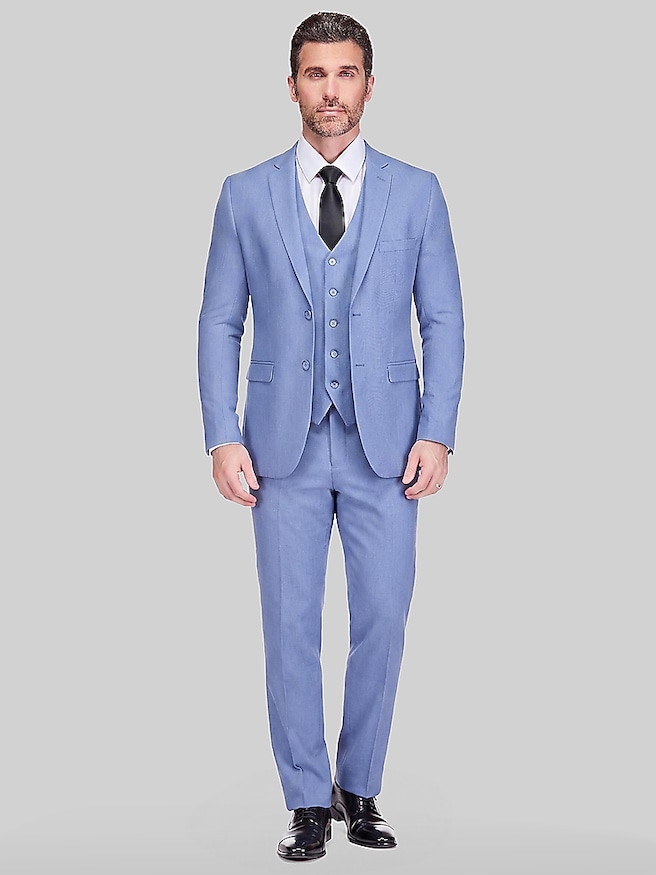
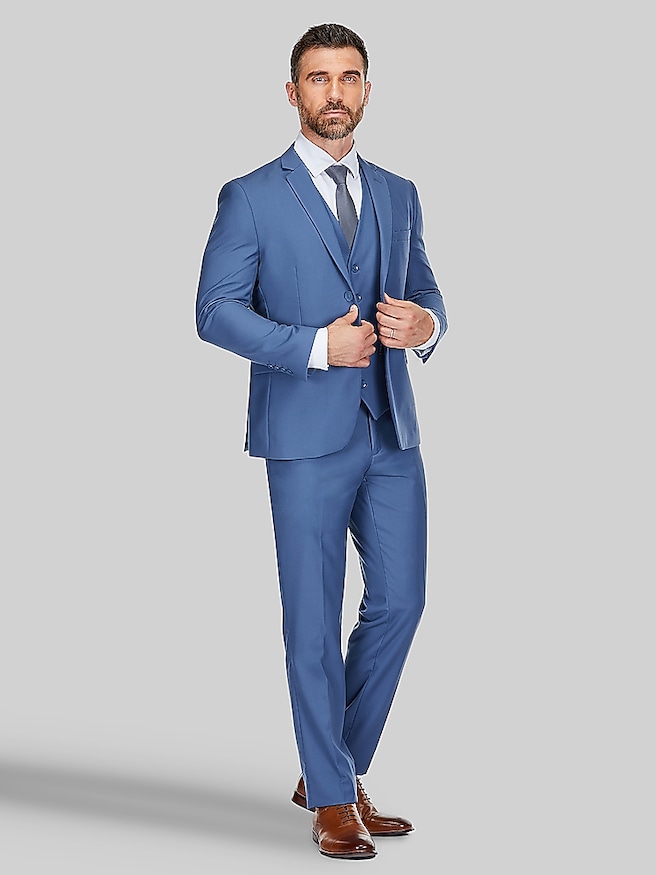
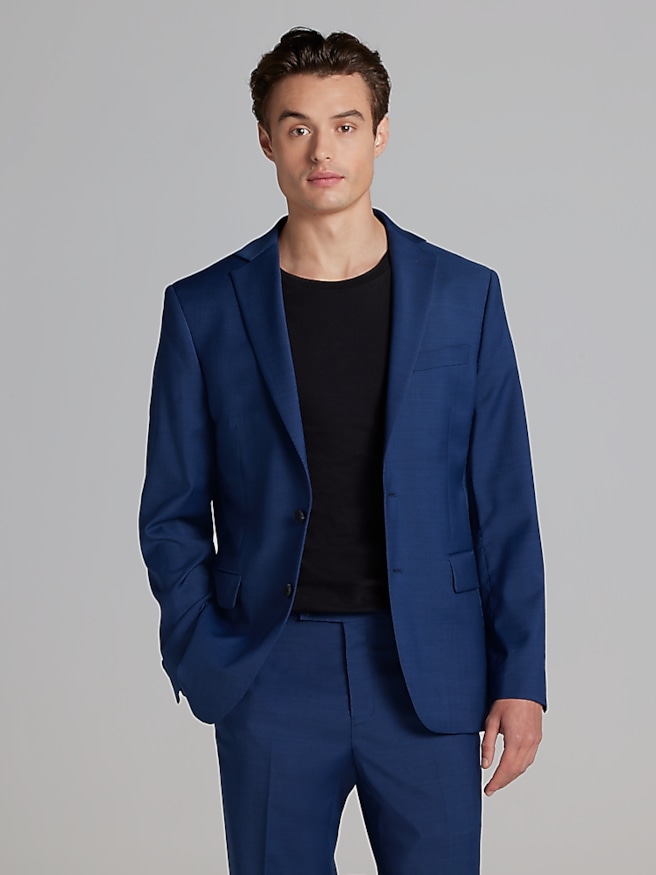
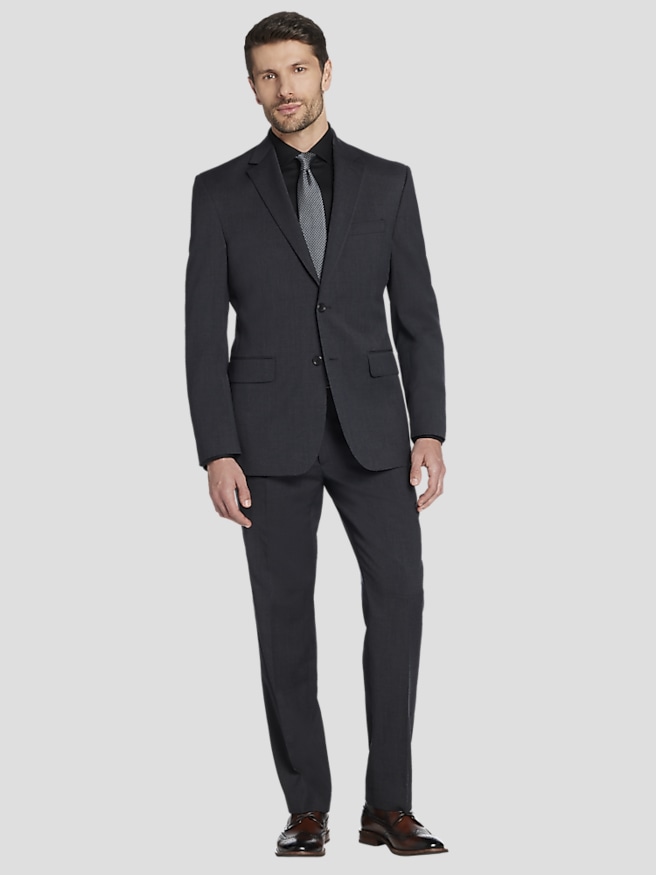
Blue suit style combines the versatility of blue tailoring with choices in shade, fabric, and fit that make the look appropriate for business, weddings, and social occasions. Navy creates a restrained, professional impression; medium blue adds definition without feeling overly bold; and light blue has a softer presence that often suits daytime celebrations and less formal settings. A navy suit with a white dress shirt, burgundy tie, and black leather oxfords is a dependable combination for presentations, interviews, and business events. Dark brown shoes offer another classic pairing, especially when the belt has a similar color and finish. With medium-blue tailoring, a pale blue shirt and subtly patterned tie create depth while keeping the outfit cohesive. The distinction between the shirt and jacket matters: a noticeably lighter shirt helps each piece stand apart rather than blending into a single block of color. For wedding guests, blue suiting can feel celebratory with a textured tie and a white pocket square, provided the outfit follows the invitation’s dress code. A blue business suit is not a substitute for a tuxedo when black tie is required. For dinners or gatherings with a more relaxed dress code, an open-collar shirt and leather loafers soften the overall effect without losing the shape of a tailored outfit. A dark shirt creates a lower-contrast evening look, while a fine-gauge knit brings texture to a less formal setting. Patterns work best when their scale varies: a fine-striped shirt can sit comfortably beneath a larger-patterned tie, while a checked suit usually benefits from quieter accessories. Shoe color also changes the impression. Black looks crisp against navy, dark brown pairs naturally with most blue shades, and lighter brown draws more attention to the footwear. These combinations give blue tailoring a broad range, from a composed workplace uniform to a distinctive outfit for a milestone celebration, without requiring every accessory to make a statement.
The character of a blue suit also comes from its construction and how it sits on the body. Smooth worsted wool has a clean surface and a drape that works well for business and dress occasions, while wool blends can introduce stretch or other performance characteristics depending on their composition. Linen adds visible texture and a naturally relaxed, creased appearance; cotton often gives tailoring a more casual character. Fabric weight, weave, lining, and construction all influence how a suit feels in motion, so fiber content alone does not tell the whole story. A subtle twill or small woven pattern can add dimension to blue cloth without competing with a shirt or tie. Fit should support the intended silhouette without restricting ordinary movement. Jacket shoulders should follow the body’s natural line, the collar should rest against the shirt collar, and the lapels should lie flat rather than bow outward. When the jacket is buttoned, strong pulling across the front can signal that the fit needs attention. Sleeves that reveal roughly a quarter to half an inch of shirt cuff create a neat finish, though individual proportions and preferences matter. Trousers should sit securely at the intended waist position, fall cleanly through the seat and thigh, and allow comfortable sitting. A slight break at the shoe gives a traditional finish, while little or no break creates a sharper line. Slim fit and classic fit describe silhouettes, not levels of sophistication; either can look polished when the proportions suit the wearer. The Blue Suit And Vest collection provides another direction for a coordinated look. A matching vest adds structure through the torso and keeps the outfit composed when the jacket comes off. The vest should cover the trouser waistband without bunching, and its neckline should leave room for the shirt and tie to sit neatly. For a cohesive three-piece appearance, matching fabric and shade are more dependable than trying to combine blue pieces that are almost, but not quite, the same.
Long-term satisfaction with blue suiting depends as much on care and intended use as on its first impression. For frequent business wear, balanced construction, a comfortable range of motion, and a fabric that recovers well between wears are practical priorities. A suit worn mainly for ceremonies or occasional dinners may place greater emphasis on a particular shade, surface texture, or dressier silhouette. No fabric is immune to friction, and trouser seats, inner thighs, elbows, and pocket edges can show wear over time. A comfortable fit helps avoid unnecessary strain at seams, while keeping bulky objects out of jacket and trouser pockets preserves cleaner lines. After wear, a suit benefits from time on a broad, supportive hanger rather than being folded over a chair. Trousers can hang from the cuffs or along their crease, depending on the hanger and care needs. Empty pockets, allow the fabric to air, and use a garment brush when appropriate for the material to remove surface dust. Cleaning should follow the care label; professional dry cleaning is appropriate for many tailored suits, but unnecessary cleaning can shorten the life of the fabric and finish. When cleaning is needed, treating the matching jacket, trousers, and vest together helps reduce uneven changes in appearance. Stains deserve prompt attention, and rubbing can spread a mark or damage the surface. For travel, a garment bag and careful folding help protect the suit’s shape, while any steaming or pressing should respect the fabric’s care instructions. Blue tailoring can also make a meaningful gift for a graduation, a new role, or another career milestone when the recipient’s measurements and preferences are known. The most useful choice reflects real routines: how often the suit will be worn, which shirts and shoes already fit the wardrobe, and whether the wearer favors understated navy or a more expressive blue. Those details make the suit feel personal, comfortable, and ready for the occasions that matter.