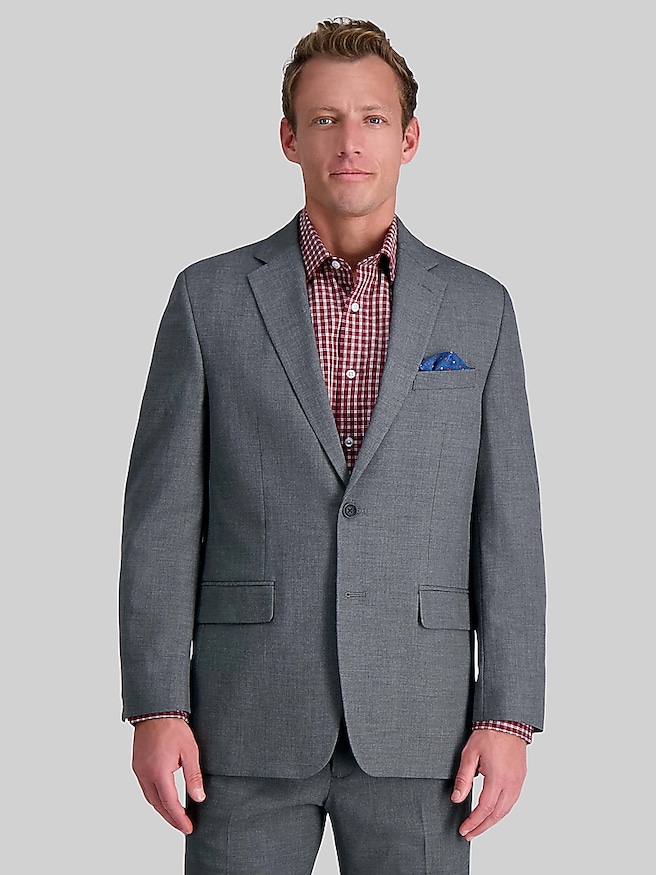
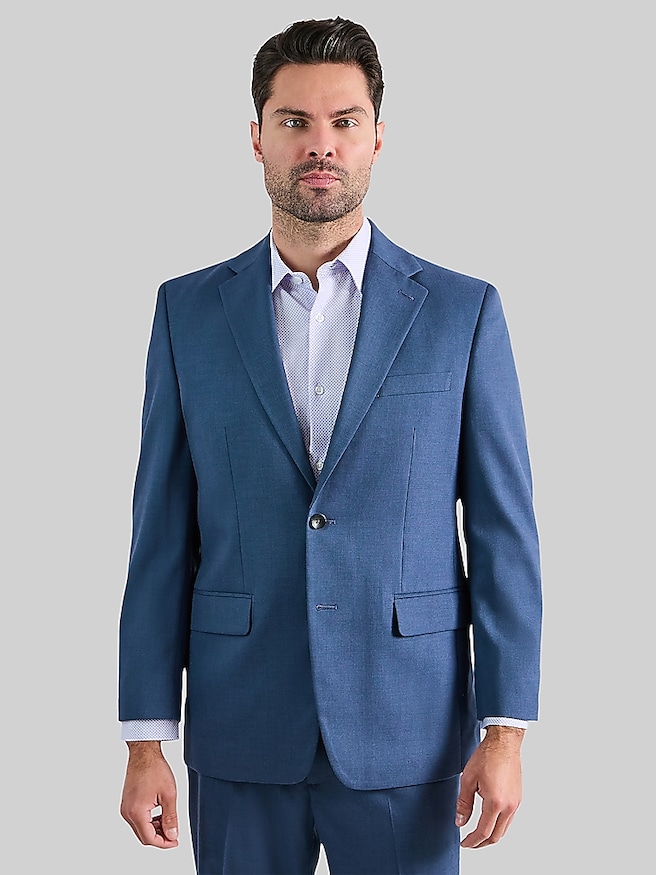
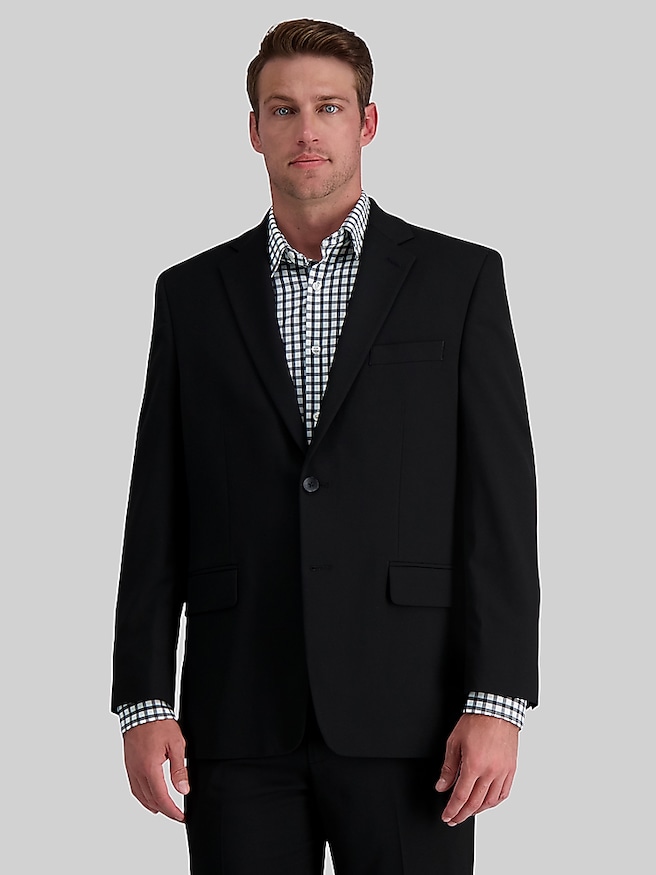
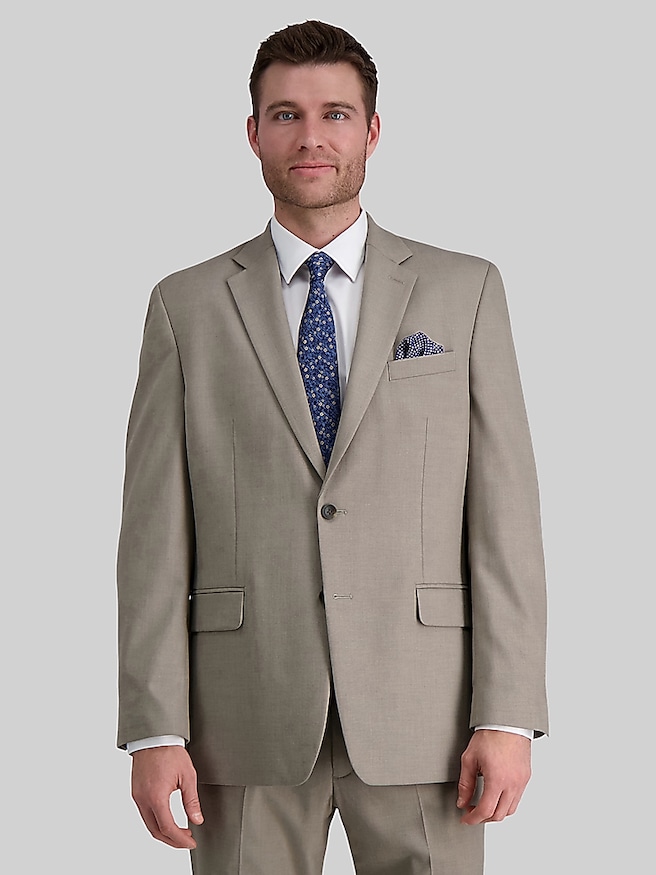
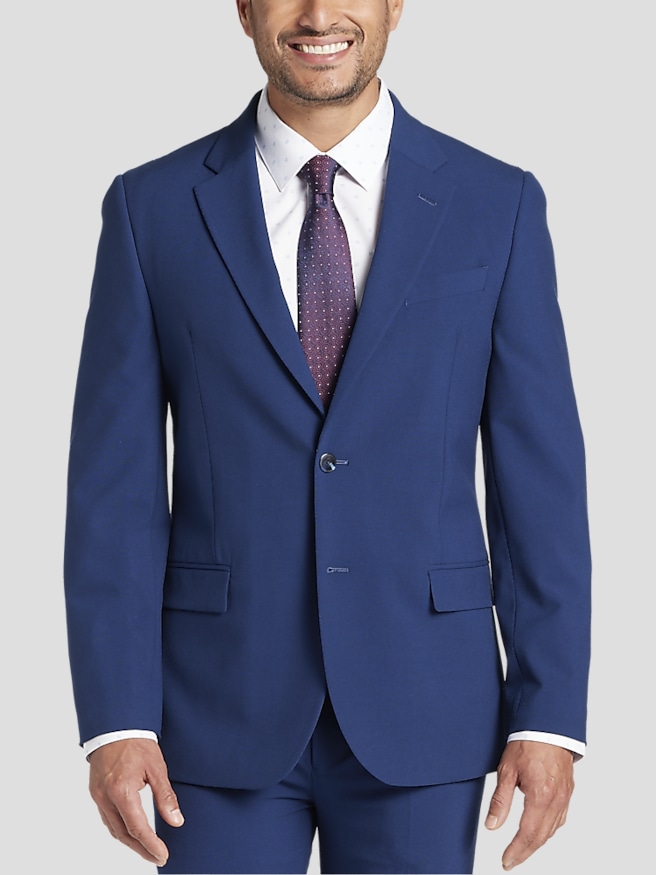
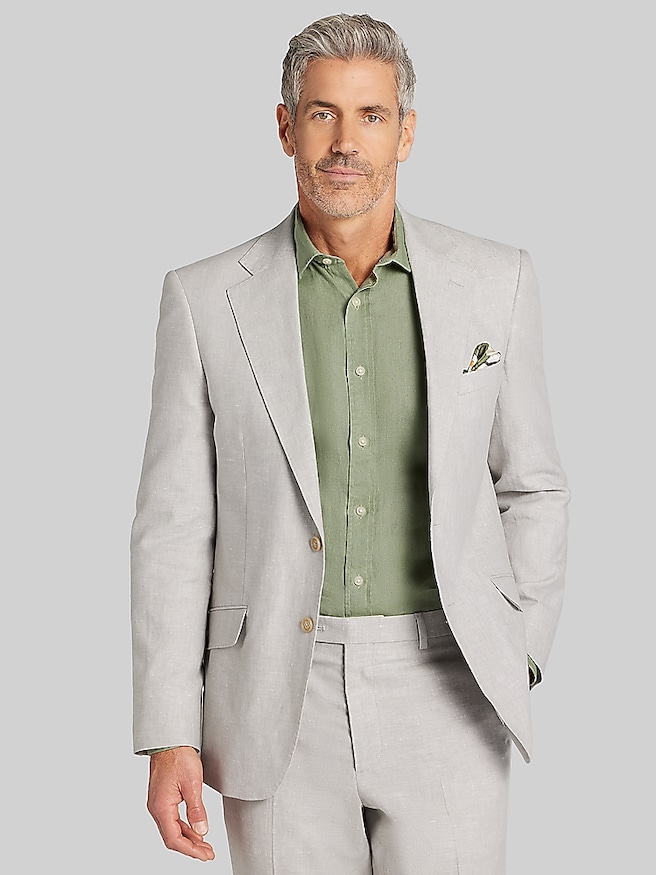
Men's blue suits bring depth and personality to tailored dressing, with shades that range from restrained midnight and navy to expressive cobalt and softer slate blue. Navy has a familiar place in business wardrobes because it looks composed without feeling severe, whether the setting is a job interview, a client presentation, or an evening reception. A brighter blue can give a wedding outfit more distinction, while a muted blue with gray undertones offers a subtle alternative to traditional dark tailoring. Color also changes with fabric texture: a smooth weave creates a crisp, uniform surface, while a textured weave gives the same shade greater dimension. Wool is a classic suiting material for its resilience, natural drape, and ability to recover from light creasing. Fine wool can feel smooth and refined, while more visibly textured wool gives a suit additional character. Blended fabrics vary in weight, softness, and structure, and a small amount of stretch can make sitting, walking, and reaching more comfortable. The fabric composition and care label provide useful context beyond color alone, especially for a suit intended for frequent wear. Solid blue keeps the emphasis on silhouette and makes coordinating shirts and ties straightforward. Subtle checks and tonal patterns add visual interest without necessarily changing the overall formality. For a more defined linear pattern, men's blue stripe suits offer another expression of blue tailoring, with stripes that may appear understated from a distance and more distinct up close. Pattern scale matters as much as pattern type: closely spaced, fine lines create a quieter effect than bold, widely spaced stripes. A blue suit can anchor a first professional wardrobe, serve as reliable attire for milestone celebrations, or give someone who wears tailoring regularly a useful alternative to charcoal. Its versatility comes from the combination of shade, cloth, and cut rather than color alone, allowing the same general category to feel businesslike, celebratory, or relaxed according to the occasion.
Fit gives a blue suit its shape and determines how comfortable it feels after the first few minutes of wear. A well-proportioned jacket follows the shoulder line without extending noticeably beyond it, and the collar rests against the shirt collar rather than pulling away. The chest should lie smoothly when the jacket is buttoned, with enough room to breathe and move without pronounced lines radiating from the button. Slim silhouettes generally sit closer through the torso and legs, while more generous cuts allow additional room through the chest, seat, and thighs. Neither approach needs to look oversized or restrictive; the strongest result is a clean outline that suits the wearer's build and preferences. Jacket length, lapel width, and trouser shape work together visually. A narrow lapel and tapered leg create a sharper profile, while fuller proportions can give the outfit a more traditional presence. Trousers should rest comfortably at the intended waist position, with pockets that remain flat and fabric that does not strain across the seat. At the hem, a slight break creates a familiar business look, while little or no break produces a cleaner view of the shoes. Someone who spends much of the day seated may value extra ease through the thighs and waist, while someone dressing for a ceremony may place greater emphasis on a precise jacket line. Trying the suit while seated, taking a few steps, and reaching forward can reveal comfort issues that standing still will not. Alterations can refine sleeve length, trouser hems, and some areas of shaping, although substantial shoulder changes are more involved. Construction also influences the finished appearance. Interior structure helps support the chest and lapels, lining affects how smoothly the jacket moves over a shirt, and neatly finished seams contribute to durability. A suit that drapes evenly and allows natural movement is more likely to remain comfortable through a full workday, a long ceremony, or an evening spent moving between dinner tables and the dance floor.
Blue suits also make coordination approachable without limiting personal style. A white dress shirt creates clear contrast and is especially useful when the occasion calls for a polished, uncomplicated outfit. Pale blue produces a softer tonal combination, while a subtle shirt pattern can add depth beneath a solid jacket. Burgundy, forest green, navy, and muted gold ties each bring a distinct accent, with texture helping separate similar shades. A matte tie against smoother suiting looks considered without appearing overly matched. Brown leather shoes often complement blue naturally, from medium brown for a less formal impression to deep brown for a more restrained finish; black shoes provide a crisp option with darker blue. The level of formality still depends on the invitation or workplace expectations, not simply the suit's color. For a wedding guest, that might mean a tie, neatly folded pocket square, and polished shoes. For a professional presentation, it may mean quieter accessories that keep attention on the speaker. Matching jacket and trousers provide the most cohesive appearance, particularly when both pieces have the same weave and depth of color. Caring for them together helps maintain that consistency over time. Between wears, a broad, supportive hanger helps preserve the jacket's shoulders, and hanging trousers neatly reduces unnecessary creasing. A soft clothing brush can lift surface dust, while allowing the fabric to air out before storage helps keep it fresh. Cleaning should follow the garment label, with professional attention when appropriate rather than an automatic cleaning after every wear. Prompt treatment of marks, gentle handling, and avoiding overloaded pockets can help protect both the cloth and the silhouette. A breathable garment bag is useful for storage, and careful packing can reduce pressure on lapels and shoulders during travel. As a gift for a graduate, partner, or family member marking a career milestone, a blue suit has lasting practical value when size, preferred fit, and likely occasions are considered. The most useful choice is one that feels like the recipient's own style: comfortable enough to wear confidently, versatile enough for meaningful occasions, and thoughtfully fitted enough to make getting dressed feel straightforward.