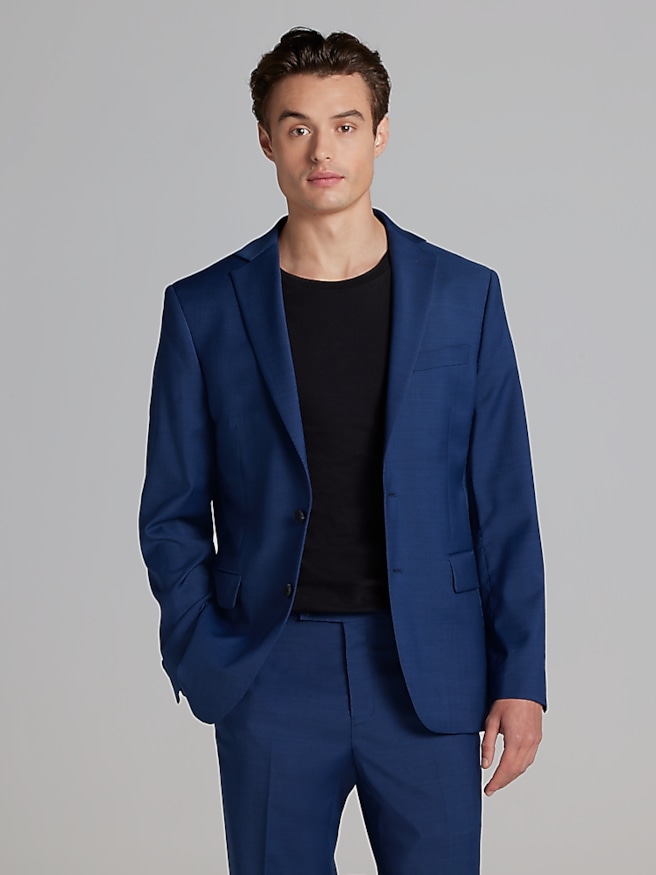
Men's navy blue suits bring a polished, adaptable foundation to a wardrobe, with enough depth to look formal without the stark contrast of black. Navy works naturally for business meetings, job interviews, weddings, graduation ceremonies, and dinners that call for more than a sport coat. Its appeal is partly in the color itself: a deep blue can appear almost charcoal in subdued indoor lighting, then reveal a richer blue tone in daylight or photographs. That subtle variation gives the fabric character while keeping the overall impression composed. A solid navy suit is especially easy to coordinate, while a restrained pinstripe, small check, or textured weave adds distinction without overwhelming a shirt and tie. The silhouette matters just as much as the shade. Slim cuts generally sit closer through the chest, waist, and legs; more relaxed cuts provide additional room without necessarily looking oversized. Fit names are not universal, so the way the jacket and trousers sit on the body is more useful than the label alone. A well-proportioned jacket follows the shoulders cleanly, rests smoothly across the upper back, and closes without pulling sharply around the button. The collar should sit near the shirt collar rather than lifting away, and the sleeves should allow a small amount of shirt cuff to show. Trousers need enough room through the seat and thighs for sitting, walking, and climbing stairs comfortably. Their hem can meet the shoes with a slight break or finish more cleanly, depending on the cut and the wearer's preference. For someone moving between a desk, a conference room, and an evening reception, these details make the difference between a suit that merely looks sharp while standing still and one that remains comfortable throughout the day. Balanced proportions also help navy tailoring feel personal: a closer waist can create definition, while a straighter jacket and fuller trouser leg can deliver an equally polished, less fitted look.
Fabric and construction influence how a navy suit feels, drapes, and holds its shape over repeated wear. Wool is a familiar choice because it can create a smooth, structured appearance while offering breathability and natural wrinkle recovery. The weight and weave still matter; two wool fabrics can feel noticeably different, with one having a crisp, firm hand and another falling more softly against the body. Worsted wool often has a clean surface suited to business and dress occasions, while more visible texture can give navy a slightly less formal character. Blended fabrics may combine wool with fibers chosen for strength, softness, or stretch, although the full fabric composition is more informative than any single feature. Stretch can make reaching or sitting easier, but it does not replace sufficient room in the shoulders, chest, and thighs. A fabric that feels comfortable across the back during a handshake or while reaching for a bag is more practical than one that looks smooth only when the arms are at rest. Cotton blends can have a more matte appearance, while some synthetic blends offer a smoother finish; each should be considered for its feel, drape, and care requirements rather than judged by fiber name alone. Jacket lining and internal structure also affect the experience, helping determine whether the suit feels firm and shaped or softer and more flexible. Durability depends on the combination of fabric, construction, fit, and maintenance. Strain across tight seams, overfilled pockets, and constant friction at the seat can contribute to wear. A broad, supportive hanger helps the jacket retain its shoulder shape, and trousers stored neatly are less likely to develop unnecessary creases. Allowing a suit to rest between wears can help it recover its shape. The garment's care label should govern cleaning and pressing, with stains addressed promptly and professional cleaning used when appropriate. Careful pressing is particularly important on dark blue fabric, where excessive heat or pressure can leave visible shine.
The versatility of navy becomes especially clear when the suit is styled for different occasions. A white dress shirt and a restrained silk tie create a crisp combination for an interview, a presentation, or a formal wedding ceremony. A pale blue shirt softens the contrast while maintaining a professional appearance, and a small-scale shirt pattern can add interest when the suit itself is solid. Burgundy, deep green, silver-gray, and muted gold accessories all have room alongside navy, though the strongest combinations usually give one pattern or color the lead rather than making every element compete. Black leather shoes create a more formal finish; dark brown or burgundy leather can bring warmth to the same suit. A belt that relates closely to the shoe color helps the outfit feel deliberate without requiring every accessory to match exactly. For a dinner with a dressier but relaxed atmosphere, an open-collar shirt can make navy tailoring feel less businesslike, provided the event's dress expectations allow it. A navy suit is not automatically a substitute for a tuxedo when an invitation specifies black tie. At weddings, a two-piece suit offers a straightforward, refined look, while a coordinating vest can add formality and keep the outfit composed when the jacket comes off. Shoppers comparing related blue tailoring can also explore Men's Nautica Blue Suits, with attention to the same distinctions in shade, silhouette, and fabric. Navy suiting can also make a meaningful gift for a graduate entering a professional setting, a partner preparing for an important celebration, or a family member building a dress wardrobe. Because jacket proportions and trouser fit are highly personal, accurate measurements and the recipient's preferences matter more than guessing from everyday clothing sizes. Whether worn frequently for work or reserved for milestone occasions, a navy suit earns its place through comfortable movement, thoughtful proportions, and a color that supports many shirts, ties, and shoes without losing its own distinctive character.