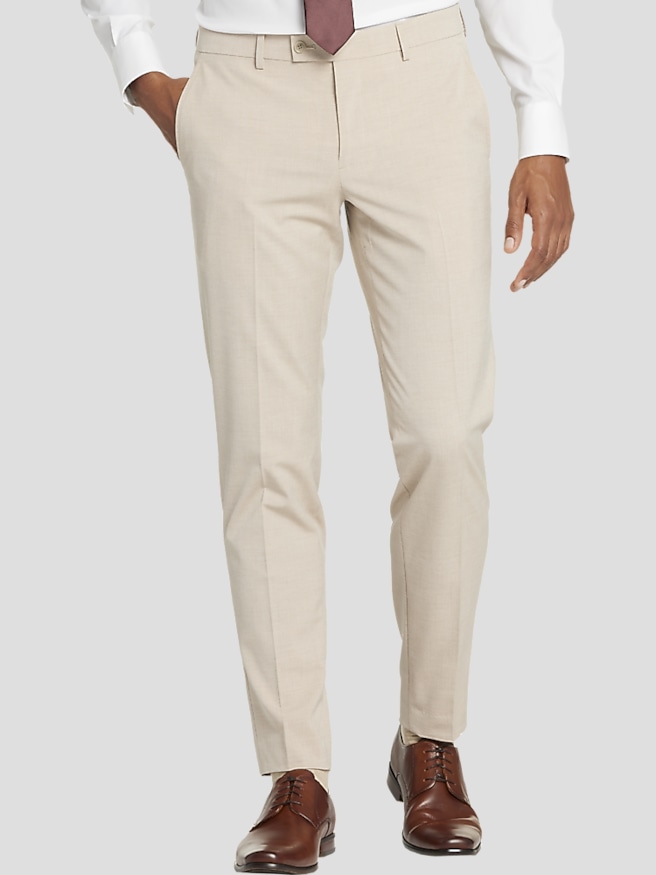
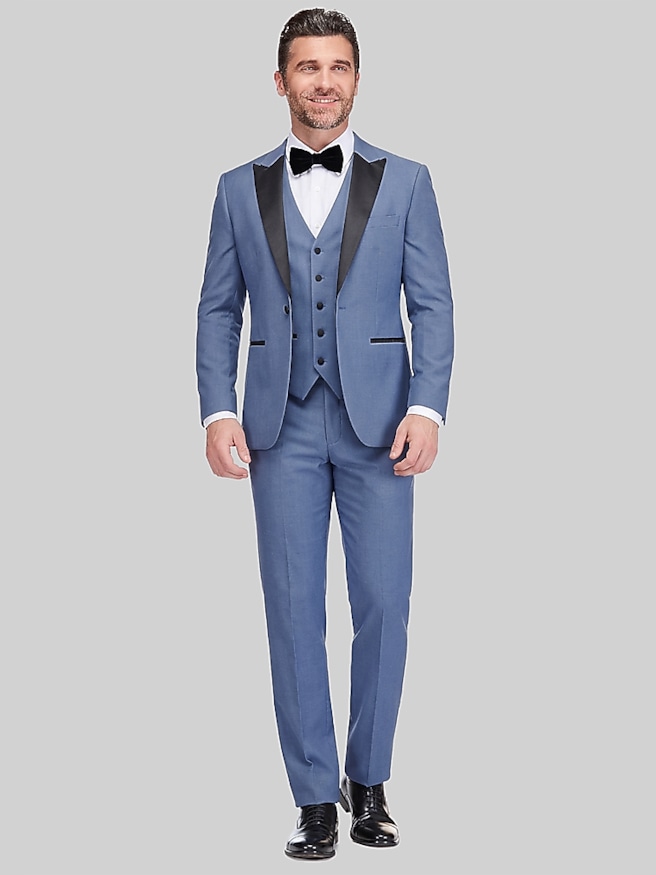
Outdoor wedding outfits bring together the polish of occasion dressing and the practicality of clothing made for movement. A ceremony beside a vineyard, a reception on a stone terrace, or a celebration beneath garden lights calls for an outfit that feels appropriate to the invitation without seeming disconnected from the setting. The dress code remains the clearest starting point: an outdoor location does not automatically make a wedding casual. Black tie generally calls for a tuxedo, while formal attire may call for a tuxedo or a dark suit, depending on the invitation. Cocktail attire typically suits a tailored suit with a dress shirt and polished shoes; dressy casual leaves more room for a sport coat and coordinating trousers. Within those expectations, color, texture, and proportion give men's outdoor wedding attire its character. Navy and charcoal have a composed, understated look against greenery, while lighter gray, tan, and muted earth tones can suit less formal celebrations when the couple's dress code allows. A subtle weave adds depth without competing with floral arrangements or a wedding party's coordinated palette. Matching jackets and trousers create a continuous line that photographs cleanly, while thoughtfully paired separates offer a more relaxed expression where appropriate. For a groom, the distinction might come from a refined tie, a carefully folded pocket square, or a vest that keeps the outfit looking complete when the jacket comes off. Groomsmen often benefit from a consistent level of formality and coordinated accessories rather than an assortment of unrelated details. Guests and family members can aim for the same sense of occasion while leaving the most distinctive ceremonial touches to the couple. Across these roles, the strongest outdoor wedding looks balance the venue's personality with the significance of the day. The broader range of possibilities in Best Wedding Outfits offers additional context for choosing a level of dress that belongs at the celebration.
Fabric and fit shape how an outdoor wedding outfit looks after several hours of sitting, standing, walking, and greeting other guests. Lightweight wool is a versatile suiting material because it can combine breathability with a clean drape and natural resistance to creasing, although its performance depends on the weave, weight, and construction. An open weave can feel less restrictive than a dense fabric, and a partially lined jacket may offer a lighter feel than a fully lined version. Linen brings visible texture and an easy drape; its characteristic wrinkles are part of its appearance rather than a sign that the outfit has been poorly chosen. Linen blends can soften that effect, with the exact result depending on the fibers in the blend. Cotton suiting generally has a more relaxed character and works particularly well where the invitation welcomes less formal tailoring. Fabric weight alone does not determine comfort: the jacket's lining, the shirt beneath it, and the amount of room through the body all matter. A well-fitting jacket rests neatly across the shoulders, closes without pronounced pulling, and allows comfortable movement through the upper back. Slim fits offer a closer outline, while more generous cuts provide additional room through the chest, seat, and thighs; neither should require standing rigidly to look right. Trousers need enough ease for sitting through the ceremony and stepping onto a terrace without strain at the pockets or waistband. A clean hem with a modest break helps keep the silhouette tidy and limits fabric brushing against the ground. Dress shirts contribute just as much to comfort, especially at the collar, across the shoulders, and through the sleeves. Smooth cotton and cotton-blend shirting offer familiar options, with texture and opacity worth considering when the jacket may be removed. An undershirt that remains unobtrusive beneath the dress shirt can help preserve a finished appearance. Alterations to sleeve length, trouser hems, or the waist can bring these separate elements into proportion without changing the outfit's overall character.
Footwear and finishing details make outdoor wedding clothing feel complete, particularly when the route from ceremony to reception includes lawn, gravel, decking, or uneven stone. Secure-fitting dress shoes with stable soles and dependable traction are generally more practical for those surfaces than shoes with very slick bottoms. No dress shoe performs equally well on every surface, so the venue matters alongside the dress code. Oxfords offer a sleek option for formal suiting, derbies bring a slightly more open construction, and refined loafers can complement less formal outfits when the invitation permits. Comfort depends on the individual shoe's shape and fit, not simply its category: toes need room, heels should stay secure, and the upper should not pinch across the foot. Wearing shoes beforehand helps identify pressure points before a long celebration. Socks that stay in place and cover the leg when seated keep a tailored outfit looking intentional. A belt in a compatible leather color, or suspenders worn without a belt, provides a considered finish at the waist. Ties and pocket squares can pick up a color from the outfit without matching exactly, and restrained patterns tend to work well alongside textured tailoring. For wedding party members, accessories should also respect any direction from the couple. These smaller pieces can make thoughtful gifts for a groom or attendant when the color palette and preferences are already known. Durability and care are part of choosing clothing for an occasion that may lead to many more wears. Secure buttons, even seams, sound pocket construction, and a lining that lies smoothly are useful details to notice. After the celebration, care should follow each garment's label rather than a single rule for every fabric. Airing a suit, gently brushing away surface debris, and hanging the jacket on a broad, supportive hanger help maintain its appearance between cleanings. Prompt attention to marks is preferable to vigorous rubbing, which can damage the surface or spread a stain. Dress shoes benefit from appropriate cleaning and thorough drying before storage. With balanced proportions, suitable materials, and consistent care, outdoor wedding outfits can remain useful for future ceremonies, receptions, and other occasions that call for thoughtful dressing.