Non-iron white dress shirts combine the clean appearance of a traditional dress shirt with fabric designed to resist wrinkles and simplify everyday care. Their appeal is practical: a smooth collar above a suit jacket, a neat shirtfront through a morning of meetings, and less preparation before getting dressed. Non-iron generally refers to a fabric finish that helps fibers resist creasing and recover after laundering; it does not mean a shirt can never wrinkle or will look freshly pressed under every condition. Fabric content, weave, fit, and washing methods all influence the result. Cotton is a familiar choice for its breathable feel and natural softness, while cotton blends may incorporate synthetic fibers for added resilience or stretch fibers for easier movement. A non-iron finish and stretch are separate features, so one does not automatically indicate the other. Within the broader Mens White Dress Shirts category, non-iron styles are especially useful for building a dependable work wardrobe or keeping a polished option ready for important occasions. The weave adds another layer of character. Poplin typically has a smooth, relatively flat surface that sits cleanly beneath a jacket. Twill has a subtle diagonal texture and often a softer drape, while pinpoint weaves bring restrained texture without looking overly casual. Fabric weight and construction also affect how opaque a white shirt appears. A lightweight cloth may reveal more of an undershirt or waistband than a denser weave, although thickness alone does not determine coverage. The balance between comfort and structure matters more than any single fabric description. A shirt worn for long office days benefits from a comfortable hand and easy movement; one chosen primarily for presentations or ceremonies may place greater emphasis on a sharply defined collar and a smooth, substantial shirtfront. White provides a consistent foundation across these uses, pairing easily with navy, charcoal, gray, and patterned tailoring without competing with a tie or pocket square.
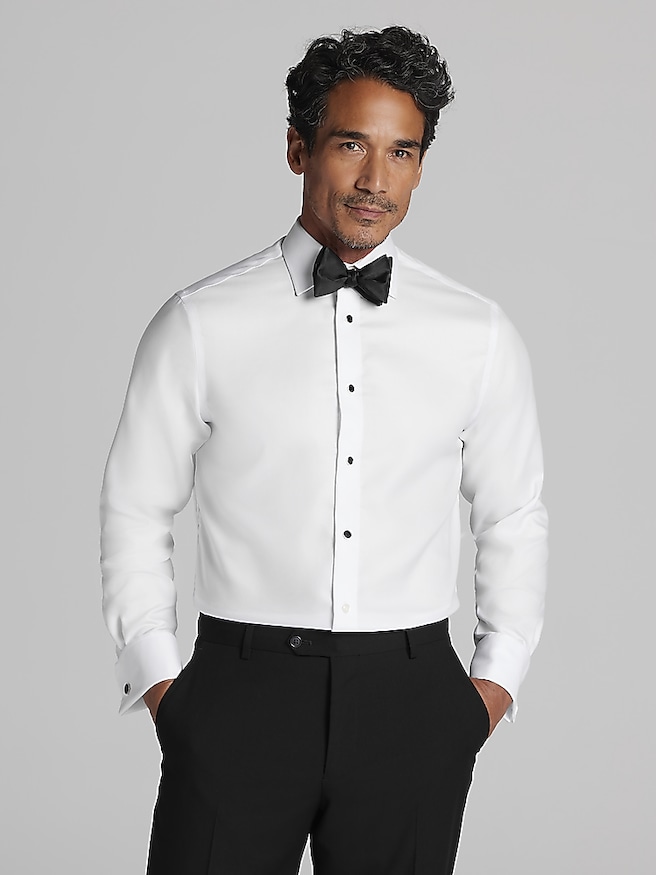
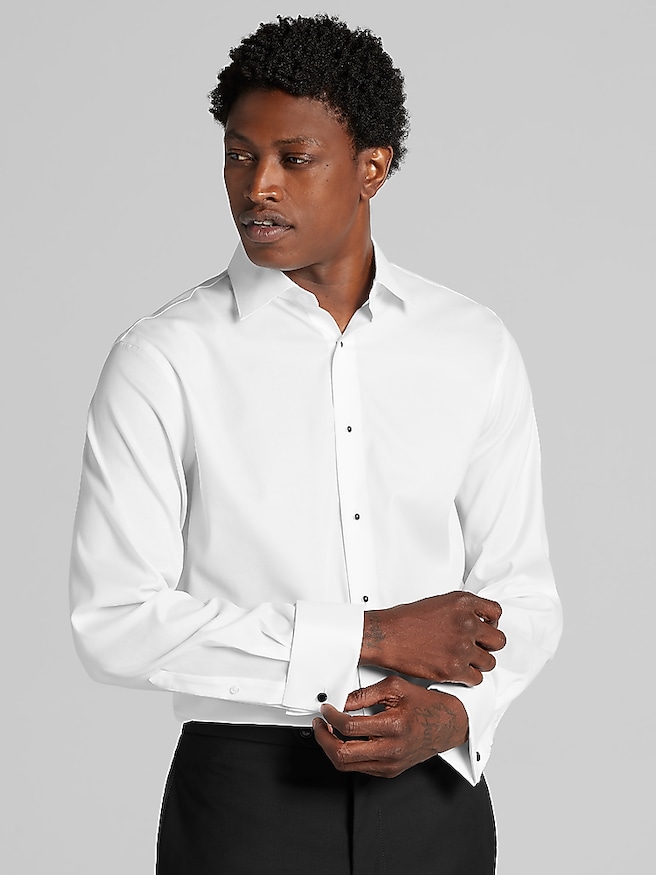
Fit gives a non-iron white dress shirt much of its finished appearance. Even wrinkle-resistant fabric can pull into visible lines when the chest, shoulders, or waist are too tight, while excess cloth can bunch beneath a jacket or gather around the waistband. A well-proportioned shoulder seam rests close to the edge of the shoulder, and the collar closes comfortably without squeezing the neck or leaving a conspicuous gap. Across the chest, the placket should lie flat rather than strain between buttons. Sleeve length matters just as much: cuffs should reach the wrist with room for natural arm movement, allowing a small amount of cuff to show beneath a properly fitted jacket sleeve. Slim, tailored, and classic fit labels describe general silhouettes, but their measurements can vary, making neck size, sleeve length, and body proportions more useful than the label alone. A closer cut can sit neatly under fitted tailoring, while a roomier shape may feel more comfortable for broader builds or long stretches spent seated. Shirt length also deserves attention for a style intended to stay tucked through a commute, a client lunch, or an evening reception. Collar and cuff details help establish the overall character. A spread collar offers space for a fuller tie knot, while a point collar creates a narrower frame around the tie. Button-down collars tend to feel less formal, making them a natural companion to chinos or a sport coat when the setting permits. Button cuffs suit everyday dressing, while French cuffs require cufflinks and create a more formal impression. With a navy suit and a restrained tie, a white non-iron shirt can look appropriate for an interview or business presentation. Worn open at the neck with tailored trousers, it takes on a less formal role. For weddings and other celebrations, the invitation’s dress code remains the best reference, since a standard white dress shirt is not interchangeable with every type of formal shirt. These details allow the same basic color to support several distinct levels of dress.
Easy care remains a central reason to choose non-iron white dress shirts, but the care label determines the right routine for each garment. Some are machine washable, while drying temperatures, bleaching restrictions, and recommendations for pressing can vary with the fabric and finish. Prompt removal from the dryer and hanging on a supportive hanger often help preserve a smooth appearance, particularly at the sleeves and shirtfront. An overloaded washer or dryer can leave fabric compressed and creased, reducing the benefit of a wrinkle-resistant finish. If light touch-up pressing is needed, the permitted heat setting matters; excessive heat can damage fibers or affect the finish. White fabric also makes everyday wear easy to see, especially along the inside collar and cuffs, where skin oils and grooming products can accumulate. Treating marks promptly with a method suitable for the fabric is generally more effective than allowing buildup to settle through repeated wear. Chlorine bleach is not appropriate for every white shirt, and the garment’s instructions should take precedence over assumptions about color. Long-term durability depends on more than wrinkle resistance. Secure buttons, even stitching, neatly finished seams, and stable collar and cuff construction all contribute to a shirt that holds its shape through regular use. Rotating shirts between wears and allowing them to dry fully before storage can also support a more consistent appearance. For business travel, non-iron fabric can reduce the amount of touch-up needed after unpacking, although tight folding and prolonged compression may still leave creases. Hanging a shirt upon arrival gives it a better chance to relax before the next appointment. As a gift, a white dress shirt can be useful for someone starting a new job, preparing for interviews, graduating, or building a more polished wardrobe. Knowing the recipient’s neck and sleeve measurements, preferred fit, and usual dress code makes that choice more personal and practical. The strongest everyday option is one that balances a comfortable fit, suitable fabric, thoughtful construction, and care requirements that work with the wearer’s routine.