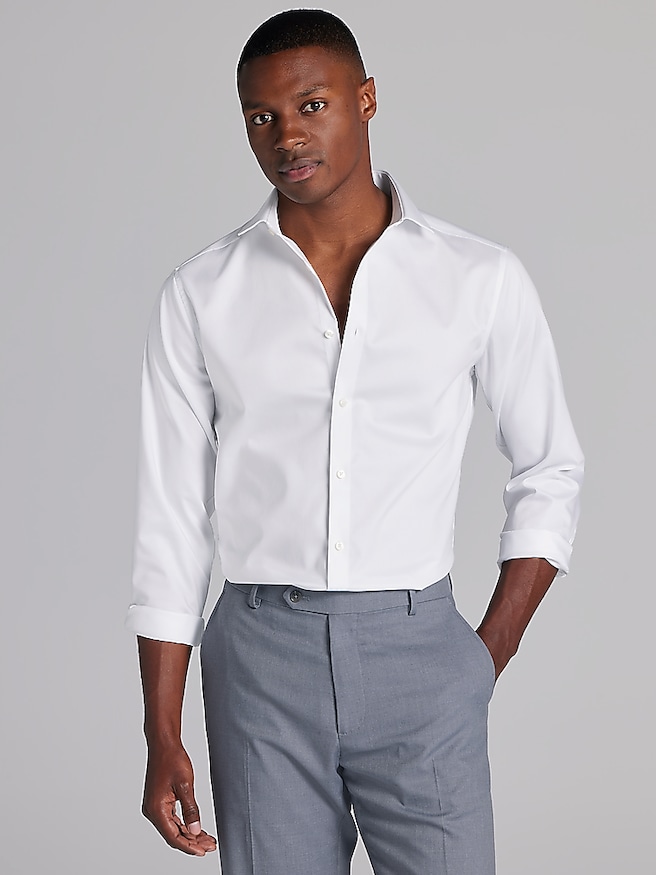
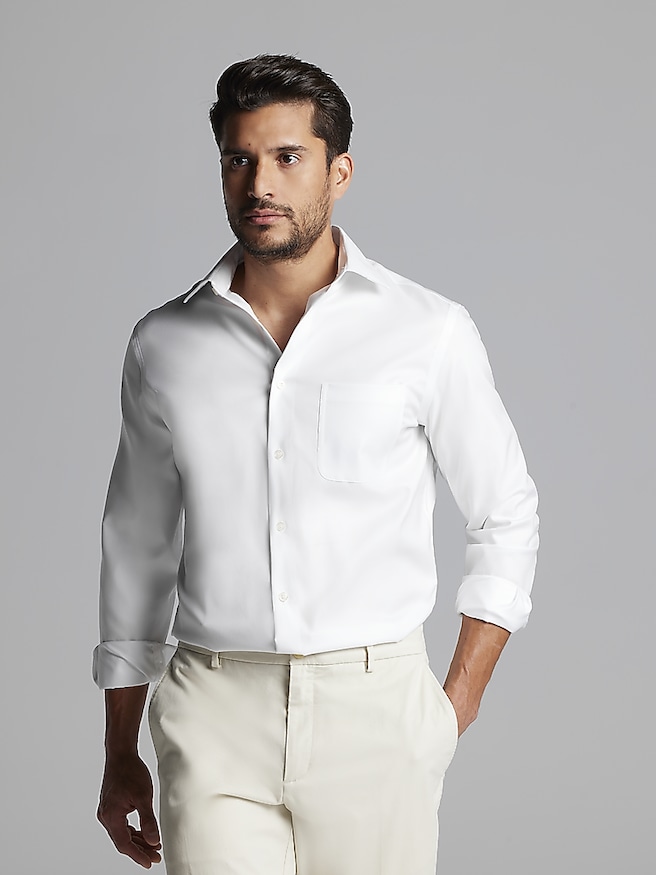
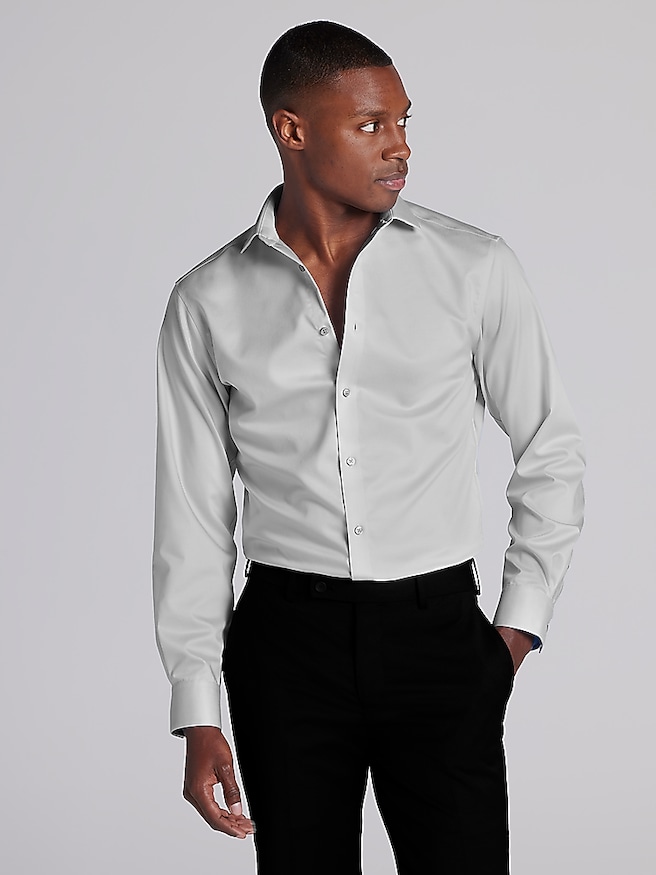
Men's white dress shirts bring a clean, composed look to everything from a navy business suit to charcoal dress pants and a leather belt. Their appeal starts with contrast: a white collar frames the face, a smooth shirtfront gives a patterned tie room to stand out, and a narrow line of white at the wrist adds definition beneath a jacket sleeve. For a job interview, a client presentation, or a wedding ceremony, that combination can feel polished without drawing attention away from the person wearing it. White also works across a wide range of suit colors, making it a practical foundation for a wardrobe built around a few well-chosen pieces. With a dark suit and restrained tie, the effect is crisp and traditional; with a textured sport coat and open collar, it becomes more relaxed while still looking intentional. The collar helps establish that distinction. A point collar has a familiar, understated shape, while a spread collar leaves more space for a fuller tie knot. A button-down collar keeps its points anchored and generally lends a less formal character to the shirt. When worn without a tie, a collar that sits neatly against the neck and stays within the jacket opening helps the outfit look finished rather than incomplete. Cuffs contribute their own detail: button cuffs are straightforward for regular wear, while French cuffs accommodate cuff links and bring a more dressed-up finish. For black-tie occasions, the event's dress expectations matter, since a standard white dress shirt is not always interchangeable with a shirt designed for tuxedo wear. Beyond special events, a white dress shirt can become a dependable part of a professional routine, whether the day includes a morning meeting, an afternoon at a desk, or dinner after work. Its versatility comes from proportion, fabric, and finishing details rather than decoration, allowing the same basic color to support distinctly formal and more approachable outfits.
Fabric and fit determine how a white dress shirt feels through those hours and how it looks once the jacket comes off. Cotton is valued for its breathable feel and ability to take a crisp press, though its texture and wrinkle behavior vary with the weave and finishing treatment. Poplin typically has a smooth surface that suits a clean, sharply defined look. Twill has a subtle diagonal texture and can offer a softer drape, while pinpoint Oxford provides fine texture without the heavier character of a casual Oxford shirt. Cotton blends may help balance softness with easier care, and fabrics containing stretch fibers can provide extra give during ordinary movement. Wrinkle-resistant and non-iron finishes can simplify upkeep, but they do not eliminate the need to follow the garment's care instructions. With white fabric, opacity deserves attention as well: a lightweight weave may reveal an undershirt or waistband more readily under bright office lighting. An undershirt close to the wearer's skin tone can make its outline less noticeable, and a neckline that stays below an open collar keeps the shirtfront visually clean. Fit should support movement without excess fabric gathering at the waist or strain appearing between the buttons. Slim and more generous cuts can both look tailored when they suit the wearer's build; the useful distinction is how the shirt sits across the shoulders, chest, and midsection. Shoulder seams should lie near the shoulder edge, the collar should close comfortably, and the sleeves should allow a natural bend at the elbow. A small amount of cuff showing below a jacket sleeve creates a tidy finish without allowing the shirt to cover the hand. Shirt length matters for tucked-in wear, especially when sitting, reaching, or standing after a long meeting. Neck and sleeve measurements provide a helpful starting point, but the fit through the body completes the picture. A shirt that stays comfortable while seated is more useful than one that looks precise only when standing still.
The lasting value of a white dress shirt also depends on how well its construction and care suit regular use. Neat seams, securely attached buttons, and well-finished collar and cuff edges contribute to a shirt that holds its shape through repeated wear. The collar and cuffs receive frequent handling and contact with skin, so those areas often show wear or discoloration before the rest of the garment. Prompt attention to marks, using a treatment appropriate for the fabric, can help prevent them from becoming harder to remove. Washing according to the care label, separating whites from garments that may transfer color, and avoiding more detergent than needed support a cleaner finish. Heavy bleaching is not a universal answer for white fabric, particularly when stretch fibers or special finishes are involved; the label should determine which products and methods are suitable. Drying and pressing deserve the same attention. Excessive heat can affect fibers and contribute to shrinkage, while the correct iron setting helps smooth the shirt without damaging it. Pressing the collar, cuffs, and front placket gives the most visible areas a crisp appearance, and hanging the shirt neatly after laundering reduces avoidable creases. A breathable storage space and a fully dry garment help keep a clean shirt ready for its next outing. These practical qualities also make white dress shirts thoughtful gifts for a graduate preparing for interviews, a partner building a professional wardrobe, or someone whose calendar includes ceremonies and dressier gatherings. Knowing the recipient's neck size, sleeve length, preferred fit, and usual care routine makes the gift more personal and useful. For workplaces and occasions with a less formal dress code, men's white short sleeve shirts provide a related option with a distinct silhouette, rather than a direct substitute for long sleeves at a formal event. Whether worn frequently or reserved for important occasions, a well-fitting white dress shirt earns its place through comfort, thoughtful proportions, and a clean finish that works naturally with the rest of a dressed-up wardrobe.