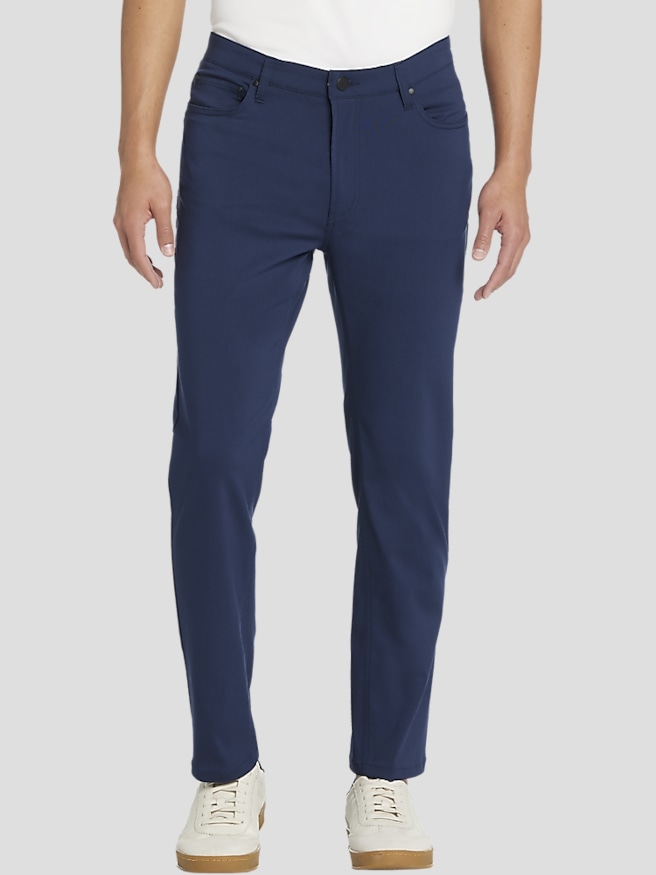
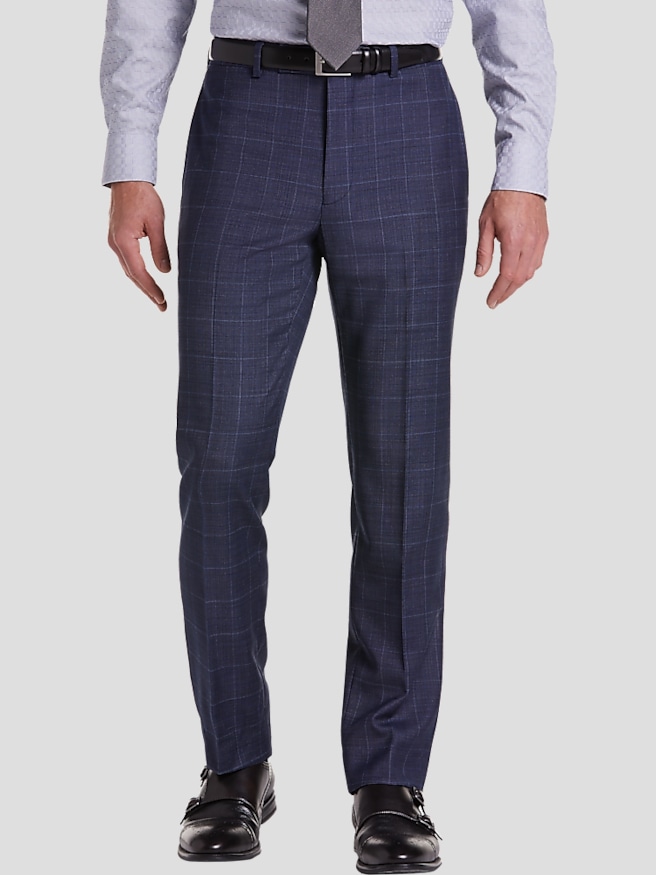
Navy slim fit pants are trousers with a close, shaped silhouette through the seat and thighs and a leg that generally narrows toward the ankle. The category spans casual chinos, five-pocket styles, and tailored dress pants, giving the same deep blue color a range of uses, from everyday office wear to dinners and dressier celebrations. Navy has enough depth to look polished with a white dress shirt, yet feels relaxed alongside a gray knit polo or an untucked button-down with a tidy hem. What distinguishes one pair from another is often the fabric and construction rather than the color alone. Cotton twill has a visible diagonal weave and a substantial, familiar feel that suits chinos and other everyday pants. Cotton blended with a small amount of elastane can provide stretch when sitting at a desk, climbing stairs, or getting into a car. Wool dress trousers tend to have a more fluid drape, helping the leg hang cleanly rather than cling. Polyester blends may offer wrinkle resistance and shape retention, although performance depends on the particular fabric and finish. A pressed crease, discreet pockets, and a smooth waistband usually give navy pants a dressier character; prominent stitching and patch pockets generally make them more casual. These details matter when building an outfit for a specific setting. A client presentation calls for a sharper finish than a relaxed dinner, even when both outfits start with navy slim fit pants. The dark blue base also works well for someone building a smaller, coordinated wardrobe because it complements white, light blue, cream, gray, burgundy, and many earthy shades. Rather than demanding a matching jacket, navy pants can anchor separate pieces, allowing a textured sport coat, a fine-gauge sweater, or a simple collared shirt to set the level of formality. Their usefulness comes from that balance: a defined shape and rich color without the full coordination of a suit.
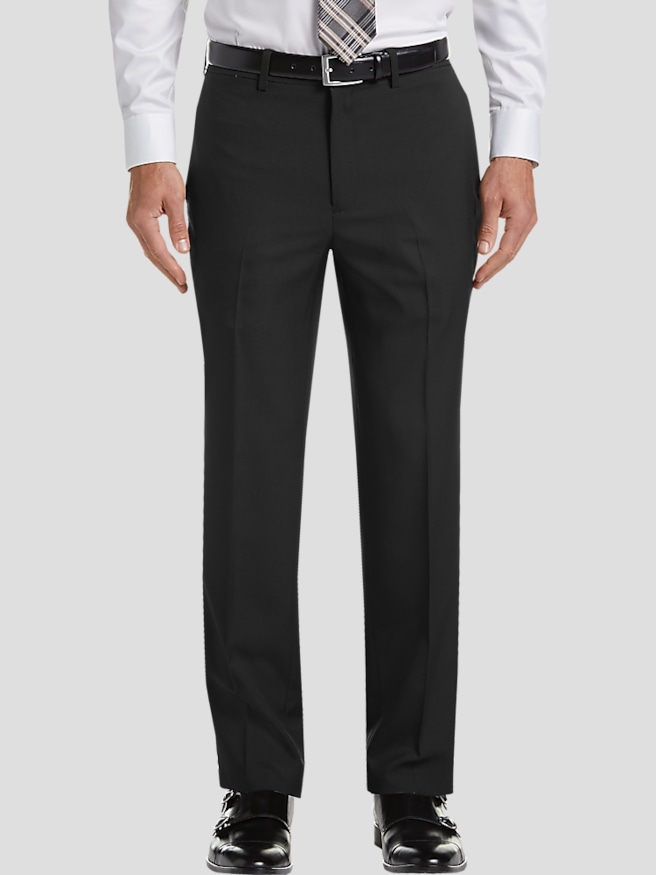
A slim fit should follow the body without restricting ordinary movement, and the best proportions depend on more than the size printed inside the waistband. The waist should sit securely without needing a tightly cinched belt, while the seat should lie smoothly instead of pulling across the hips. Front pockets that flare open and pronounced horizontal tension lines can signal that a pair is too close through the upper leg or seat. There should be enough room to sit comfortably, bend a knee, and take a full stride without the fabric straining. Someone with muscular thighs may need more space above the knee while still preferring a tapered lower leg; someone with a narrower build may prefer a closer cut throughout. Slim fit is not a uniform measurement across every design, so waist, rise, thigh room, and leg opening all contribute to the finished appearance. The rise affects where the waistband sits and how a tucked shirt looks, especially when a jacket is worn open. Length is equally visible. A hem that just meets the shoe produces a clean line, while a slight break adds a little softness at the ankle. Excess fabric bunching over the shoe can obscure the tapered shape that makes these pants distinctive. Footwear helps determine the most useful hem length: low-profile loafers, lace-up dress shoes, and streamlined sneakers meet the trouser leg in slightly different ways. For an office outfit, navy dress pants with a pale blue shirt and dark brown shoes offer contrast without looking busy. For a dinner reservation, a cream knit top and loafers can make navy chinos feel considered without becoming overly formal. A charcoal jacket adds depth, while a subtly patterned shirt brings interest without competing with the pants. Navy separates can suit many celebrations, but formal dress codes may require a matching suit or other prescribed attire. For another dark neutral with a more graphic contrast against pale shirts, Black Slim Fit Pants offer an alternative.
Comfort over repeated wears depends on fabric weight, weave, finishing, and construction as much as initial softness. A densely woven twill can feel more structured and substantial, while a lighter dress fabric may move more freely and fall into a cleaner crease. Stretch can make a narrow silhouette easier to wear, but it does not replace adequate room through the seat and thighs. Fabric recovery also matters: pants that return to shape after sitting tend to maintain a tidier appearance at the knees. Neat seams, secure pocket edges, a smoothly operating zipper, and firmly attached waistband closures are useful signs of careful construction. Areas that experience friction, including the inner thighs and pocket openings, deserve particular attention when assessing everyday durability. Carrying a bulky wallet or phone in a close-fitting pocket can distort the outline and place extra stress on those areas. Care requirements should match the way the pants will be used. Some cotton and synthetic blends are machine washable, while certain wool trousers and structured dress styles call for professional cleaning; the sewn-in care label is the deciding reference. For washable navy pants, following the specified water temperature, turning them inside out, and avoiding excessive dryer heat can help protect the color and finish. Promptly removing pants after washing or drying can also reduce stubborn creases. Pressing should follow the fabric’s heat guidance, and a pressing cloth can help prevent unwanted shine on dark material. Hanging trousers neatly between wears supports their shape, while addressing small stains promptly according to care instructions helps prevent lasting marks. These practical details make a difference for commuters, frequent travelers, and anyone wearing tailored pants through long stretches of seated work. Navy slim fit pants can also be a useful gift for a graduate starting an office role or someone refining an everyday wardrobe, particularly when the recipient’s measurements and preferred fit are known. With the right balance of room, drape, and finish, they provide a dependable foundation for outfits that need to look composed and feel comfortable throughout the day.