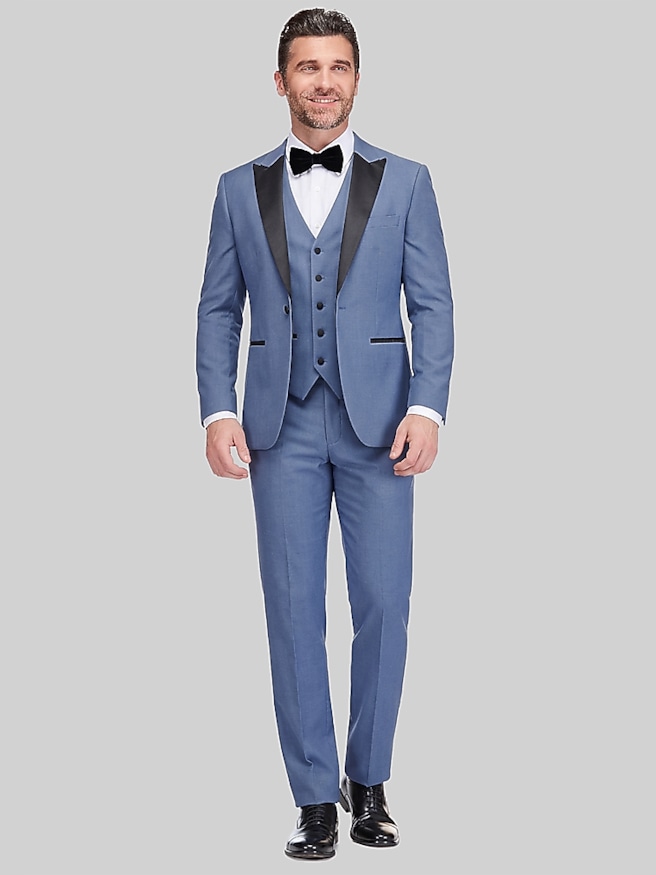
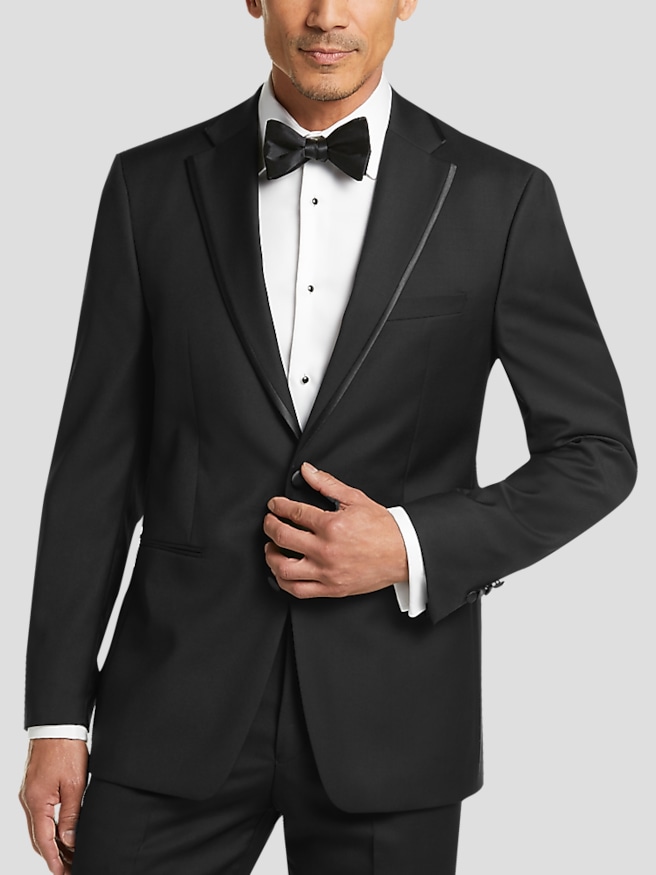
A navy blue tuxedo is a formal ensemble distinguished by its deep blue color and dress details, such as satin or grosgrain lapel facings, that separate it from a business suit. It offers an alternative to classic black for black-tie weddings, proms, galas, and other celebrations where traditional evening attire is appropriate. Navy brings depth to formalwear without demanding a bold pattern or bright color, making it a natural choice for someone who wants a distinctive look that still respects the occasion. Within the broader category of Men's Blue Tuxedos, navy sits at the understated end of the spectrum, pairing easily with crisp white shirting and black accessories. The precise shade matters: a rich navy may show an unmistakable blue cast in photographs, while a very dark midnight blue can appear nearly black in subdued lighting. Both can create a polished evening look, though the event’s dress code should take priority over color preference. Black tie generally calls for a tuxedo and its accompanying formal accessories; white tie requires a distinct, more formal ensemble. For a wedding, a navy tuxedo can give the groom a subtle visual distinction while keeping the wedding party coordinated through shared lapel finishes, shirts, or bow ties. At prom or a charity dinner, the same color offers personality without overwhelming the person wearing it. Lapel shape contributes just as much character as color. A shawl collar creates a smooth, continuous curve around the chest, while a peak lapel adds sharper lines and a stronger shoulder-to-waist impression. Black facings create a clear contrast against navy cloth, while tonal facings give the jacket a quieter appearance. These details help determine whether the overall impression feels restrained, dramatic, or somewhere between the two, even before accessories enter the picture. A solid navy cloth also keeps the emphasis on the cut, allowing the jacket’s proportions and the wearer’s posture to define the look rather than a conspicuous print.
Fabric and fit determine how navy blue tuxedos feel through a full evening, not just how they look in a fitting-room mirror. Wool is a traditional choice because it can combine a clean drape with breathability and natural resilience, although its performance depends on the weave, weight, and construction. Wool blends may balance that tailored appearance with other practical qualities, while synthetic blends can offer durability and wrinkle resistance depending on their composition. The fabric label is more useful than a broad assumption about any fiber: two cloths with similar ingredients can feel noticeably distinct in the hand. A smooth, matte body fabric allows satin lapels to stand out, whereas a more lustrous cloth creates a dressier surface across the entire ensemble. Neither effect replaces good proportions. Jacket shoulders should sit close to the natural shoulder line without extending into a pronounced ledge, and the collar should rest against the shirt rather than leave a visible gap. The front should close without strong pulling around the button, with enough room to sit, reach across a table, and offer a handshake comfortably. A slim silhouette follows the body closely; a more traditional cut provides additional room through the chest, seat, and thigh. The best choice is the one that maintains clean lines without restricting ordinary movement. Trousers should rest securely at the intended waist and fall smoothly through the leg, with a hem that meets the shoes cleanly rather than gathering in heavy folds. Trying the ensemble with the intended dress shoes makes the trouser length easier to judge. Sleeve length should leave a modest glimpse of shirt cuff, and jacket length should remain balanced with the torso rather than chase an exaggeratedly short silhouette. For someone expecting to spend hours moving between a ceremony, dinner, and dancing, comfort at the upper back, waist, and knees deserves particular attention. Alterations can refine many details, but starting with well-positioned shoulders and a comfortable chest gives the finished tuxedo a stronger foundation.
Styling a navy tuxedo works best when the supporting pieces reinforce its formal character. A white formal shirt provides clear contrast against the jacket and gives the face a clean frame in photographs. Depending on the shirt’s design, a concealed placket or a stud front can keep the center of the outfit neat, while French cuffs accommodate cuff links for a considered finishing detail. A black bow tie is a classic companion to black lapel facings; keeping the textures compatible helps the pieces look intentional together. A waistcoat or cummerbund can cover the trouser waistband in a traditional ensemble, while trousers designed for side adjusters or suspenders maintain a cleaner line than a visible belt. Polished black formal shoes ground the blue and connect naturally with black trim. A simple white pocket square adds definition without competing with a boutonniere or other meaningful accent. For a coordinated group, matching the navy shade and fabric finish is often more important than making every accessory identical, since blue fabrics can look similar indoors yet separate visibly under a camera flash. Care also plays a large role in preserving that polished appearance over repeated occasions. The care label should govern cleaning, especially when the jacket combines body fabric, lining, and delicate lapel facings. After wear, empty the pockets, allow the pieces to air out, and place the jacket on a broad, shaped hanger that supports its shoulders. Trousers benefit from careful hanging along their crease or from an appropriate trouser hanger. A breathable garment bag helps protect the ensemble during storage, while avoiding cramped conditions reduces unnecessary creasing. Direct heat and aggressive pressing can leave shine or marks on formal fabrics, so professional attention is worthwhile for stubborn wrinkles or stains. Checking buttons, hems, and seams before the next event leaves time for small repairs. With thoughtful fit, restrained accessories, and consistent care, a navy blue tuxedo can remain a dependable part of a formal wardrobe across weddings, milestone celebrations, and evenings that call for dressing with intention.