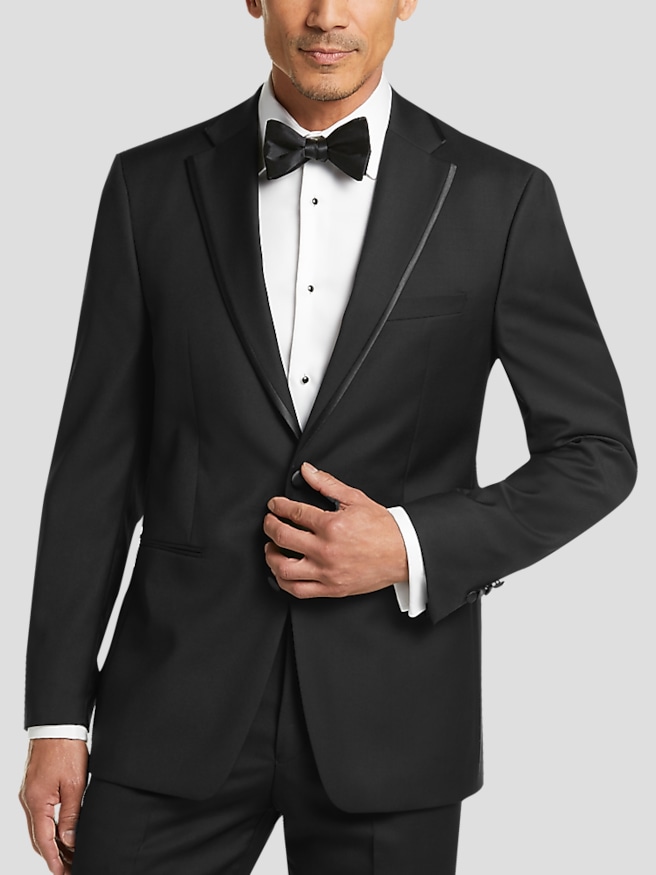
Men’s blue tuxedos bring depth and personality to formal dressing without losing the crisp lines and polished details that distinguish a tuxedo from an everyday suit. The color spans a broad spectrum, from inky midnight blue to saturated royal blue, and each shade creates its own impression. A darker blue can look nearly black in a dimly lit ballroom, then reveal its color in photographs or beneath brighter lights. A richer, more vivid blue makes a stronger statement, particularly when balanced with a white shirt and restrained accessories. For a closer look at the darker end of that spectrum, Navy Blue Tuxedos offer a classic direction for formal celebrations. Blue tuxedos suit occasions such as weddings, proms, galas, and milestone evenings, though the invitation’s dress code should always shape the choice. Midnight blue has a long-standing place in traditional eveningwear, while brighter shades generally work best when the setting welcomes personal expression. For a groom standing beside a coordinated wedding party, subtle variations in blue can establish a distinction without making the group look disconnected. For a prom attendee, a clear blue jacket with dark lapel facings can provide enough visual interest that the rest of the outfit needs little embellishment. Lapel shape also influences the overall effect: a peak lapel creates an angular, assertive line, while a shawl collar traces a smooth curve around the chest. Satin or grosgrain facings introduce contrast through texture and light, giving the jacket a formal character that a standard blue suit does not have. A single-breasted jacket offers a familiar, streamlined profile, while a double-breasted silhouette brings more structure across the torso. The strongest choice is not necessarily the boldest shade or the most elaborate detail, but the combination that feels appropriate to the event and comfortable on the person wearing it.
Fabric and fit determine how a blue tuxedo looks well beyond the first photograph. Wool is a traditional choice because it can drape cleanly, hold a tailored shape, and recover from light creasing. Wool blends may combine that structure with other qualities, such as added resilience or a softer feel, depending on the fiber content and weave. Fabrics with stretch can provide useful flexibility, but stretch should complement a good fit rather than compensate for a jacket or trousers that are too tight. Texture matters as much as composition. A smooth, relatively matte body fabric lets lustrous lapels stand out, while a more textured surface adds dimension to the blue itself. Color can also appear deeper or brighter under various lighting conditions, so viewing the fabric in both natural and indoor light helps set expectations for the event and its photographs. At the shoulders, the jacket should follow the body cleanly, with no pronounced overhang, dents, or pulling across the upper back. When the jacket is fastened, the front should lie smoothly rather than form an obvious X-shaped crease around the button. A slim fit creates a closer outline through the chest, waist, and legs; a more generous cut allows additional room without needing to look oversized. Neither label replaces checking how the garment sits on an individual frame. Sleeve length should allow a small amount of shirt cuff to show, and the jacket collar should rest against the shirt collar without a visible gap. Trousers should sit securely at the intended waist position, with enough room through the seat and thighs to sit comfortably. A clean hem with little or no break often complements the sharp lines of eveningwear. Before settling on the fit, sit down, walk a few steps, and bend the elbows. Those simple movements reveal issues that are easy to miss while standing still in front of a mirror, especially before an evening that includes dinner, dancing, and repeated trips across a reception room.
Finishing details give a blue tuxedo coherence, and a restrained approach usually lets the tailoring do its best work. A white formal shirt supplies a clear contrast against blue, with a bib front, pleats, or a smooth front offering distinct levels of visual detail. Shirt studs and cuff links should suit the shirt’s construction, and coordinating their metal finishes keeps the combination deliberate. A black bow tie is a dependable partner for dark lapel facings, while a neatly folded white pocket square adds definition without competing for attention. When a waist covering is appropriate, a formal waistcoat or cummerbund can keep the transition between shirt and trousers looking finished; the jacket’s cut and the event’s expectations help determine which makes sense. Tuxedo trousers often use side adjusters or accommodate suspenders rather than relying on a visible belt. Black patent leather shoes deliver a traditional eveningwear finish, while highly polished black calfskin can also work in many formal settings. Socks that cover the calf help maintain an uninterrupted line when seated. For wedding photographs, coordinating the level of formality across the group is usually more important than matching every accessory exactly. After the event, thoughtful care helps preserve both the blue fabric and the contrasting trim. Follow the garment’s care label, and point out stains, delicate facings, or decorative details to a professional cleaner rather than attempting aggressive spot treatment. Excessive heat or direct pressing can leave unwanted shine on tailored fabric and damage some trims. Let the tuxedo air out before storage, empty the pockets, and use a broad, shaped hanger to support the jacket’s shoulders. Hang trousers neatly to protect their crease, and choose a breathable garment bag for longer storage. Avoid prolonged exposure to direct sunlight, which can gradually affect color. Durable construction, sound seams, and well-secured buttons all contribute to lasting wear, but careful handling matters just as much. With the right fit and consistent care, a blue tuxedo can remain a distinctive part of a formal wardrobe for celebrations well beyond its first outing.