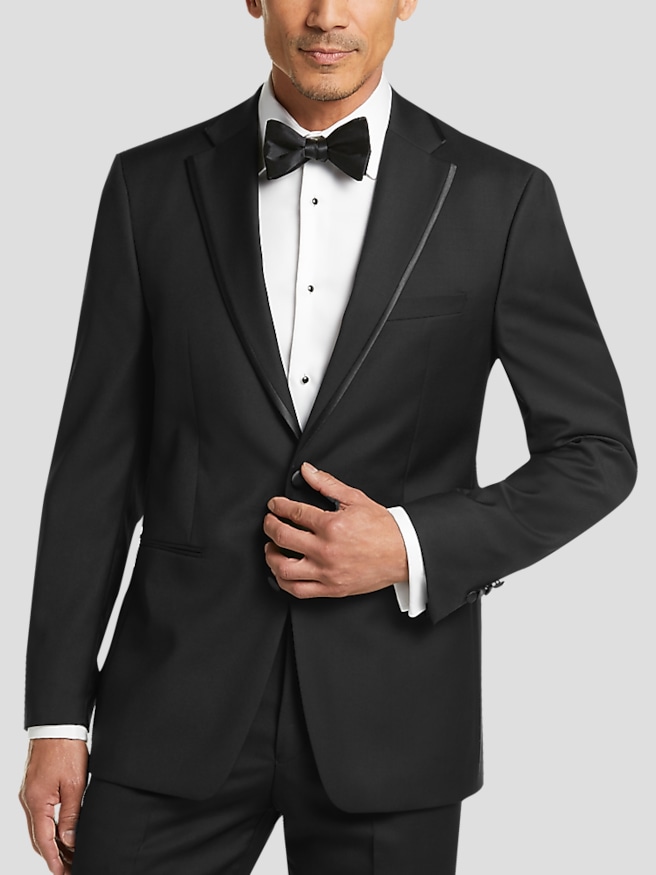
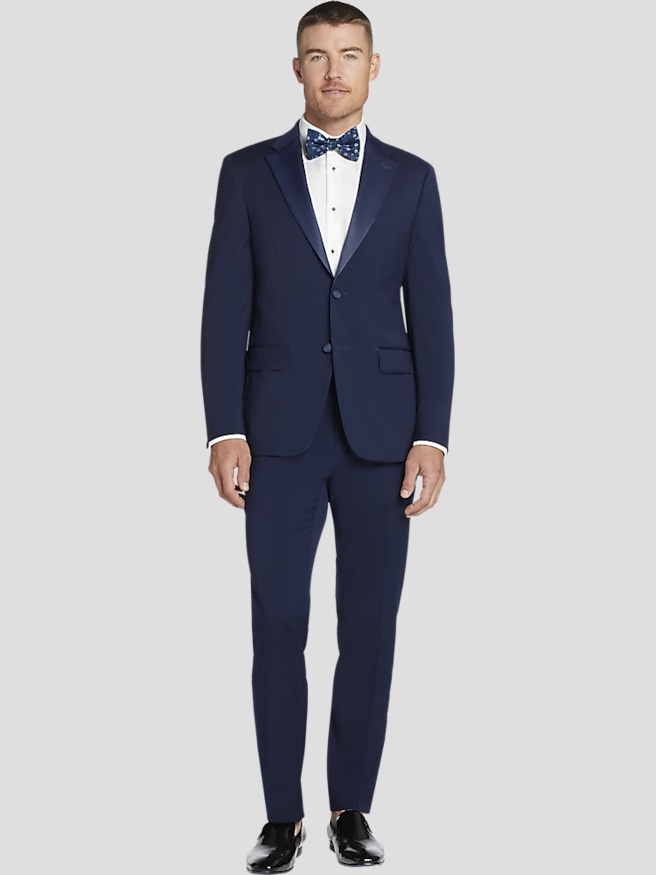
Blue tuxedos are formalwear distinguished by a blue jacket and coordinating trousers, typically finished with contrasting satin or grosgrain details at the lapels, buttons, and trouser seams. They offer an alternative to a black tuxedo, with shades ranging from deep midnight and navy to more expressive royal blue. Midnight blue has a subtle character that can appear almost black in low light, while navy makes the blue more apparent without moving far from a traditional formal look. Royal blue creates stronger contrast against a white shirt and draws more attention in photographs. The right shade depends on the occasion, the dress code, and how much emphasis the outfit should carry. For a traditional black-tie evening, a dark blue tuxedo with classic black facings is a more conventional choice than a bright blue interpretation. For prom, a celebratory reception, or an event with a more flexible formal dress code, a stronger blue can feel right at home. Wedding attire also benefits from this range: a groom may choose a distinctive shade, while a coordinated wedding party can use consistent shirts, ties, and accessories to bring the overall look together. Color alone does not make a suit a tuxedo. The formal detailing, accompanying shirt, and choice of neckwear all contribute to the distinction, which matters when an invitation calls for black tie rather than business attire. Lapel shape adds another layer of character. A shawl collar has a smooth, rounded line, while a peak lapel creates a sharper outline across the chest and shoulders. Neither needs elaborate styling to make an impression. A crisp white shirt, a well-proportioned bow tie, and polished black footwear allow the blue fabric and the jacket’s contrasting trim to remain the focus.
Fabric and construction influence how a blue tuxedo looks in motion, feels through a long event, and holds its shape over time. Wool is a traditional choice because it can drape cleanly and recover from light creasing, although the weave, fabric weight, and lining also affect comfort. Wool blends may combine that tailored appearance with other performance characteristics, depending on their fiber content and construction. Synthetic blends can offer crease resistance, but their feel and breathability vary, so the composition label deserves attention. Velvet creates a richer surface with depth that changes as the fabric catches the light; it also needs care that protects its pile from crushing. A smoother woven fabric produces a more restrained effect, especially when paired with lustrous lapels. Durability depends on more than fiber alone: sound seams, secure buttons, a smooth lining, and a fit that does not strain at stress points all matter. The shoulder seam should sit near the edge of the shoulder, and the jacket collar should rest against the shirt collar without a noticeable gap. When the jacket is fastened, the front should lie smoothly rather than pulling into an X around the button. A close fit can look precise, but there should still be room to sit through dinner, reach across a table, and move comfortably on a dance floor. Slim, modern, and classic fit labels are useful starting points, not substitutes for checking actual proportions. Trouser fit deserves equal attention. The waistband should sit securely without bunching, the seat should remain smooth, and the leg should fall cleanly toward the shoe. A slight break can look traditional, while little or no break creates a cleaner, more abbreviated line. Jacket sleeve length should leave a modest glimpse of shirt cuff. Trying on the complete outfit with the intended shirt and shoes makes these details easier to judge before alterations are finalized.
Accessories help set the level of formality without needing to match every blue surface exactly. A white formal shirt gives a blue tuxedo a clear, bright foundation, and a black bow tie connects naturally with black lapel facings. For traditional black tie, a bow tie is the conventional choice; a long necktie changes the character of the outfit and is better reserved for a dress code that permits that interpretation. A pleated or textured shirt front can add interest beneath a plain jacket, while restrained studs and cuff links provide a finished touch. For a layered look, Blue Tuxedo Vests can add coverage at the waist and bring another blue element into the outfit. When combining separate pieces, compare their undertones and textures rather than assuming that two fabrics described as navy will match. A slightly purplish blue beside a green-leaning navy can look accidental, particularly under bright indoor lighting. Waist coverings should work with the jacket and trouser rise so that the shirt does not become the dominant feature at the midsection. Black patent leather shoes are a traditional formal option, while carefully polished black dress shoes can provide a more understated finish when appropriate to the event. A simple white pocket square offers contrast without competing with the tuxedo’s color. After the occasion, a little attention helps preserve the outfit for future wear. Empty the pockets, hang the jacket on a broad, shaped hanger, and let the pieces air before returning them to storage. Follow the care label, address stains promptly, and use professional cleaning when needed rather than automatically cleaning after every brief wear. Avoid applying a hot iron directly to satin trim or velvet, since pressure and heat can mark delicate surfaces. A breathable garment bag helps protect the fabric during storage, while a roomy travel bag reduces compression on the way to an event. With thoughtful fit, restrained accessories, and appropriate care, a blue tuxedo can serve as a distinctive formal outfit for celebrations well beyond a single evening.