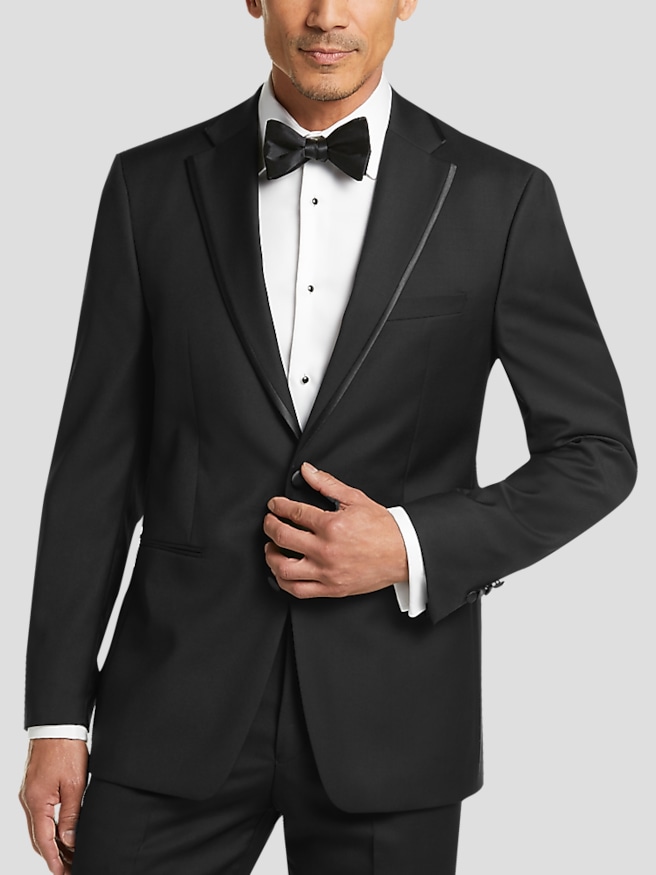
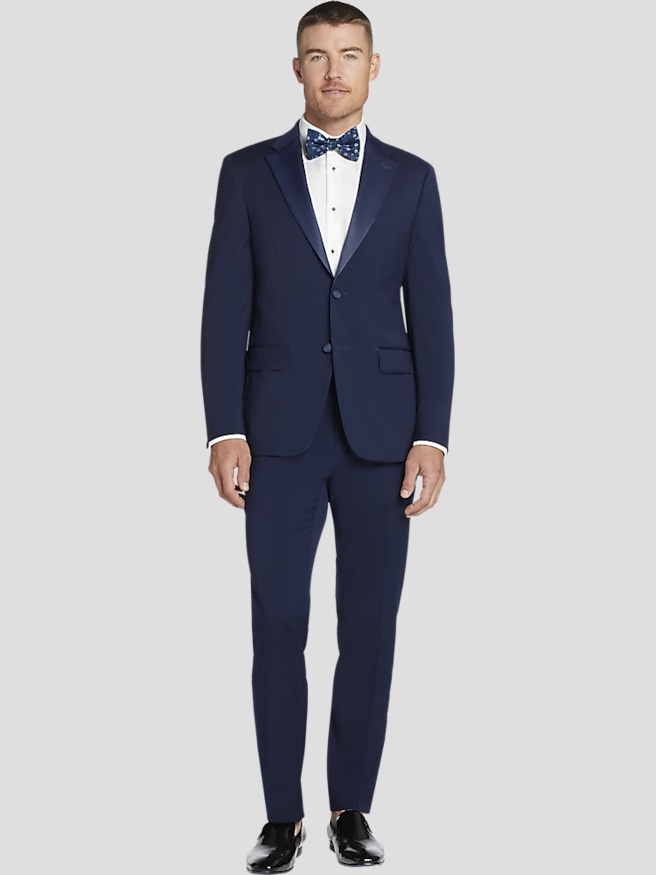
Blue tuxedo vests bring color, structure, and a finished look to formal attire, whether the occasion is a wedding, prom, gala, or evening celebration. Common shades include navy, midnight blue, and royal blue, each with a distinct effect against a tuxedo jacket and crisp dress shirt. Navy offers understated depth and pairs naturally with black or blue tailoring. Midnight blue can appear nearly black in subdued lighting, with its blue undertone becoming more noticeable in brighter surroundings. Royal blue creates a stronger contrast, making it a distinctive choice when the dress code allows expressive color. Fabric finish matters as much as shade: a smooth, lustrous surface catches the light, while a matte weave keeps the emphasis on the silhouette. Subtle jacquard or tonal paisley can add dimension without introducing another color, especially when the pattern becomes visible only at close range. These details give a blue formal vest character while preserving the clean lines expected of evening attire. A blue vest beneath a black jacket creates a deliberate color accent; beneath a blue jacket, it can support a coordinated look or introduce a tonal contrast. Closely related blues are not necessarily exact matches, so the relationship between the fabrics should look intentional rather than almost identical. For coordinated wedding attire, Blue Tuxedos For Weddings provide a foundation for considering how the vest, jacket, and trousers work together. A groom may prefer a restrained midnight shade that distinguishes his outfit through texture, while a coordinated wedding party may use a consistent blue to connect individual looks. At prom or a creative formal celebration, a brighter vest can carry more of the outfit’s personality. For a traditional black-tie invitation, a low-cut evening waistcoat and restrained color treatment generally sit more comfortably within established conventions than a high-buttoned vest associated with a business suit.
The fit of a tuxedo vest determines how cleanly the entire outfit comes together. A well-proportioned vest lies close to the torso without pulling across the buttons, leaving enough room to sit, reach forward, and move comfortably through a long event. Its front should cover the trouser waistband so that a strip of shirt does not interrupt the line between vest and trousers. This makes trouser rise an important consideration: low-rise trousers can leave a gap even when the vest fits correctly through the chest. Around the shoulders and armholes, the fabric should rest smoothly rather than stand away from the body or collect in folds. A back adjuster, when included, can refine the waist, but it cannot compensate for a vest that is too narrow across the chest or too short through the body. The neckline also changes the overall impression. A lower opening reveals more of the formal shirt front and accommodates the traditional balance of a tuxedo and bow tie, while a higher opening places greater emphasis on the vest itself. Single-breasted fronts tend to create a straightforward vertical line; double-breasted designs introduce more overlap and a broader, more architectural shape. Material affects both that shape and the experience of wearing it. Wool and wool blends can offer a supple drape and natural breathability, with performance depending on fabric weight, lining, and construction. Polyester and blended fabrics can contribute shape retention and resistance to everyday wrinkling, although their feel varies considerably by weave and finish. Satin describes a weave rather than a specific fiber, so two satin vests may have distinct care requirements and textures. A smooth lining helps the vest settle over a dress shirt, while neatly finished seams, secure buttons, and stable buttonholes support repeated wear. The best result is a vest that remains composed beneath the jacket and looks equally considered when the jacket comes off for dinner or dancing.
Accessories give blue tuxedo vests their final context, but they do not all need to repeat the same shade. A white formal shirt provides a clear backdrop that lets navy, royal blue, or midnight blue read distinctly. For traditional black-tie dressing, a black bow tie can keep the outfit grounded even when the vest introduces blue. A blue bow tie creates a more coordinated effect where the occasion permits it, while a patterned tie or pocket square can pick up the vest’s color in a smaller detail. Matching every accessory in both color and shine can make the combination feel more uniform than personal; a variation in texture often creates a more balanced result. A lustrous vest, for example, already contributes visual interest, so a simple white pocket square can be enough. Wedding photographs also make fabric relationships especially noticeable, since flash and daylight can reveal undertones that are less obvious indoors. Seeing the vest beside the shirt and jacket under more than one light source helps clarify whether the combination feels cohesive. For someone giving formalwear as a gift, a blue vest can be a thoughtful choice for a recipient with an upcoming ceremony, milestone celebration, or established tuxedo wardrobe, provided the chest measurement, body length, and intended outfit are known. Care is equally important to keeping its appearance intact beyond that first occasion. The sewn-in care label should determine whether professional cleaning, washing, or another method is appropriate; a satin finish alone does not establish what treatment is safe. Prompt attention to spills, gentle handling around textured surfaces, and avoiding unnecessary friction help protect the fabric. After wear, the vest benefits from airing before storage and being kept without tight folds or heavy pressure on the front. A smooth, supportive hanger can help preserve its shape. With suitable fit, thoughtful coordination, and care matched to its construction, a blue tuxedo vest can remain a dependable part of a formal wardrobe rather than a detail reserved for a single photograph.