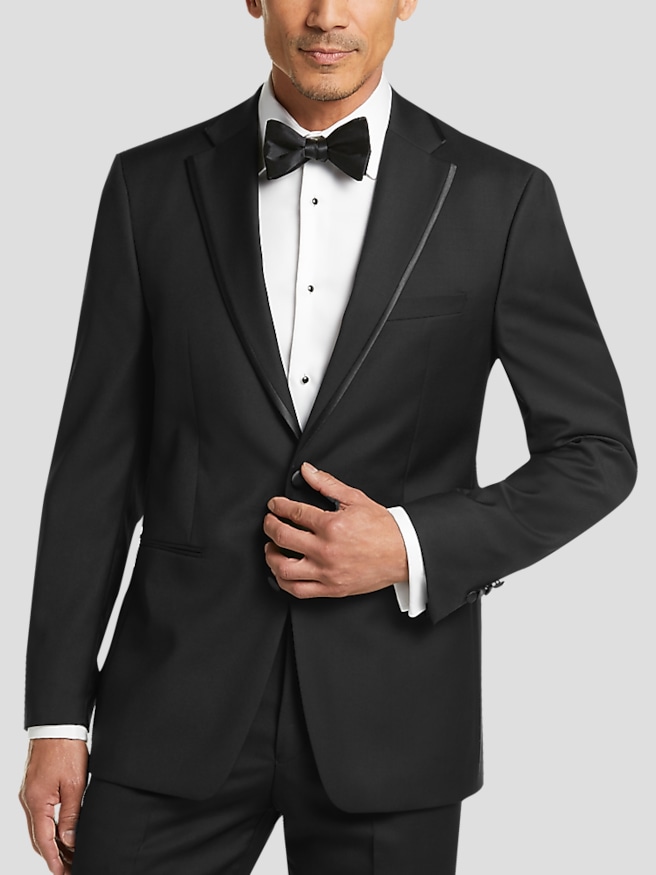
Blue tuxedo shirts bring color to evening dressing without losing the crisp lines and distinctive details that separate formal shirting from everyday office wear. Their character changes with the shade: powder blue creates a soft contrast against black lapels, a brighter blue makes a more expressive statement, and deep navy gives an outfit a dark, tonal finish. The effect can feel understated or bold, depending on the fabric, shirt front, and accessories surrounding it. For weddings, proms, anniversary dinners, and celebrations with a flexible formal dress code, a blue shirt offers a way to make a tuxedo feel more personal. At an event requiring traditional black tie, however, a white formal shirt remains the conventional choice; blue belongs where the invitation allows some interpretation. The distinction matters because color alone does not make a shirt appropriate for every formal occasion. Construction also helps define a tuxedo shirt, from a pleated or textured bib to cuffs designed for cufflinks and a front that accommodates studs or conceals its buttons. Not every style includes all these features, and a simpler front can create an equally deliberate, streamlined appearance. Fabric adds another layer of difference. Cotton poplin generally has a smooth surface and a crisp hand, while cotton twill has a subtle diagonal texture and often a slightly fuller feel. Cotton blends can offer easier maintenance, depending on their composition and finish, and fabric with stretch can provide more give across the shoulders and elbows. A fine weave can look polished beneath satin lapels, while a textured bib creates contrast within an otherwise restrained outfit. In pale blue, sufficient opacity is especially useful: an undershirt or visible seam should not become the strongest detail across the chest. The overall impression comes from the relationship between color, surface, and structure, rather than from the shade of blue alone.
Fit gives blue tuxedo shirts their finished appearance, especially when a jacket comes off during a reception or an evening of dancing. A close fit can look clean without pulling across the chest, while a roomier cut allows more space through the torso without needing to look oversized. Shoulder seams should sit near the natural shoulder, and the front should lie smoothly when the wearer sits down, reaches forward, or buttons a jacket. Fabric straining between the buttons usually signals that more room is needed; deep folds gathering above the waistband can indicate excess volume or an unsuitable cut. Enough body length helps the shirt stay tucked through a seated dinner and the movement that follows. At the neck, a properly fitted collar closes comfortably without leaving a large gap, providing a stable frame for a bow tie. A turndown collar keeps the outline familiar and works well with many contemporary formal outfits, while a wing collar creates a more traditional ceremonial effect and requires particular attention to the bow tie and its visible band. Cuffs deserve the same consideration. French cuffs fold back and fasten with cufflinks, adding a small but noticeable finishing detail at the wrist. Other cuff constructions may use buttons or offer convertible fastening, so their closure should suit the intended accessories. With the arms relaxed, a modest amount of shirt cuff showing beyond the jacket sleeve creates a balanced finish; roughly a quarter to half an inch is a common reference, though proportions vary. The front treatment changes the look just as clearly. Narrow pleats give the chest a measured rhythm, piqué introduces a small-scale raised texture, and a covered placket keeps attention on the collar and bow tie. A stud-compatible front needs studs designed for its openings, while a button-front shirt should be worn according to its construction rather than modified for the evening. These details help distinguish a formal shirt from a blue business shirt that happens to be worn beneath a tuxedo.
Color coordination is most convincing when each part of the outfit has a clear role. A light blue tuxedo shirt beneath a black jacket creates visible contrast without demanding that every accessory repeat the same shade. A black bow tie can anchor that combination, while understated cufflinks and studs keep the small details connected. Navy shirts create less contrast against dark tailoring, so differences in fabric texture and depth of color become more important. Two blues that nearly match can look less intentional than shades with a distinct relationship, particularly when photographed under indoor lighting. For outfits that include a waistcoat, Blue Tuxedo Vests can extend the color story, with the shirt and vest contributing separate tones or textures rather than competing for attention. A patterned pocket square may introduce another note of blue without requiring an exact match. For wedding parties, consistency in collar shape, shirt shade, and front treatment often creates a more unified photograph than matching color names alone. A blue formal shirt can also make a thoughtful gift for someone who regularly attends dressy celebrations, provided the neck size, sleeve length, preferred fit, and cuff style are known. Those measurements matter more than a familiar casual-shirt size. Long-term appearance depends on care as much as styling. The care label determines the appropriate washing or professional cleaning method, particularly when a shirt combines different fabrics, decorative fronts, or specialized finishes. Cufflinks and removable studs should come out before cleaning, and pale blue fabric should not be treated with chlorine bleach unless its instructions expressly allow it. Prompt attention to collar marks and spills helps prevent discoloration from becoming harder to remove. Pressing at the recommended temperature preserves a smooth finish without flattening textured details unnecessarily. Storage on a suitable hanger, with space around the collar and cuffs, helps maintain the shape between occasions. With sound construction, comfortable proportions, and consistent care, a blue tuxedo shirt can remain a distinctive part of a formal wardrobe across many celebrations.